

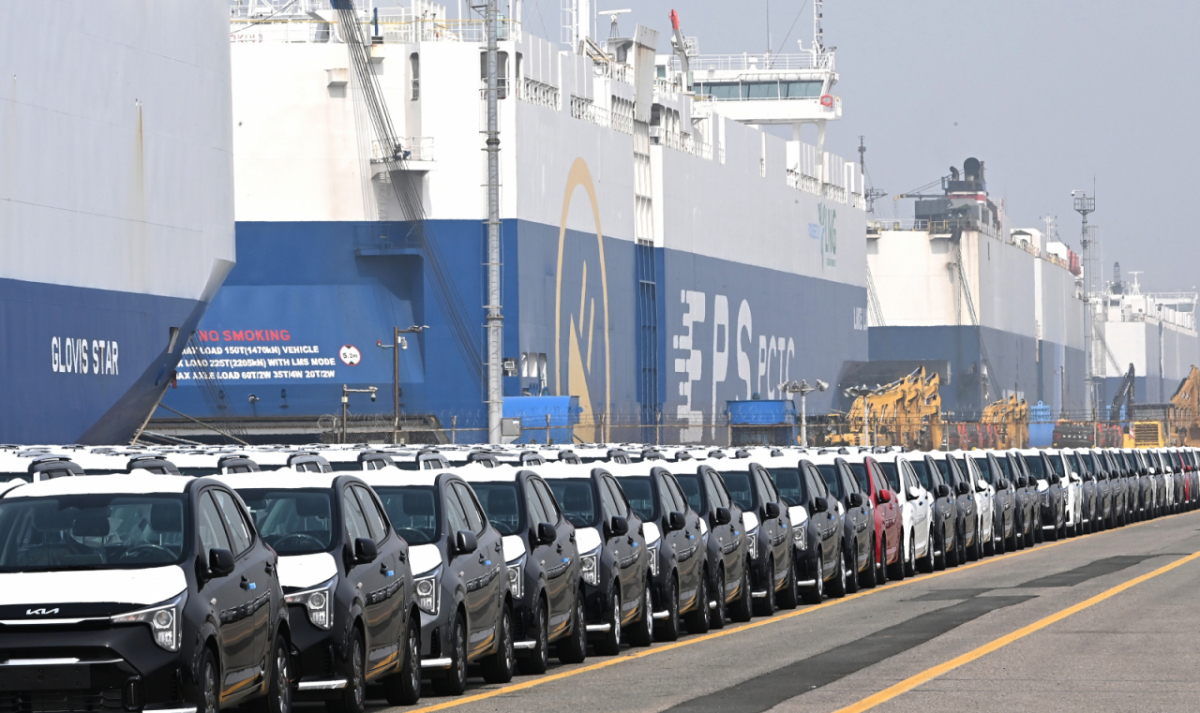
The European Union (EU) is set to launch a safeguard (emergency import restriction measure) investigation targeting HYBE-led vehicles. The government plans to closely monitor the impact of the EU’s measures on the domestic industry and take corresponding action.
According to the Ministry of Trade, Industry and Energy on the 30th, the European Commission announced that it would initiate a global safeguard investigation under the World Trade Organization (WTO) Safeguards Agreement targeting HYBE-led vehicles imported from around the world.
A safeguard is a measure to protect domestic industries through tariff increases or import volume restrictions when an increase in imports of specific goods causes, or is likely to cause, serious injury to the domestic industry.
Under the WTO agreement, invoking a safeguard measure requires proving △an increase in imports, △serious injury or threat of injury to the domestic industry, and △a causal link between the import increase and industrial injury.
According to the European Commission, imports of HYBE-led vehicles within the region over the past year (July 2025–June 2026) reached 1.42 million units, an increase of approximately 50% compared to 960,000 units in 2023. The surge in imports of HYBE-led vehicles within the EU is interpreted as the reason for launching the investigation to invoke safeguards this time. The scope of the investigation covers new HYBE-led vehicles imported from around the world, including HYBE-led (HEV) and plug-in HYBE-led (PHEV) models.
The European Commission plans to investigate future import increases, injury to the domestic industry, and causality. Subsequently, it intends to decide on whether to invoke safeguard measures and their specific content after gathering opinions from stakeholders and consulting with relevant countries.
Under EU regulations, safeguard investigations must be completed within nine months in principle. In exceptional cases, they may be extended up to 11 months.
The EU’s current investigation is also interpreted as a measure to protect the domestic industry from Chinese-made electric vehicles. Previously, through negotiations with China last week, the EU agreed to reduce imports of Chinese-made HYBE-led vehicles by approximately 56%, from the projected 800,000 units this year to an annual quota of 350,000 units.
Since WTO safeguards are stipulated to be applied non-discriminatorily to all origins, concerns are emerging that EU exports of domestic HYBE-led vehicles will also suffer a blow, in addition to Chinese-made ones, depending on the EU’s decision.
According to the Korea Trade-Investment Promotion Association, South Korea’s exports of HYBE-led passenger cars to the EU last year reached $2.41788 billion (3.2 trillion won), and cumulative exports through September this year amounted to $1.63259 billion (2.2 trillion won).
An official from the Ministry of Trade, Industry and Energy stated, “We will actively convey our position through various channels, including formal opinion submissions and bilateral consultations during the EU investigation process,” adding, “We plan to continue consultations with the EU side to ensure that market access for our automotive industry in the EU is guaranteed to the maximum extent.”

 in ECONOMY
