

"Monthly rent is 1.66 million won": Salary just skims past the bank account… A young person from a humble background laments
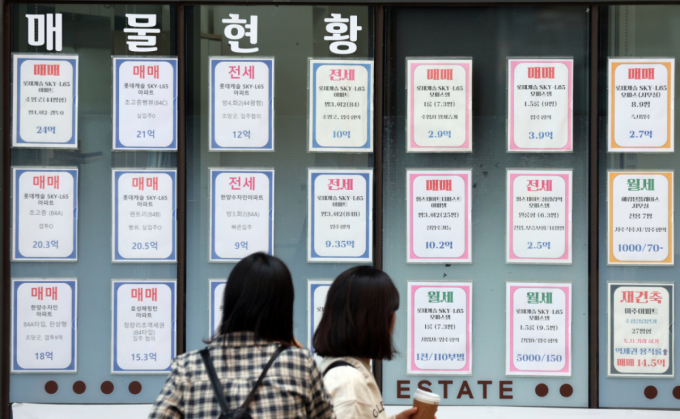
A, a man in his 30s who is currently living in a rented apartment in the Seoul metropolitan area as a newlywed couple and commutes to Seoul for work, had planned to try to buy his own home around next year. Due to the sharp rise in housing prices, he lowered his target from Seoul to the broader metropolitan area, but finding a home has not been easy; even for an apartment of about 20 pyeong (approximately 66 square meters), prices near his current residence far exceed 6 million won (the policy loan cap). Even if he were to find a property that meets the criteria, it has become difficult to secure a loan up to the limit under the current regulatory stance on lending, leaving A unable to even consider buying a home. He is filled with a sense of frustration, wondering whether only cash-rich individuals can afford to buy a house.
Seoul home prices have recorded their longest-ever streak of gains, and along with this, housing prices in the metropolitan area have also risen significantly, pushing the opportunity for young people to "buy their own homes" further out of reach. On top of that, as policies centered on owner-occupied housing have reduced the supply of jeonse (long-term lease) properties, the trend toward monthly rentals has intensified. With a triple surge in sales, jeonse, and monthly rental markets, the difficulties faced by young people are compounding, making it even harder to save up a lump sum. The existing housing ladder structure is crumbling.
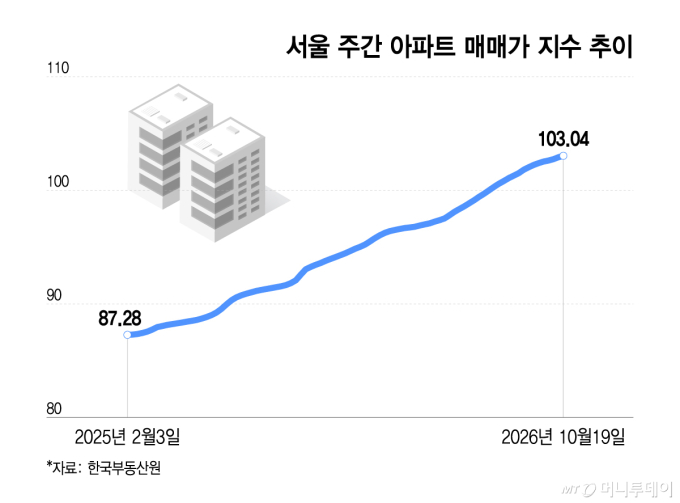
According to the Korea Real Estate Board, Seoul apartment prices rose for the 89th consecutive week as of the 19th, with a cumulative increase of approximately 18.1% over that period. This marks not only the longest price streak in history but also a substantial rise in values, which has significantly increased the difficulty for young people, who generally have relatively limited surplus funds, to purchase their own homes within Seoul.
In particular, what is weighing more heavily on young people is that the recent rise in Seoul home prices has been driven less by major high-end areas such as Gangnam and the Han River Belt, and more by mid- to lower-priced trading districts on the outskirts of Seoul. These areas had relatively low home prices, making it easier for young buyers to attempt purchases or move in under jeonse (long-term rental) arrangements. Looking at the year-to-date change in home prices by Seoul district through the 19th, Seongbuk-gu rose by 16.1% while Gangnam-gu fell by 1.26%. Seodaemun-gu increased by approximately 13.7%, and Guro-gu by about 12.7%.
Until now, a common formula for wealth accumulation in Korean society had been to purchase homes in mid- to lower-priced areas of Seoul or live there on jeonse (a deposit-based lease system), save money, add loan proceeds, and gradually move into more expensive properties. However, the sharp rise in housing prices has placed constraints on this structure. In particular, the recently prominent trend toward monthly rent payments is also making it difficult to follow the traditional formula. According to Seoul Real Estate Information Center, the volume of monthly rental transactions for apartments in Seoul from January to September this year reached 87,740 cases, accounting for 51.0% of the total jeonse and monthly rental transaction volume of 172,027 cases.
For homebuyers with no immediate plans to sell, jeonse (a Korean rental system involving a large lump-sum deposit) is more advantageous than monthly rent, as it allows them to accumulate savings. However, as the government strengthens its policies focused on owner-occupancy, the supply of jeonse properties has decreased. Coupled with regulations on jeonse loans, this has led to an increased share of monthly rentals. Additionally, due to the expiration of tax relief measures for multi-home owners and other tax reform proposals, existing multi-home owners are increasingly prioritizing cash flow to cover their tax burdens, prompting them to convert their properties into monthly rental units. Paying monthly rent makes it difficult to save money, inevitably pushing the dream of owning a home further out of reach.
According to the Korea Real Estate Board, the average monthly rent for apartments in Seoul in September was 1.661 million won, an increase of 218,000 won (15.1%) from the same month last year (1.443 million won). As jeonse (long-term lease) properties have become scarce and prices have risen, competition for monthly rentals has intensified, leading to a shortage in that segment as well. This has resulted in a "triple strength" trend across sales, jeonse, and monthly rental markets. According to the real estate big data platform Ahseol, as of the 22nd, the number of apartment jeonse listings in Seoul stood at 20,945, a decrease of 15.4% compared to one year ago. Monthly rental listings numbered 17,971, down 10.8% from the same period last year. Consequently, the structure making it difficult for young people to save up a lump sum has become even more pronounced.
As turmoil in the rental market intensifies, the government is hastily rolling out countermeasures. According to a housing supply policy brief recently released by the Ministry of Land, Infrastructure and Transport, the move-in of 100,000 units of public housing in the metropolitan area is being pushed forward from the fourth quarter of this year through the end of next year. While there are plans to supply large-scale rental housing to stabilize the lease market, it remains uncertain whether this can fundamentally alleviate the anxiety in the housing market among those seeking to own their homes. In addition, a key issue is whether the "Ansim Trust" for monthly and lump-sum deposits, under which the Deposit Stabilization Agency manages tenants' full-lease deposits, can overcome landlords' resistance.
"Not the country I have been protecting"... From the streets to the polling booths: Young people entering politics
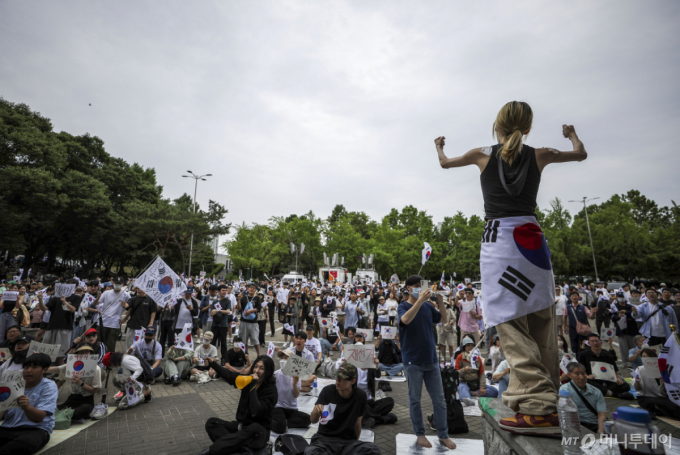
Kim Min-seong (a pseudonym), a 1992-born employee at a major corporation, visited Olympic Park with his wife on June 7. It was the first rally he had voluntarily attended in his life. "Our right to housing has been stripped away, and opportunities have vanished," Kim said. "They (the older generation) bear no responsibility, and now even our voting rights are being infringed upon." He added, "The Republic of Korea today is not the country I have been protecting."
Choi Ji-ye, born in 2001, launched a "movement against violent protests" after violent demonstrations erupted over the issue of converting Dongduk Women's University to a coeducational institution while she was enrolled at the university. Choi stated, "I felt concerned about the way extreme actions were portrayed as representing the opinion of the majority of women." With the goal of serving as a bridge to convey the voices of young people to the political establishment, Choi joined the People Power Party and served as an executive Seon Geo-dae-chaek (Chairman) in the the 3rd local elections. She is currently working as an intern secretary in a National Assembly member's office, gaining experience in real-world politics.
A sense of deprivation among young people, stemming from employment difficulties, housing insecurity, and wealth gaps, is erupting into political action. An increasing number of young people are taking to the streets in protest against unfairness and double standards, or entering mainstream politics. The voting preferences of the youth demographic have long been considered a decisive variable in determining election outcomes, and both ruling and opposition parties have staked everything on courting young voters ahead of the general and presidential elections.

The rally held at Olympic Park, which began immediately after the the 3rd local elections, is frequently cited as an example of spontaneous mobilization among young people. As voices demanding accountability from election management authorities over issues such as a shortage of ballots spread through social media (SNS), young people with no prior experience in rallies also took to the streets. In the early stages of the rally held right after the local elections, participants who volunteered for tasks such as volunteer work attracted attention by emphasizing the guarantee of voting rights and procedural fairness rather than partisan reasons.
Analysts attribute the political participation of the younger generation to the collapse of expectations for fair competition and reward. They note that while securing employment and building assets have become increasingly difficult, the political establishment is more absorbed in factional logic than in addressing the realities of young people's lives. Another interpretation suggests that resentment toward the older progressive generation, long characterized by the phrase "neoronombul" (a double standard of applying rules to others but not oneself), has driven conservative-leaning youth, who had previously refrained from political expression, into action.
This trend is also evident in the voting patterns. In a post-election survey on the the 3rd local elections conducted by Korea Gallup from the 20th to 21 at the request of Money Today's "The 300," 62% of men aged 18 to 29 and 59% of men in their 30s said they voted for Oh Se-hoon, a candidate of the People Power Party. Only 12% of men in their 20s and 27% of men in their 30s reported voting for Jung Won-oh, a candidate of the Democratic Party. Notably, 63% of men in their 20s and 59% of men in their 30s stated that real estate policies influenced their choice of candidate. This suggests that practical issues such as housing prices and living costs played a role in young people's decisions, rather than political slogans.
Youth political participation is not limited to the conservative camp or men. During the political crisis surrounding the the 3rd martial law declaration and the impeachment of President Yoon Suk-yeol Jeon (President), the participation of women in their 20s and 30s at rallies was particularly prominent. An analysis of Seoul’s resident population statistics revealed that on December 14, the day the vote on the impeachment motion took place, approximately 29% of the population in the area around the Yeouido rally demanding impeachment were women in their 20s and 30s. Mobilized through light sticks and online communities, they emerged as a key participating demographic in the impeachment crisis.
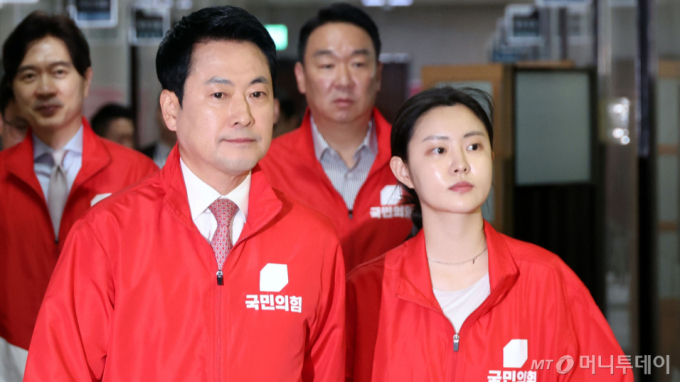
Young people's political activities are also leading to challenges within the established system. According to the National Election Commission, a record-high 810 candidates aged 10 to 30 ran in this year's the 3rd local elections. Of these, 403 won seats in metropolitan and basic-level councils, resulting in an election win rate of 49.7%.
The political establishment is also focusing on developing youth policies with an eye toward the 2028 general election and the 2030 presidential election. The People Power Party launched a Youth Policy Planning Team in September, comprising 233 young participants, and plans to announce its first "Youth Policy Package" in November. The Democratic Party has outlined plans to reflect the voices of young people in policy and legislation through initiatives such as the Youth Future Roundtable and the 1030th Policy Team.
Choi Ji-ye, a former People Power Party Seon Geo-dae-chaek (Chairman) who entered politics around the the 3rd local elections, told MoneyToday The 300 on the 22nd, "For a long time, young people in the political sphere have been consumed as promotional tools rather than being treated as decision-making subjects. I question whether their opinions were substantively reflected in the policy design process." She further emphasized, "For youth politics to function effectively, we need not just leaders who are simply young, but figures who deeply understand youth issues and possess the capacity to translate them into policy."
Average first marriage age is 33.8 years old, but... 8 out of 10 men in their early 30s in Seoul are "unmarried"
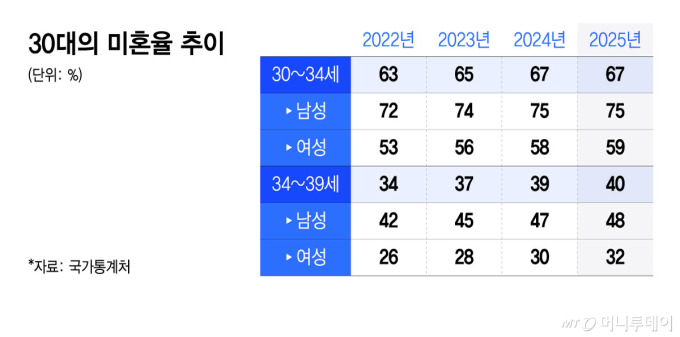
Although the recent birth rate has shown signs of recovery, the threshold for marriage, considered a prerequisite to childbirth, remains high. In particular, as the unmarried rate continues to rise annually among those in their early 30s, an age group generally regarded as the prime time for marriage, concerns over population decline remain very much alive. Demographic experts unanimously agree that it is necessary to create social conditions that enable young people to get married.
◇The "Eco Boom" generation's "ages 30 to 34" bracket has been included, but the never-married rate stands at 67% = According to the National Data Agency on the 24th, the never-married rate (the proportion of people who have never been married) for those aged 30 to 34 (born between 1995 and 1991) last year was 67%, an increase of 4 percentage points (P) in three years since surveys began in 2022. The rate rose by 3 P to 75% for men and by 6 P to 59% for women.
The average age at first marriage in South Korea last year was 33.85 for men and 31.62 for women, but the population of those in their early 30s who remain unmarried is far larger. This reflects a social atmosphere in which getting married has become increasingly difficult as life grows more financially strained. Pointers have been raised that the reality of struggling to pay rent on a monthly salary is driving young people to give up on marriage.
The number of marriages among men aged 30 to 34 last year was 99,000, and for women in the same age group it was 95,000, representing a 13% increase from the previous year for each gender. However, this can be attributed to a base effect. In addition, as the large Echo Boom generation (those born between 1991 and 1995) fully entered their 30s, the population base for the 30th-to-34 age group increased by approximately 53,600 people (1.6%) compared to the previous year.
The unmarried rate was higher in larger metropolitan areas. Among the 17th provinces and metropolitan cities, Seoul had the highest unmarried rate at 77%, with rates of 82% for men and 73% for women, standing out distinctly. Busan ranked second (average 70%, men 77%, women 63%), followed by Gwangju in third place (67%, 75%, 59%) and Daegu in fourth (67%, 75%, 57%). Gyeonggi Province, which has the largest youth population in South Korea, had an average unmarried rate of 65%, ranking sixth, with rates of 73% for men and 56% for women.
In non-metropolitan regions, which are predominantly male in population, the overall unmarried rate was lower than the national average, but there were notable differences between men and women. Gyeongbuk Province had the largest gender gap in unmarried rates at 24 percentage points (74% for men, 49% for women), while Ulsan and Chungnam Province each showed a gap of 23 percentage points. In Ulsan, the unmarried rate was 72% for men and 49% for women, whereas in Chungnam Province, it was 71% for men and 48% for women.
A similar trend is observed among those aged 34 to 39. The single rate for this age group was 40 percent last year, up 6 percentage points from 2022. The rate was 48 percent for men and 32 percent for women. Seoul also had the only single rate exceeding half at 51 percent, with 56 percent for men and 45 percent for women.

◇President also now orders “support for unmarried young people” = Analysis suggests that the annual rise in the unmarried rate is not simply a matter of individual choice, but stems from structural societal causes.
According to a survey conducted by the Korea Institute for Health and Social Affairs (KIHSA) in 2024, titled "Public Awareness and Values on Marriage, Childbirth, and Family" (targeting individuals aged 19 to 49), a higher proportion of respondents indicated they had no intention of marrying. This trend was observed among women, those in their 40s, residents of rural and fishing areas, individuals with lower educational attainment, temporary and daily wage workers, and low-income households. Notably, high-income earners with incomes of 0.6 billion won or more also showed a high rate of responding that they had no intention of marrying.
Among respondents who are unmarried but expressed a desire to marry, the most common reason for not yet being married (based on top-priority responses) was "unable to find a suitable partner," cited by 43.2%. This was followed by "unable to secure housing costs" at 20% and "unable to secure employment" at 19.5%.
Kim Eun-jung, a research fellow at the Korea Institute for Health and Social Affairs (KIHSA), analyzed that while the issue may appear on the surface to be related to individual choice, it is in fact the result of complex interactions between reduced opportunities for meeting potential partners and the social and economic conditions surrounding marriage. She noted that high housing prices and the burden of living costs in metropolitan areas are acting as economic barriers to entry.
President Lee Jae-myung also stated at the “Population Strategy Vision Declaration Ceremony” on the 14th, “The burden of child-rearing is not an issue for one person who marries and has children,” adding, “It would be good to listen to the stories of those who cannot get married or are hesitating about having children.” He further emphasized, “(Marriage and childbirth) have become a national task rather than individual choices,” urging that “the social community should (consider what it) should take responsibility for.”
Lee Sang-rim, a senior researcher at the Population Policy Research Center of Seoul National University, stated, "If eliminating marriage barriers has been a remarkable policy achievement so far, it is now time to support young people who are considering marriage." He added, "While the echo-boom generation remains in their 30s, multi-faceted support, including employment and regional revitalization measures, is needed."
Low Income, High Debt: Young People Losing the Ability to Repay
A (27), who graduated from university and is preparing for employment, carries a 130 million won student loan from the Korea Student Aid Foundation. Although he earned approximately 0.1 billion won per month through part-time work at a cafe, 600,000 won went toward rent and management fees. After deducting food and transportation costs, almost no money was left for job preparation. He ultimately took out a 50 thousand won credit loan from a savings bank to cover academy fees, qualification exam application fees, and insufficient living expenses. He believed he could repay the loan once employed, but his job search lasted more than one year. As he reduced part-time work hours to prepare for interviews and exams, his monthly income dropped to around 800,000 won. After paying rent and living expenses, he lacked sufficient funds to repay the savings bank loan and eventually defaulted on a portion of the installment payments. Before receiving his first paycheck, his debt had already exceeded 20 million won.
Like the case of Person A, loans taken out to secure housing after completing education and finding employment are hindering young people’s financial independence. Data show that among loan borrowers in the youth demographic, the proportions of multiple debtors and low-credit-score individuals are higher than those in the middle-aged and older demographics, and the rate of long-term delinquency is rising more rapidly than in other age groups.
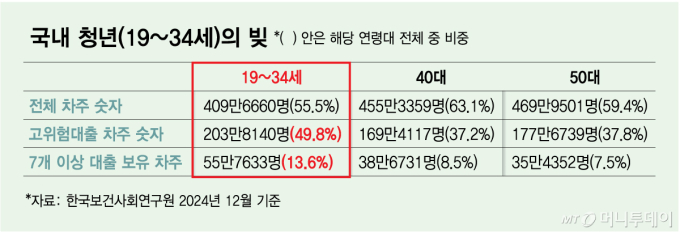
According to the Korea Institute for Health and Social Affairs on the 24th, as of the end of 2024, 4,096,660 young people aged 19 to 34 held loans, accounting for 55.5% of young people with credit information records. In particular, among those holding loans, 2,411,587 (58.9%) were multiple debtors carrying two or more loans, while 557,633 (13.6%) had seven or more loans.
Young people not only carried multiple debts but also had low credit scores. Among young borrowers, the number of low-credit individuals with a credit rating of Grade 7 or lower reached 2,038,140 (49.8%). In particular, this ratio reached 60.7% among those aged 19 to 29. This is up to 25 percentage points higher than the rates for those in their 40s (37.2%), those in their 50s (37.8%), and those aged 60 and older (35.8%).
The bigger problem is that the delinquency situation among young people is deteriorating rapidly. The share of low-credit borrowers among youth expanded from 49.3% (1,987,989 people) at the end of 2020 to 49.8% (2,038,140 people) at the end of 2024. This contrasts with other age groups, where the proportion of low-credit borrowers declined over the same period: from 39.0% to 37.2% for those in their 40s, from 38.4% to 37.8% for those in their 50s, and from 38.1% to 35.8% for those aged 60 and above.
The increasing number of young people taking out loans and experiencing payment delinquency is interpreted as a result of rising prices coupled with delayed employment. According to real estate platform Dabang, the average monthly rent for a one-room apartment in Seoul's 10 major university districts, based on a deposit of 0.1 billion won, rose from 514,000 won in January 2023 to 622,000 won in January this year, an increase of approximately 21% over three years. In contrast, the Ministry of Employment and Labor reported that the average period it takes for university graduates to secure their first wage-earning job increased from 10 months in 2020 to 11.5 months in 2024.
As a result of these circumstances, policy financing aimed at young people with relatively low interest rates or unstable incomes has gained traction, but the number of cases in which borrowers are unable to repay even policy loans is also on the rise.
The subrogation rate for the Hetsaron Youth low-interest policy loan, which is a policy loan targeted at young people and refers to the proportion of cases in which the guarantor repays the bank on behalf of borrowers who fail to repay their loans, rose from 4.8% in 2022 to 9.4% in 2023, 12.7% in 2024, and 13.6% in 2025. Among the policy-based housing mortgage loan known as Bogijamaron, the number of new delinquent low-income young borrowers also increased from 16 in 2023 to 103 in 2024, and 234 last year. This year, 282 people fell into delinquency between January and May alone, surpassing the annual total of the previous year.
Financial authorities are expanding funding support and financial counseling to prevent young people from giving up on their independence due to debt burdens. In March, the authorities launched the "Youth Future Bridge Loan," which provides loans of up to 50 thousand won at an annual interest rate of 4.5% to unemployed or early-career youth who meet specific low-credit and low-income criteria. The loan limit for operating funds under the Microfinance program for self-employed youth aged 34 and under was also increased from 20 million won to 30 million won. Starting in July, a system has been established to provide more than 100,000 customized financial counseling sessions annually, expanding access to such services for anyone between the ages of 19 and 34.
A financial industry official stated, “Policy loans are necessary to meet the urgent funding needs of young people, but if they are not backed by stable income, the burden of repayment will inevitably remain.” The official added, “We must support them in increasing their repayment capacity through high-quality employment while also providing financial education and tailored financial counseling before they enter society, so that they can borrow and repay in line with their income.”

 in ECONOMY


