

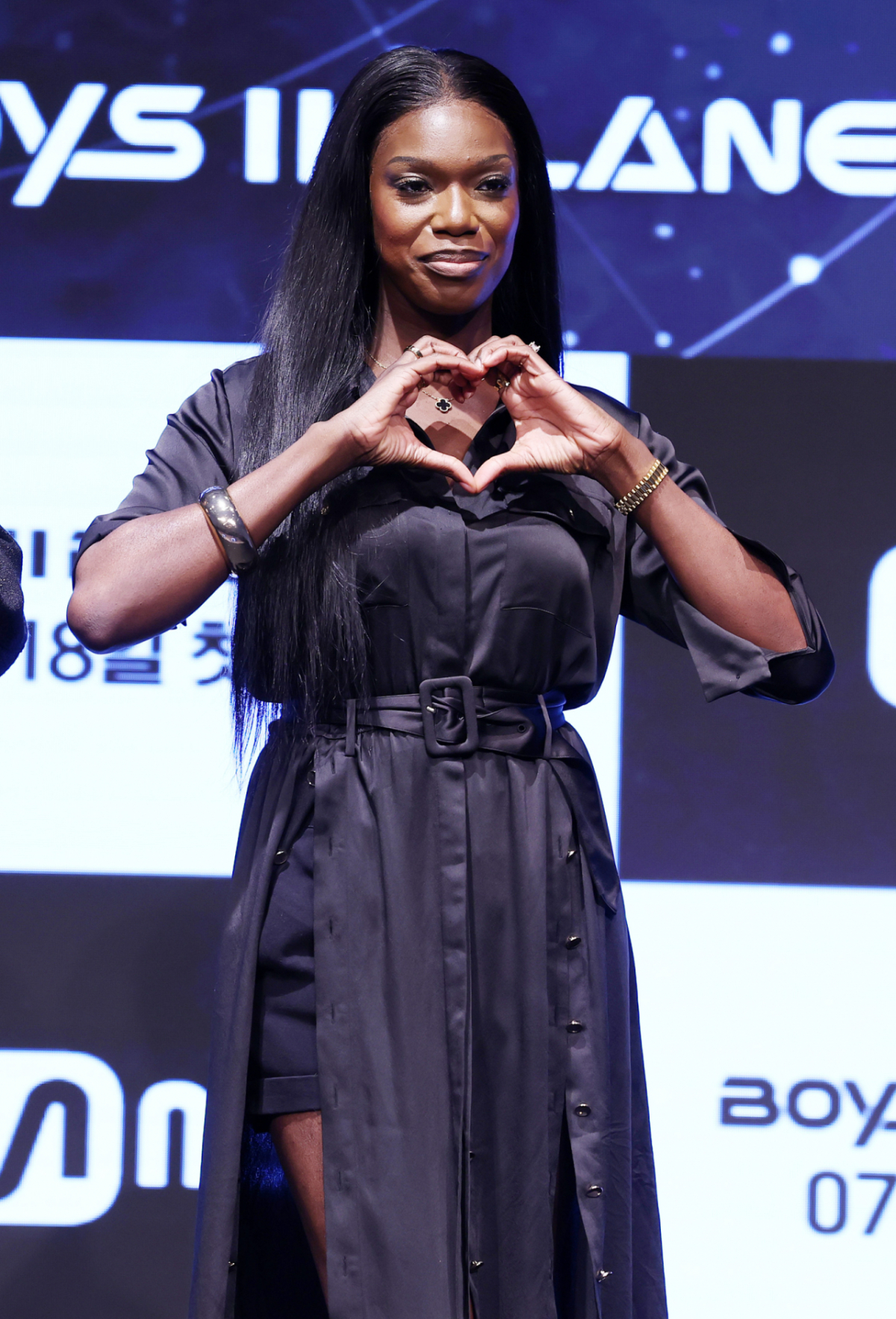
French choreographer and dancer Kany, 40, has apologized following controversy over remarks criticized as racially insensitive.
On Nov. 10, Kany posted an apology on social media, saying, "I sincerely apologize to everyone who was hurt or offended by my remarks in a recent YouTube video."
A video uploaded to Kany's YouTube channel on Nov. 4 showed her visiting a wholesale fruit market where her husband had worked for 10 years and trying her hand at the job.
When asked what kind of fruit she liked, Kany replied, "Honestly, I think all Black people like watermelon. Black people like watermelon, chicken and Fanta." The video also featured an on-screen caption reading "Black soul food."
After the video was released, some viewers criticized her remarks, saying they could reinforce racial stereotypes. In the United States, watermelon and fried chicken have historically been used to mock and demean Black people.
The stereotype surrounding watermelon dates back to the period following the abolition of slavery in the late 1860s. Some Black Americans began growing and selling watermelons as a means of supporting themselves. White opponents of emancipation subsequently used the phrase "Black people love watermelon" in a derogatory manner, perpetuating the stereotype to this day.
Fried chicken has also become associated with racial stereotypes. One longstanding misconception holds that plantation owners in the American South ate only the meatier parts of chickens, while frying less desirable, bony parts such as necks, wings and legs for enslaved Black people.
In response to the criticism, Kany apologized, saying, "I understand that the combination of watermelon and fried chicken carries a painful history tied to racial stereotypes in the United States. I regret that my remarks may have caused hurt."
Kany, who was born and raised in France and is of Senegalese descent, said she was proud of her roots and identity.
"My cultural experiences are not necessarily the same as those of Black Americans. Black people are not one homogeneous group," she said.
She went on to explain, "In Senegalese culture, watermelon is an everyday fruit, and chicken is an important ingredient in Senegalese cuisine. Fanta is also a familiar drink in many African households."
Kany added, "When I mentioned these three things as a joke, I was referring to cultural elements that are familiar to me. I was not consciously referring to racist stereotypes in the United States. I had no intention of creating further divisions between African and African American communities."
She also clarified that the phrase "Black soul food" in the video caption had been added during the editing process. However, she acknowledged that her own wording had contributed to the controversy.
"I recognize that expressions such as 'we' and 'all' could have sounded as though I was generalizing about all Black people," she said.
Concluding her apology, Kany said, "As a Black woman working in the Korean entertainment and broadcasting industries, I understand that I have a responsibility that comes with being seen as someone who represents others. Going forward, I will be more careful about how my words may be received across different cultures."
The controversial segment has since been removed from the YouTube video.

 in ENTERTAINMENT
