

[For more diverse corporate information on the startups mentioned in this article, visit Unicorn Factory's Big Data Platform 'Data Lab'.]
"Government-funded research institutes offer organizational stability, but their lack of adaptability left me feeling frustrated in a rapidly changing world centered on AI (artificial intelligence)."
A person has joined a new space startup after leaving his position at the Korea Ocean Research & Development Institute (KORDI), where he was guaranteed retirement at age 70. He is recognized as a leading authority in the space sector who led the development of Cheollan, the world's first geostationary ocean observation satellite, and shared expertise on satellite data processing technology with NASA (U.S. National Aeronautics and Space Administration).
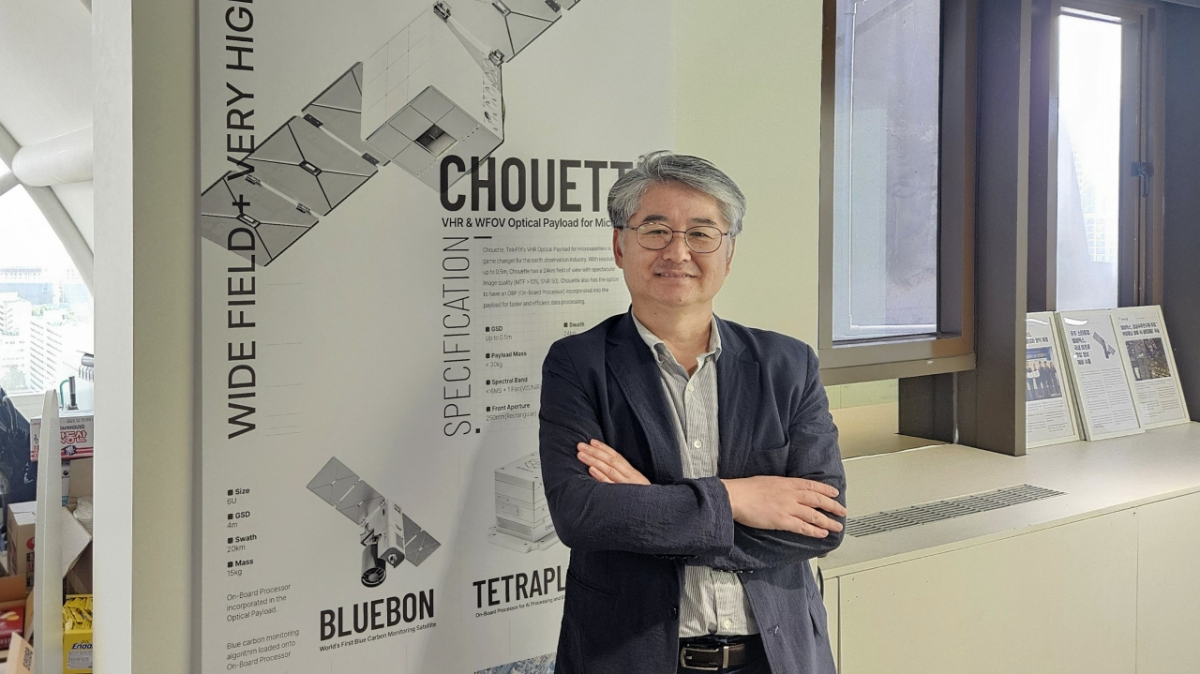
This is the story of Director Park Young-je (60), who currently serves as CRO at the satellite AI solutions company Telefix, leading the Institute for Future Innovation Technologies. Regarding his decision to join Telefix, he stated, "Rather than waiting for retirement, I wanted to directly experience and actively engage with AI technologies in the field." He added, "Entrepreneurial concerns are handled by other experts, allowing me to focus solely on advancing technology, which is extremely enjoyable."
Development of 'Optical Satellite Atmospheric Correction Technology' That Penetrates Clouds and Smoke
Director Park graduated from the Department of Physics at Seoul National University and earned both master's and doctoral degrees in optics from the Korea Advanced Institute of Science and Technology (KAIST). From 1998, he worked as a researcher at institutions including Japan Aerospace Exploration Agency (JAXA), Royal Belgian Institute for Natural Sciences (RBINS), and Commonwealth Scientific and Industrial Research Organisation (CSIRO) in Australia, handling remote sensing and satellite data-related tasks. In 2011, he joined the Korea Ocean Research & Development Institute as a senior researcher, holding key positions such as Director of the Ocean Satellite Center and Head of the Physics Research Division before rising to Deputy Director.
Director Park's research philosophy is "precise understanding and thorough verification." He shared an example from his time in Australia where he accidentally captured floating marine debris invisible to visible light by analyzing infrared signals, subsequently developing an algorithm for it. He remarked, "Satellite data reveals only as much as one knows."
He also recounted his experience collaborating with officials from the Ministry of Oceans and Fisheries to develop a 'red tide detection algorithm' that no one had attempted before. He stated, "I feel the greatest pride as a researcher when I can provide clear solutions to socially pressing problems using accumulated knowledge."
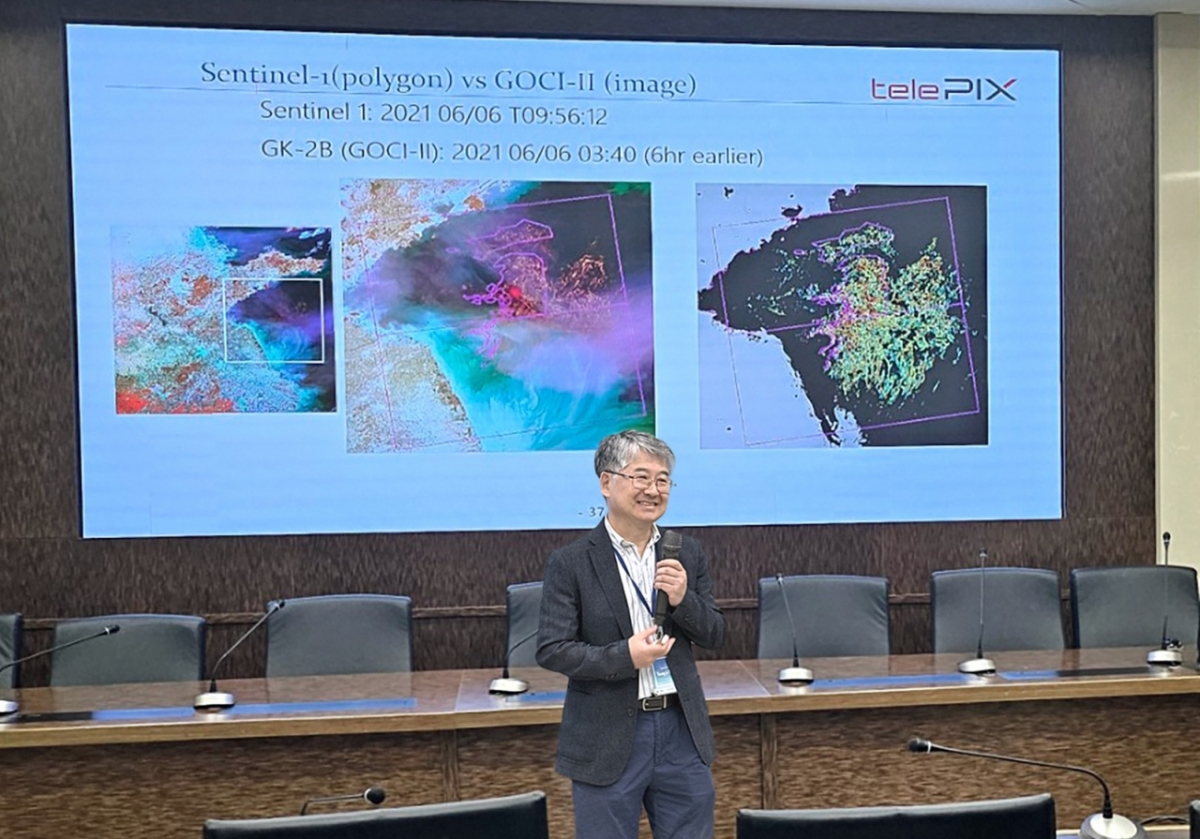
Joined as Telefix's CRO in 2024, Director Park is leading satellite data research. Last year, he commercialized 'optical satellite atmospheric correction technology,' becoming only the second globally after Airbus Europe. While conventional optical satellite imagery suffers from low analytical accuracy due to weather conditions, this technology restores surface information close to its original state by penetrating clouds and smoke.
Director Park noted, "As climate and environmental risks continue to grow, demand for high-quality, reliable Earth observation data is increasing," adding, "We plan to expand our global business based on atmospheric correction technology."
"Core of New Space: Ultra-Small Satellites and AI"
As the 'New Space' era, where private enterprises lead space development and industry beyond government leadership, officially begins, Director Park defines the core of New Space as the combination of 'ultra-small satellites' and 'AI.'
He explained, "Large satellites require budgets in the hundreds of billions of won and long development periods, whereas ultra-small satellites can be launched within three years at costs of tens of billions of won, offering limitless opportunities for private companies."
In particular, Telefix's AI technology is expected to further expand these opportunities. Director Park stated, "Telefix's developed 'SatCHAT' summarizes and provides complex satellite information in human language, enabling anyone—even non-experts—to easily utilize satellite data."
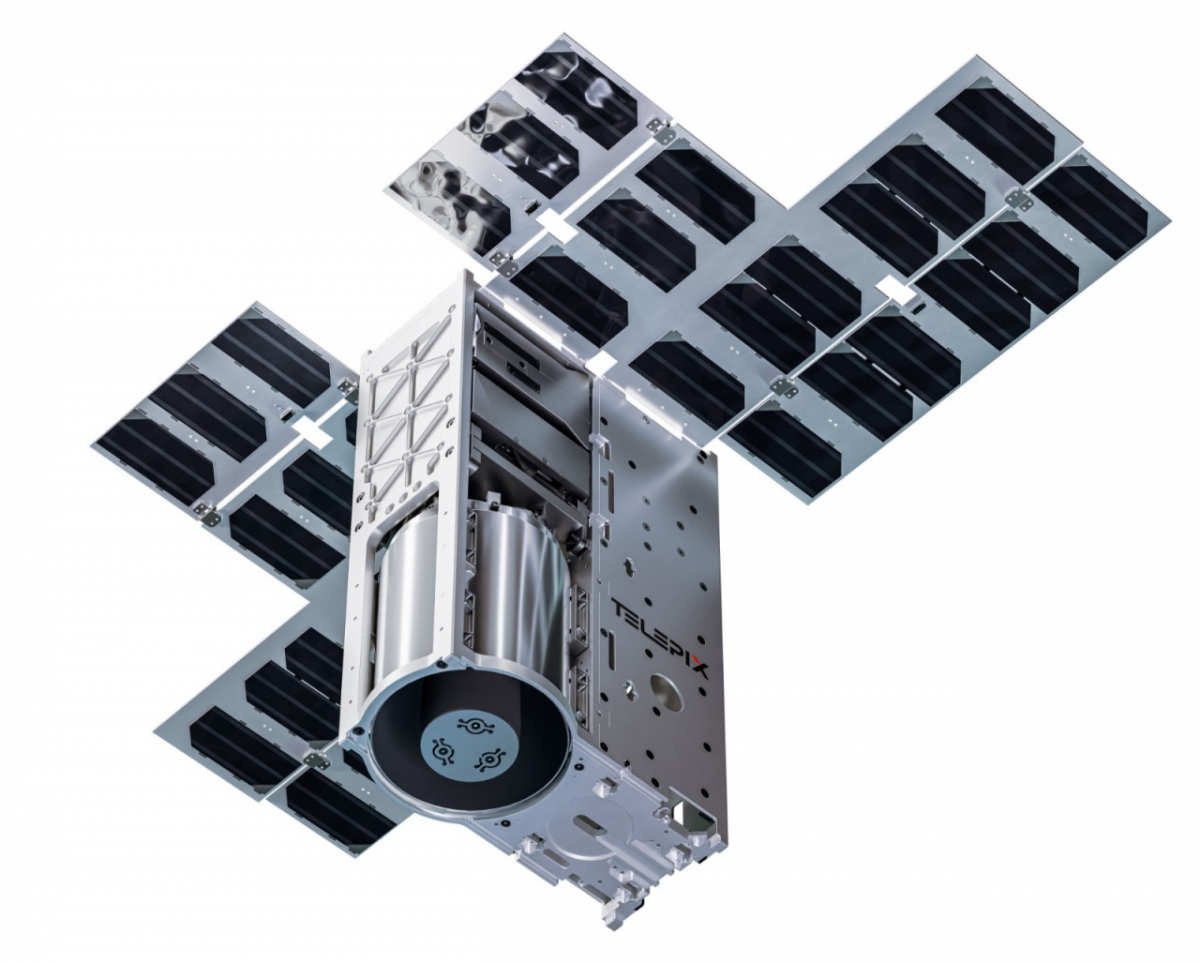
Currently, beyond SatCHAT, Telefix has established diverse business models covering the entire space industry cycle, from hardware manufacturing to satellite data analysis. These include sales of the satellite AI processor 'TetraFlex' and environmental/climate monitoring via the blue carbon (marine ecosystem carbon absorption) observation satellite 'BlueBON.'
BlueBON is a 6U-class (ultra-small) satellite designed to capture approximately 4.8-meter resolution high-definition images. Comparisons with actual space imagery and 1.5-meter resolution images from 16U-class CubeSats (25kg) sold by existing overseas companies indicate that BlueBON's image quality is superior.
Director Park urged the government to play a catalytic role in the market rather than focusing solely on large national projects, enabling private entities to develop their own technologies. He emphasized, "If even one-third of the budget allocated for large satellites were invested in the ultra-small satellite market, South Korea's industrial competitiveness would grow dramatically."
[MoneyToday startup media platform 'Unicorn Factory']

 in FUTURE


