

[For more diverse company information on the startups mentioned in this article, please visit the Unicorn Factory big data platform 'Data Lab'.]
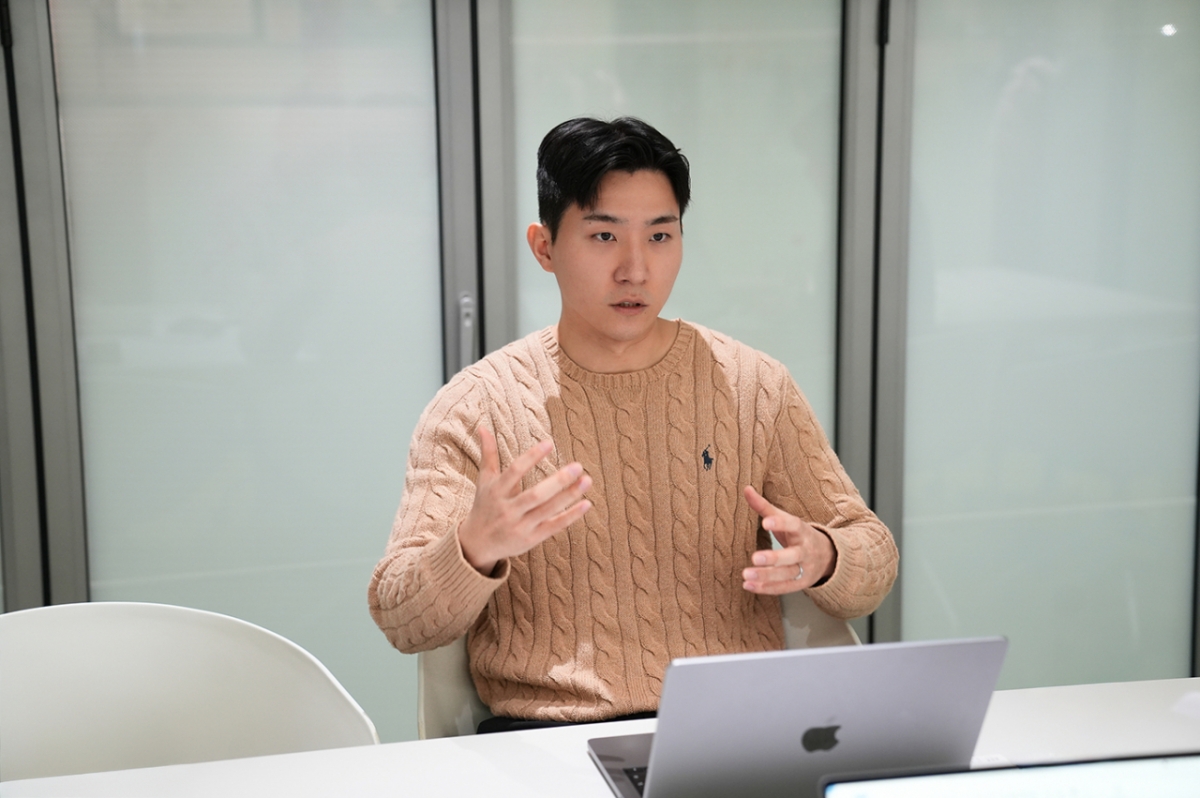
"When we visited an MIT lab, everyone initially thought we were there to recruit from Korea. It was reportedly the first time a Korean venture capital (VC) reviewer had traveled all the way to a university to meet with PhD-level researchers who hadn't even started a company yet."
While many domestic VCs claim to pursue global investments, it is rare for them to personally knock on the doors of university research labs in the U.S. to identify 'prospective entrepreneurs.' Shin Jeong-ho, Senior Reviewer at Kakao Ventures, made an unusual move by traveling between San Francisco, Boston, and Los Angeles immediately after the COVID-19 pandemic to visit various university research labs.
He is known as a global pioneer within Kakao Ventures. Working closely with Kim Gi-jun (CEO), he leads the firm's global deep-tech investment strategy. Shin stated, "I believe the essence of early-stage investment ultimately lies in following 'talent.' If we find the smartest and most resilient (Grit) individuals, we should seek them out not only in Korea but anywhere in the world."
MIT and Caltech: Starting from scratch... First, look for 'promising young talent'
Over the past three years, he has intensively visited prestigious engineering universities such as Stanford University in San Francisco, MIT and Harvard University in Boston, and Caltech (California Institute of Technology) in Los Angeles. Shin explained, "During the investment winter around 2022, after much deliberation, I concluded that we should focus on Korean scientists in STEM fields conducting research abroad. If these individuals enter industry or launch startups, they could become key investment connection nodes."
A representative investment case emerging from the network he built through hands-on efforts is 'Wecover,' an LLM (large language model) solution company targeting the U.S. financial market. Founded by Choi Chang-yeol (CEO), a MIT PhD graduate, the company is expanding its foothold based on technology that meets the stringent regulatory and security standards of the global financial sector.
In addition, Kakao Ventures has successively identified startups with global competitiveness, including FS2, a semiconductor technology company led by an MIT research team, and Magendo, a robotic surgery firm involving researchers from both MIT and Harvard.
Shin joined Kakao Ventures in 2020 and is now in his sixth year as a reviewer. Having focused primarily on investing in early-stage companies, he has yet to achieve any exits so far. However, he highlighted 'SolverX' and 'Config Intelligence' as portfolios with particularly high growth potential. Both share the commonality of solving industrial problems based on AI (artificial intelligence) technology.
SolverX provides simulation (CAE) solutions that allow testing component durability in virtual environments when designing vehicles or aircraft. Shin explained, "SolverX has already generated revenue through partnerships with five major South Korean conglomerates and is receiving love calls from the U.S. and Japan."
The other mentioned robot AI company, Config Intelligence, is a team comprising global talents including Professor Seo Min-jun of KAIST (Korea Advanced Institute of Science and Technology), former Google Brain researchers, and ex-Waymo employees. Shin expressed his expectations, stating, "They are developing an AI model for robots capable of performing diverse tasks without hardware constraints."
U.S. deep-tech investment: South Korea's 'manufacturing ecosystem' as a competitive edge
Shin identified 'South Korea's industrial infrastructure' as the key differentiator that domestic VCs can leverage in overseas investments. He explained that connectivity with a dense industrial ecosystem, including manufacturing and finance, can become a genuine competitive advantage.
He noted, "Just as thinking of Israeli startups immediately brings to mind strengths in IT security, South Korea also holds clear comparative advantages in specific industries such as semiconductors." He added, "What local startup teams want most is a practical collaboration network." He also emphasized the need to strategically utilize South Korea's geographical and industrial standing amidst the global hegemony competition.
Shin stated, "In deep-tech areas such as space, robotics, and semiconductors, the only countries besides China and Russia that U.S. firms can partner with are limited to South Korea, Japan, and Australia." He continued, "U.S. startups expect collaboration opportunities with large corporations like Samsung Electronics, Hyundai Motor, and Hanwha, as well as connections to manufacturing infrastructure. Therefore, a network capable of linking them is most important."
Even Oligo Space, a newspace startup he invested in, reportedly found it impressive that during his visit to South Korea, he met both private space companies and government institutional investors. He said, "Our role is to help startups aim for the global market from Day 1 of their founding by leveraging the infrastructure South Korea possesses."
[MoneyToday startup media platform Unicorn Factory]

 in FUTURE
