

[For more diverse corporate information on the startup featured in this article, please visit DataLab, the big data platform of Unicorn Factory.]
As the era of a privately driven New Space has arrived, competition to secure a leading position in the space market is becoming increasingly fierce. Rockets carrying payloads such as satellites are being launched somewhere on Earth almost every day. As objects orbiting the Earth, including satellites, surge in number, the risk of collision is also growing. Just as aircraft fly safely with the help of air traffic control systems, it is now an era when a 'control tower' that monitors the movements of satellites and space debris is needed in space.
U.S. space situational awareness (SSA) company LeoLabs is turning its attention to Korea. The company believes that demand for space safety management will increase in Korea, which has its own launch vehicle and satellite development capabilities, and is seeking cooperation with government agencies and private enterprises.
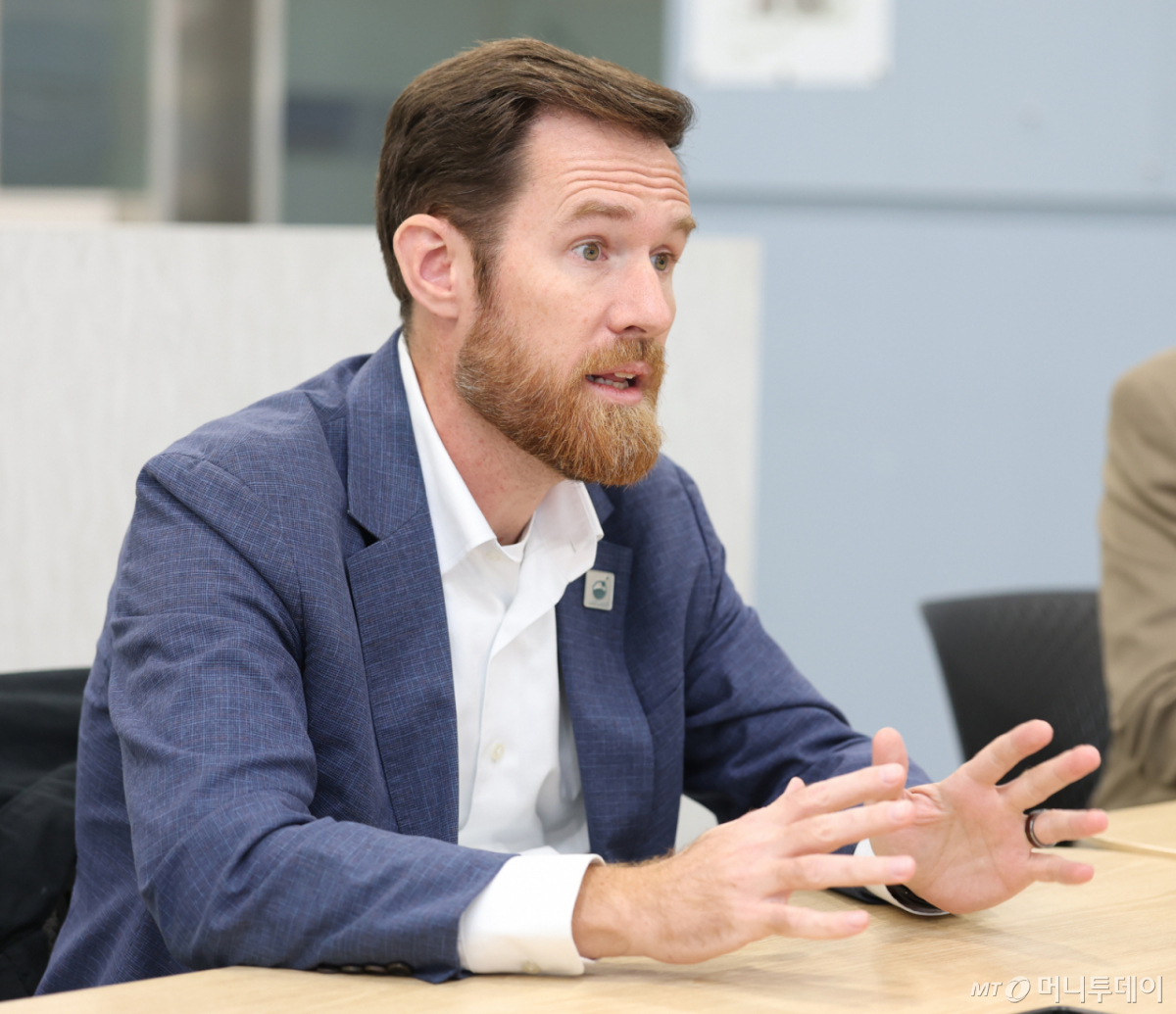
Daniel Ceperley, Co-Founder and Chief Operating Officer (COO) of LeoLabs, stated in a recent exclusive interview with MoneyToday's startup media platform 'Unicorn Factory,' "The second space race is accelerating, but innovation in the space industry is not happening in every country," adding that "Korea is one of the major innovation hubs equipped with its own launch vehicle and satellite development capabilities, as well as a startup ecosystem." This is the first time Ceperley, who visited Korea from the 26th to the 30th of last month, has conducted an exclusive interview with domestic media.
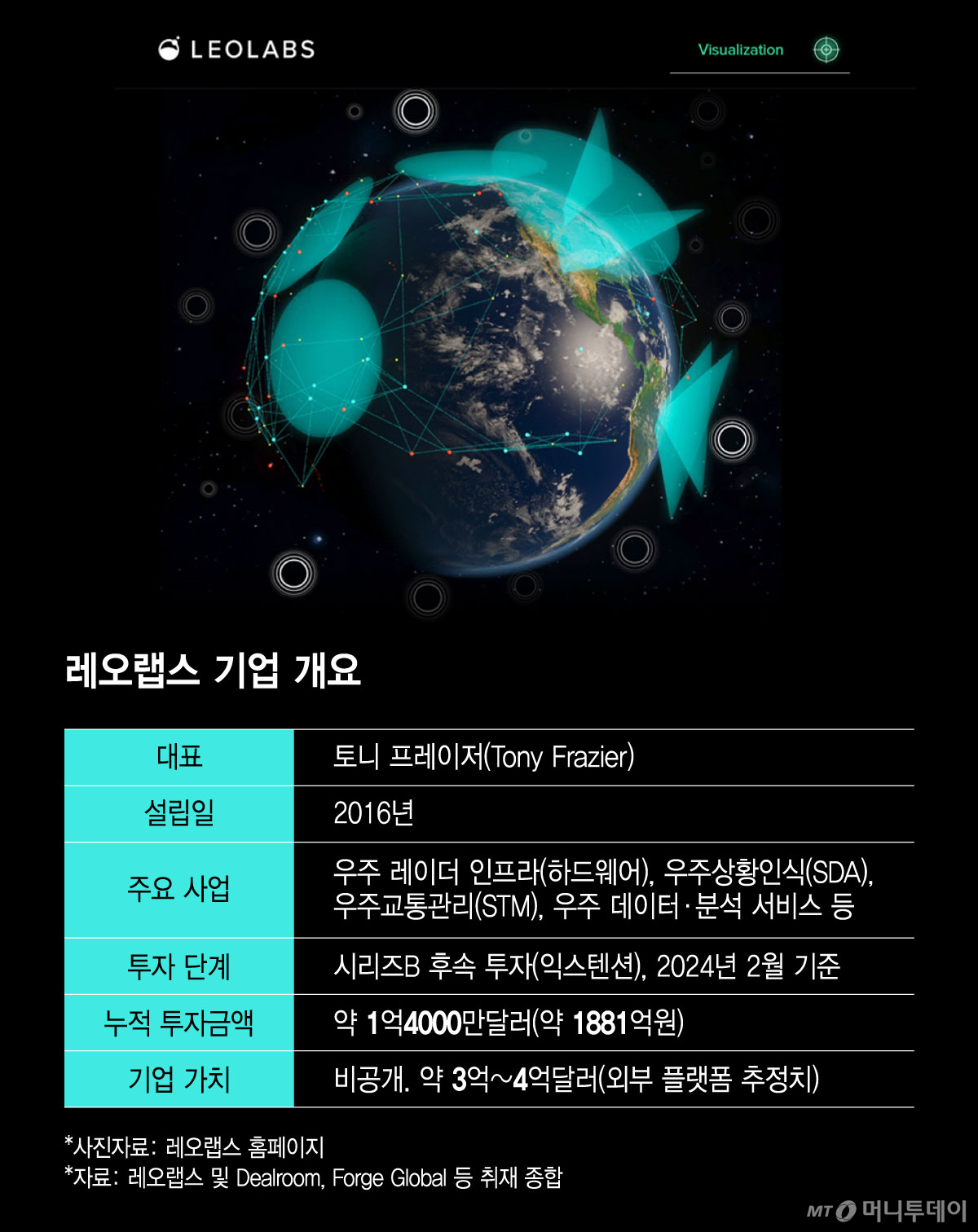
Founded in 2016, LeoLabs is a company that builds its own radar networks around the world to track low Earth orbit (LEO) satellites and space debris. The company analyzes data collected by radar to determine the location, trajectory, and collision risk of space objects, providing this data as a subscription-based service to satellite operators and government agencies. It also supplies hardware, including self-developed radar equipment. According to the company, contracts for radar equipment scheduled for delivery next year account for over $100 million (approximately 140 billion won) of its total orders this year.
LeoLabs' data is already being utilized in domestic space safety management. The Korea Aerospace Research Institute received more than 600,000 pieces of satellite close-approach data from the U.S. Space Force and LeoLabs last year. The institute uses this observation information to monitor collision risks for domestic satellites and lunar exploration probes around the clock.
LeoLabs is exploring ways to expand its scope of cooperation in Korea, including building a radar observation network and providing space activity analysis services. Previously, at the 'Space Situational Awareness Now Forum 2026' held at the National Assembly in June, Ed Lu, Co-Founder and Chief Technology Officer (CTO) of LeoLabs, attended and expressed his willingness to cooperate with the Korean government, military, and private sector. At the time, key tasks presented included building space surveillance radar, AI-based analysis of space objects, and establishing a data-sharing system among the private sector, government, and military.
COO Ceperley explained that during this visit to Korea, he is conducting follow-up consultations with domestic space industry stakeholders to concretize the cooperation plans discussed in June.
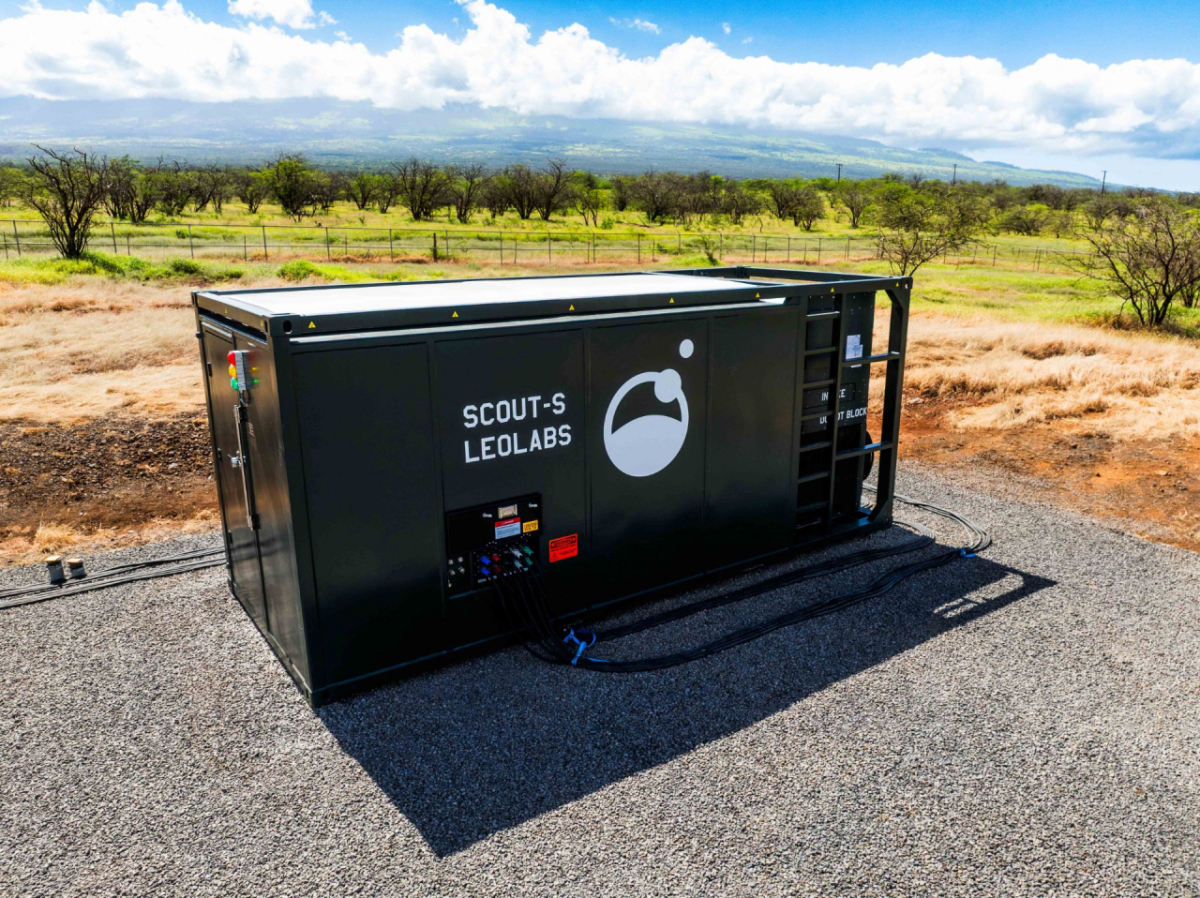
Future cooperation options include the deployment of LeoLabs' new radar 'Scout S' and its AI-based space activity analysis platform 'Delta.' This involves installing Scout S in Korea to expand the space object observation network, or using Delta to provide domestic institutional investors and companies with space activity analysis information, such as satellite orbital changes and close maneuvers by other satellites.
While stating that "nothing has been finalized yet," COO Ceperley said, "We are keeping all possibilities open, from radar installation to providing data on satellite close maneuvers."
LeoLabs has also completed local hiring for its business expansion in Korea. COO Ceperley stated, "Our services can help the growth of Korea's space industry, and the more we support new satellite launches, the more LeoLabs' business will grow together," adding, "We hope to announce a concrete partnership with Korea as early as next year."
Suspicious Approach by Russian Military Satellite Captured... Expanding Scope to Space Security
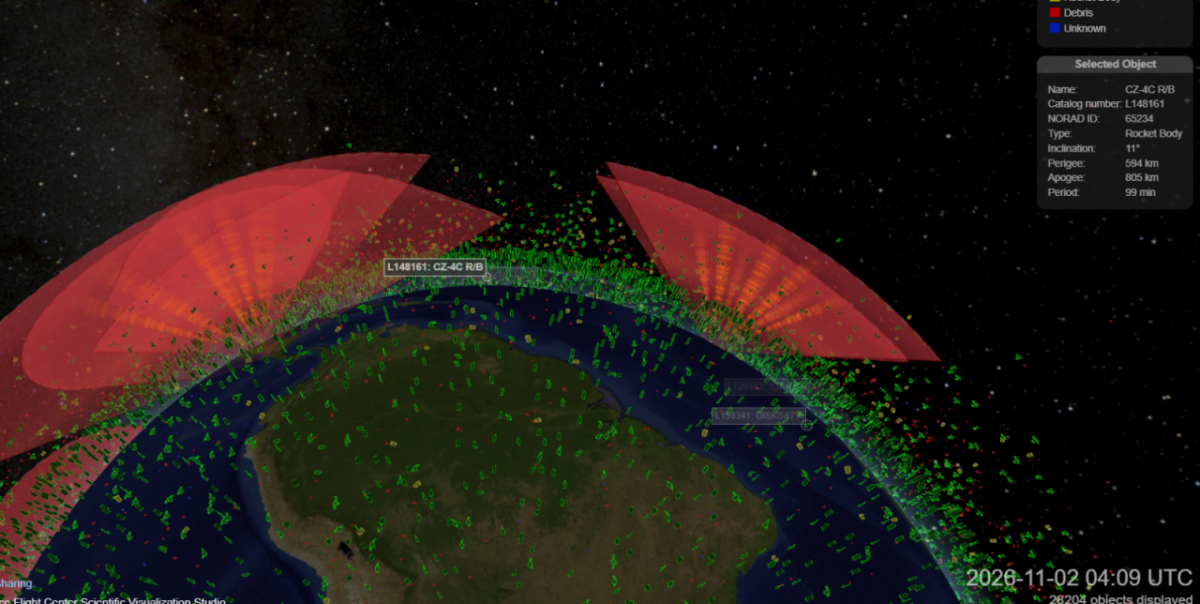
COO Ceperley revealed that Korean government officials are showing particular high interest in LeoLabs' 'Delta.' Delta does not merely track the location and trajectory of satellites; it also detects unusual movements, such as abnormal orbital changes or close maneuvers toward other satellites. When signs of anomaly are detected, it provides warning notifications to users.
A representative recent case is when Russian military satellite 'Cosmos-2612' approached Finnish space company ICEYE's Earth observation satellite 'ICEYE-X36' to within approximately 500 meters. ICEYE is a company that provides satellite imagery information to the Ukrainian military. LeoLabs tracked the movements of the Russian military satellite as it made fine adjustments to its orbit to maintain close proximity. However, the specific purpose of the Russian military's approach has not yet been confirmed.
COO Ceperley explained, "We have never seen such a movement where a government satellite chases a private satellite," adding, "As the maneuvering capabilities of satellites have become more advanced recently, movements that were previously unseen are emerging."
To track such increasingly complex space activities and security threats, LeoLabs is also expanding its radar observation network. The new radar 'Scout S,' unveiled in June this year, focuses on reducing the time and cost of building the observation network through mass production. Unlike existing large radars, it does not require large-scale construction work and can be transported in container form, allowing for quick and inexpensive installation.
COO Ceperley stated, "Just as mass production of satellites has transformed the space industry, we are applying the same approach to space traffic management infrastructure," adding, "We aim to mass-produce radars to expand our observation range in response to the surging number of satellites."
COO Ceperley compared the necessity of SSA technology to air traffic control systems. Just as aircraft determine their location and trajectory through control radar, a system is needed in space to track the movements of satellites and space debris and manage collision risks.
He emphasized, "People are excited about rocket launches when they think of the space industry, but for this industry to grow sustainably, foundational technologies like SSA must definitely support it," adding, "LeoLabs' goal is to become a 'global space control tower' responsible for global space traffic and satellite safety."
[MoneyToday startup media platform Unicorn Factory]

 in FUTURE


