

[For more diverse company information on startups mentioned in this article, visit the Unicorn Factory big data platform 'Data Lab'.]
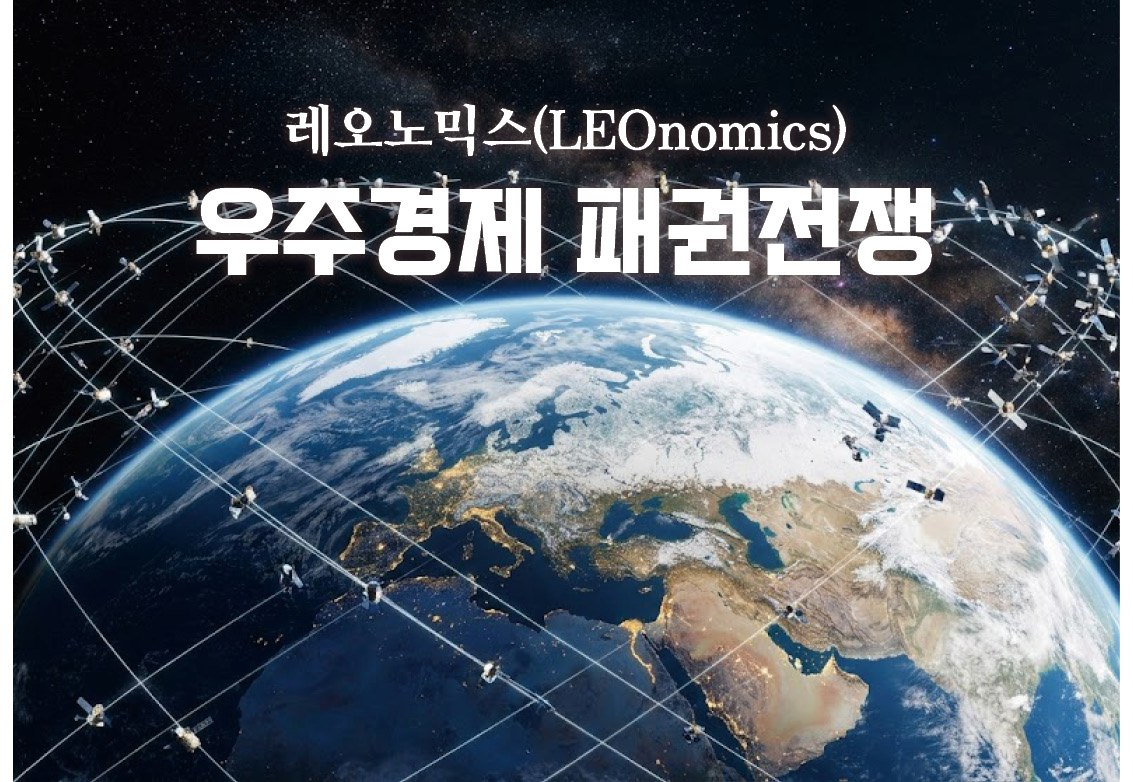
Major global powers including the United States and China are waging a territorial war over the "low Earth orbit (LEO)" space market at altitudes of 160–2,000 kilometers above Earth. SpaceX in the U.S. has dramatically reduced launch costs through reusable rockets, prompting it to view space—not merely as an exploration domain but as a platform directly tied to economic hegemony—and enter the race to secure dominance.
According to an analysis by MoneyToday's startup media platform "Unicorn Factory," which synthesized data from major global investment banks (IBs) including McKinsey, the World Economic Forum (WEF), NovaSpace, and Bank of America, the global low Earth orbit market grew 163% in just five years, rising from $26.8 billion (approximately 39.3 trillion won, per Hanwha) in 2020 to $70.5 billion (approximately 103.4 trillion won) last year. This growth stands out compared to the overall space market, which expanded by only 52.2% during the same period—from $446.7 billion (approximately 654.9 trillion won) to $680 billion (approximately 996.54 trillion won). For the first time last year, low Earth orbit accounted for over 10% of the total space market.
Projections are even more striking. Major institutional investors forecast that the global low Earth orbit market will grow to $250 billion (approximately 366.63 trillion won) by 2030, $750 billion (approximately 1,099.9 trillion won) by 2040, and 1.35 trillion won (approximately 1,979.8 trillion won) by 2050. They project that low Earth orbit's share of the total space market will reach 25% in 2030 and exceed 50% after 2040. This indicates a rapid shift in the center of gravity of the space economy from geostationary orbit (approximately 36,000 kilometers above Earth; Geostationary Earth Orbit; hereinafter GEO)—which suffers from longer signal delays and higher launch costs—to low Earth orbit.
The most commercially active sector within the low Earth orbit market is satellite communications. SpaceX in the U.S. effectively monopolizes this market, with Amazon of the U.S. now chasing. China is seeking to expand its foothold through a national-level "Space Silk Road" strategy. Expansion is also rapid in bio and manufacturing sectors leveraging space's microgravity environment. Additionally, the "orbital services" market—enabling efficient operation of space assets including satellite refueling and repairs—is growing.
The rapid growth of the low Earth orbit market stems from governments and private companies worldwide launching satellites competitively. Recognizing that low Earth orbit—with limited frequencies and altitudes—is a first-come, first-served territory where the first to plant the flag secures ownership, they are pursuing aggressive expansion strategies. According to the International Telecommunication Union (ITU) and the U.S. Federal Communications Commission (FCC), as of February this year, the United States leads overwhelmingly with 12,094 active satellites. China (1,235), the United Kingdom (662), the European Union (510), and Japan (216) follow. South Korea's number of active satellites remains below 50.
The gap between nations in satellite launch applications—a key indicator for future low Earth orbit dominance—is widening further. Led by SpaceX, the United States has already applied to launch 1.15 million satellites. China has announced plans to launch 203,000 satellites and is preparing to catch up. Next are the United Kingdom (7,200), the European Union (2,100), and Japan (1,800). South Korea's figure is estimated by industry sources at fewer than 300. This explains why experts advise that South Korea must fundamentally transform its space industry structure.
Unicorn Factory's "Future Industry Report" No. 16 shines a light on the rapidly growing low Earth orbit space industry. It analyzes how large this market has become, why it is growing, and which technologies and companies are gaining attention. The report also includes recommendations on the current state of South Korea's space industry and its future direction, along with coverage of promising space-related startups with high growth potential.
To access the full version of the Future Industry Report: mobile users can scan the QR code; PC users should click the link () and download.

[MoneyToday startup media platform Unicorn Factory]

 in FUTURE

