

[For more diverse corporate information on the startups mentioned in this article, please visit the Unicorn Factory big data platform 'DataLab'.]
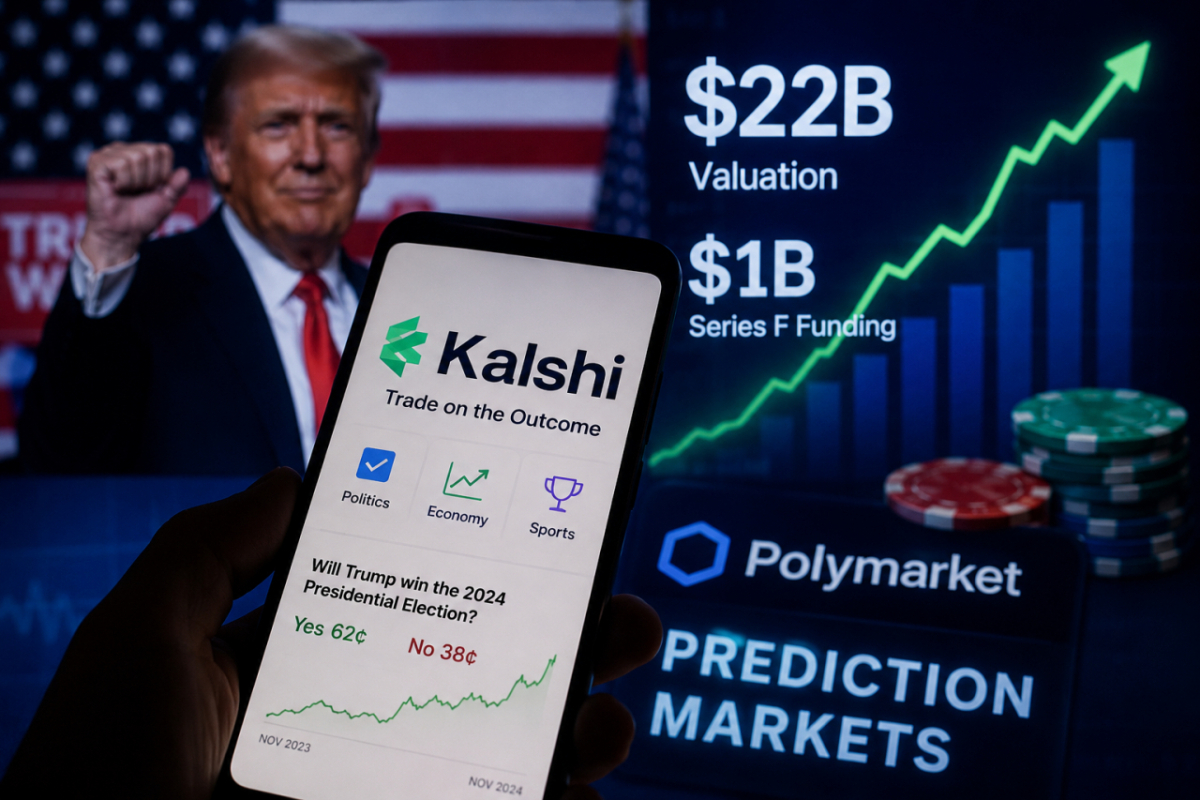
Large amounts of capital are flowing into U.S. prediction market platforms that forecast the outcomes of future events across politics, economics, sports, and other fields, treating them like financial products for trading. In particular, Kalshi has seen rapid growth after successfully predicting Donald Trump's 2024 presidential election victory, doubling its valuation within just five months to be recognized as a company valued at around 30 trillion won. The investment industry even describes it as "the fastest-growing market after AI."
However, legal and regulatory uncertainties surrounding prediction market platforms remain a persistent concern. Recently, allegations emerged that government officials and military personnel allegedly leaked classified information ahead of military operations to make large profits on prediction markets, raising the possibility of stricter regulations.
Kalshi's valuation doubled in just five months... corporate valuation exceeds 30 trillion won
According to a summary of major international news outlets including The Wall Street Journal (WSJ) and Financial Times (FT) on the 9th, Kalshi secured $1 billion in new funding through its recently completed Series F investment round, achieving a corporate valuation of $22 billion (approximately 32 trillion won). Just last December, when it raised new funds, its valuation was assessed at $11 billion (approximately 16 trillion won), but within just five months, its valuation doubled.
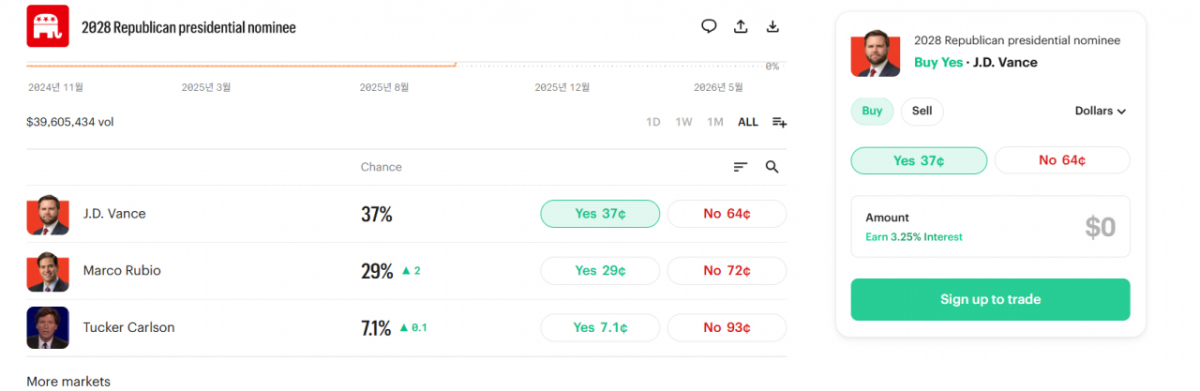
This round, led by Coatue Management, included participation from Sequoia Capital (hereinafter Sequoia), Andreessen Horowitz (a16z), IVP, Paradigm, Morgan Stanley, ARK Invest, and others.
Kalshi is a prediction market platform that has seen rapid growth after successfully predicting Donald Trump's victory in the 2024 U.S. presidential election. According to prior Wall Street Journal reports, President Trump's family has invested in prediction market platforms, and Trump Jr., the president's eldest son, serves as an advisor to both Kalshi and Polymarket.
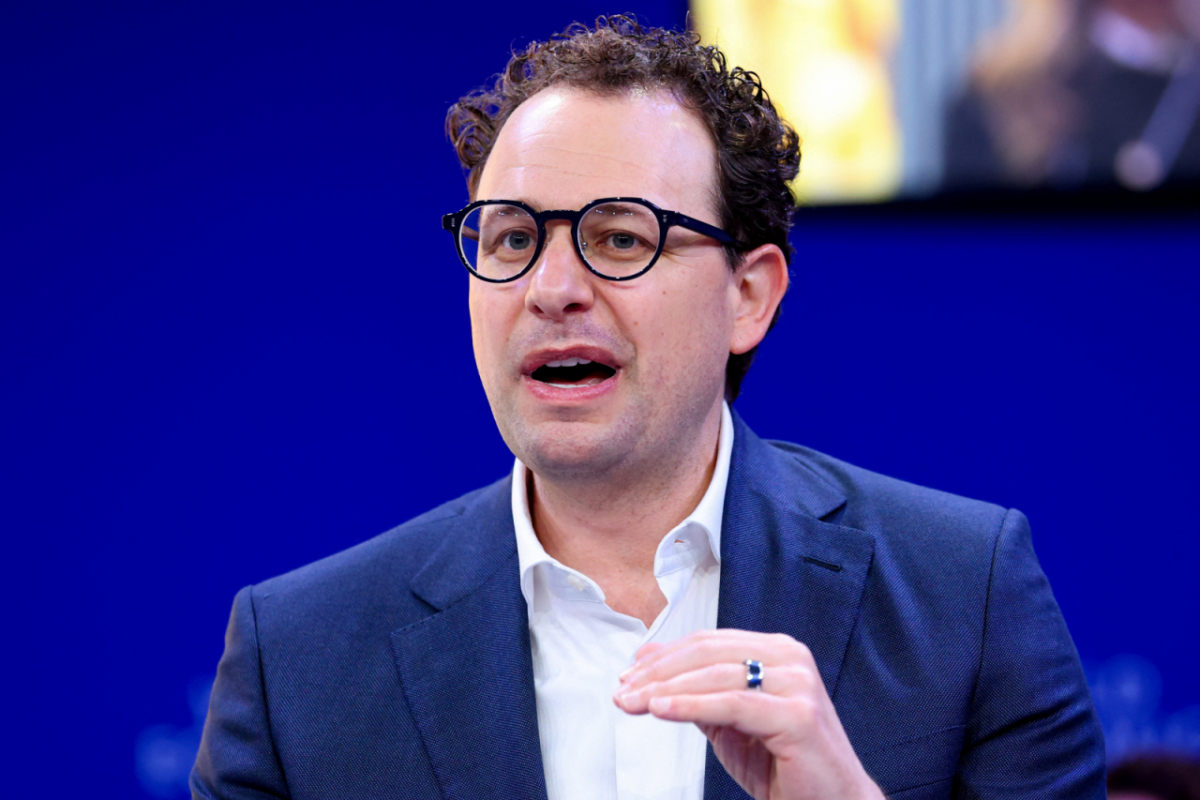
Tarek Mansour, co-founder and CEO of Kalshi, stated, "Aside from AI, there are almost no fields that have grown this rapidly in recent history."
According to Kalshi, the company's annual trading volume tripled over the past six months, rising from $52 billion to $178 billion. Additionally, as of this month, Kalshi's annualized revenue has surpassed 1.5 billion won.
Kalshi explained that institutional investors are increasingly utilizing prediction markets to hedge against real-world risks and gain market signals regarding future outlooks. The company plans to invest the newly raised funds in developing products tailored to meet institutional investor demand.
Due to its highly speculative structure, some critics argue that prediction markets should be viewed not as "legal derivatives" but as "illegal gambling." This controversy intensified last January when a special forces soldier who participated in the operation to arrest Venezuelan President Nicolás Maduro was charged with earning approximately 600 million won by investing on Polymarket, a prediction market platform.
There are also moves at the state level to regulate these markets. Last month, Illinois issued cease-and-desist orders against prediction market platforms such as Kalshi and Polymarket, accusing them of violating state gambling laws.
Anthropic joins hands with Wall Street giants... forms AI consulting joint venture
Anthropic is moving forward with establishing a joint venture (JV) alongside major Wall Street financial firms such as Blackstone and Goldman Sachs to promote the adoption of enterprise-grade AI tools. This JV will operate as an organization providing consulting and solutions to support various corporate clients, including private equity (PE) investment firms, in adopting and utilizing AI.
In this project, Anthropic, private equity firm Blackstone, and Hellman & Friedman will each invest approximately 0.3 billion won (about 439.2 billion won), serving as core investors. U.S. investment bank Goldman Sachs plans to invest around 1.5 billion won. Additionally, General Atlantic, Leonard Green, Apollo Global Management, GIC, Sequoia, and others are expected to participate, bringing the total investment scale to approximately 1.5 billion won (about 2.196 trillion won).
The established JV will be responsible for supporting AI technology adoption in portfolio companies held by private equity firms. It will educate businesses on how to apply AI across all operational processes and provide support for actual implementation on the ground.
This move particularly aligns with competitor OpenAI. Industry observers note that the two companies, engaged in a race for dominance in AI models, are also expanding their influence in the PE market as they approach potential listings later this year.
Bloomberg recently reported that OpenAI is pushing to establish a new JV named "The Development Company." This JV is expected to raise $4 billion from approximately 19 investors and be established with a scale of about $10 billion (approximately 14.65 trillion won), larger than the JV being set up by Anthropic. The financial firms participating include TPG, Brookfield Asset Management, and Bain Capital, and it is reported that the investor composition does not overlap with Anthropic's JV.
Among 28 global unicorns, 26 are AI companies

Two UK-based AI startups, established less than a year ago, have secured investments worth thousands of billions of won and joined the ranks of unicorns (corporate valuation exceeding $1 billion). The trend of raising large-scale funds at very early stages such as seed or Series A rounds centered on the AI field and immediately entering unicorn status is spreading.
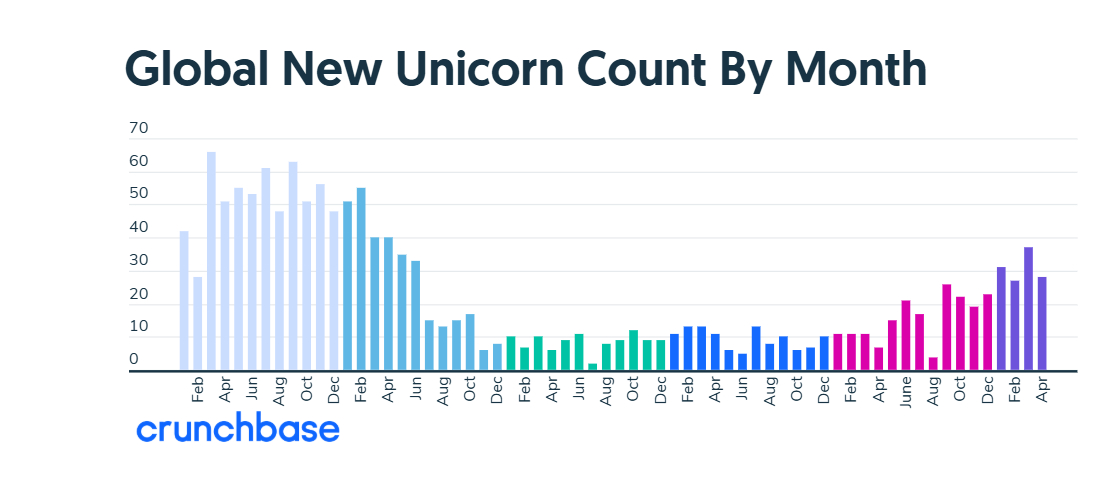
According to global corporate information platform Crunchbase, a total of 28 startups newly became unicorns worldwide last month. Among them, 26 were identified as AI-related technology companies, highlighting that the concentration in AI remains pronounced.
The most eye-catching among the unicorn companies are UK-based AI foundation startups "Ineffable Intelligence" and "Recursive Superintelligence." Both companies were founded by researchers from DeepMind and have secured large-scale investments within less than a year of establishment, joining the unicorn ranks.
In particular, Ineffable Intelligence raised $1.1 billion (approximately 1.63 trillion won) in investment funds, setting a record for the largest seed round in European startup history. Sequoia and Lightspeed Venture Partners jointly led the seed round.
The company was founded by David Silver, an AI researcher who designed "AlphaGo" and "AlphaZero" at DeepMind. The company focuses on developing reinforcement learning-based technologies where AI learns through direct interaction with its environment and repeated trial and error, rather than learning from human-created data.
Recursive Superintelligence, co-founded by Tim Rocktäschel, a former Google DeepMind researcher, and Richard Socher, a former Salesforce researcher, recently secured a $500 million (approximately 73 billion won) Series A investment led by Google Ventures and NVIDIA in less than four months since its establishment. Its corporate valuation is currently assessed at over $4 billion (approximately 588 billion won).
The core goal of Recursive Superintelligence is to build an AI system that can improve its own performance without human intervention. Based on the concept of "recursive self-improvement," it aims to implement a structure where AI continuously learns and evolves.
By industry, new unicorns have emerged in various sectors including finance, defense, energy, and healthcare, indicating that AI technology is rapidly spreading across industries.
By region, the United States and China continue to dominate the market. Among the total 28 unicorn companies, the U.S. had the highest number with 12, followed by China with 8. The UK released two new unicorns last month, including Ineffable Intelligence and Recursive Superintelligence, while Germany, Spain, Switzerland, India, Japan, and others each added one.
[MoneyToday Startup Media Platform Unicorn Factory]

 in FUTURE


