

[For more diverse corporate information on the startups mentioned in this article, please visit the Unicorn Factory big data platform 'Data Lab'.]
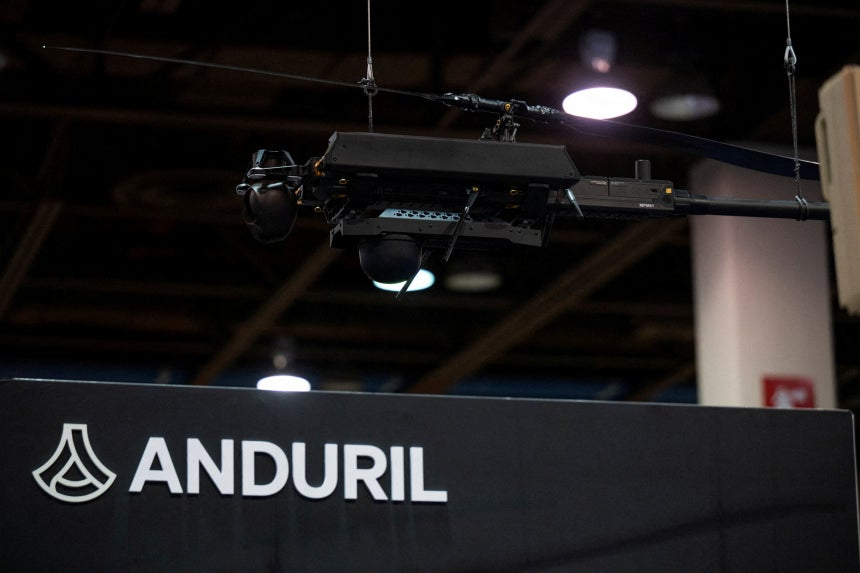
A U.S. defense technology startup has raised a massive capital amount of approximately 7 trillion won. Analysis suggests that Russia's invasion of Ukraine ushered in the era of drone warfare, and with conflicts between the U.S., Israel, and Iran reaffirming the importance of anti-drone defense systems, the strategic value of AI-driven defense companies is soaring.
According to a synthesis of major foreign media outlets including Bloomberg, Reuters, and the Financial Times (FT) on the 16th, Anduril Industries (hereinafter referred to as Anduril), a U.S. defense technology startup, recently secured $5 billion in its Series H funding round.
The cumulative fundraising amount totals $11.4 billion (approximately 17 trillion won). The corporate valuation has reached $61 billion (approximately 91.6 trillion won), doubling within a year. This investment round was led by Scribe Capital and Andreessen Horowitz (a16z).
"Produce quickly and deploy to the battlefield"... Silicon Valley-style defense model succeeds
Anduril was established in 2017 in Costa Mesa, California. It was co-founded by Palmer Luckey, who sold VR headset company Oculus VR to Meta (then Facebook), alongside engineers from Palantir. This also explains why Founders Fund, the venture capital firm operated by Palantir co-founder Peter Thiel, provided Anduril's initial funding. The current CEO is Brian Shamp, a former Palantir engineering director.
Anduril follows a 'Silicon Valley-style defense' model distinct from traditional defense companies. Unlike traditional defense firms such as Lockheed Martin and Boeing, which rely on cost-plus contracts to build weapons over decades, Anduril adopts a strategy of developing software for rapid deployment to operational sites.
The core platform is 'Lattice', an AI-based command, control, and operations system. This system acts as the brain connecting drones, sensors, and command-and-control systems, and is installed on all of Anduril's hardware products. Key products include the reconnaissance drone 'Ghost', the anti-drone interception system 'Roadrunner', the unmanned underwater vehicle 'Ghost Shark', and the unmanned combat aircraft 'Purifier'.
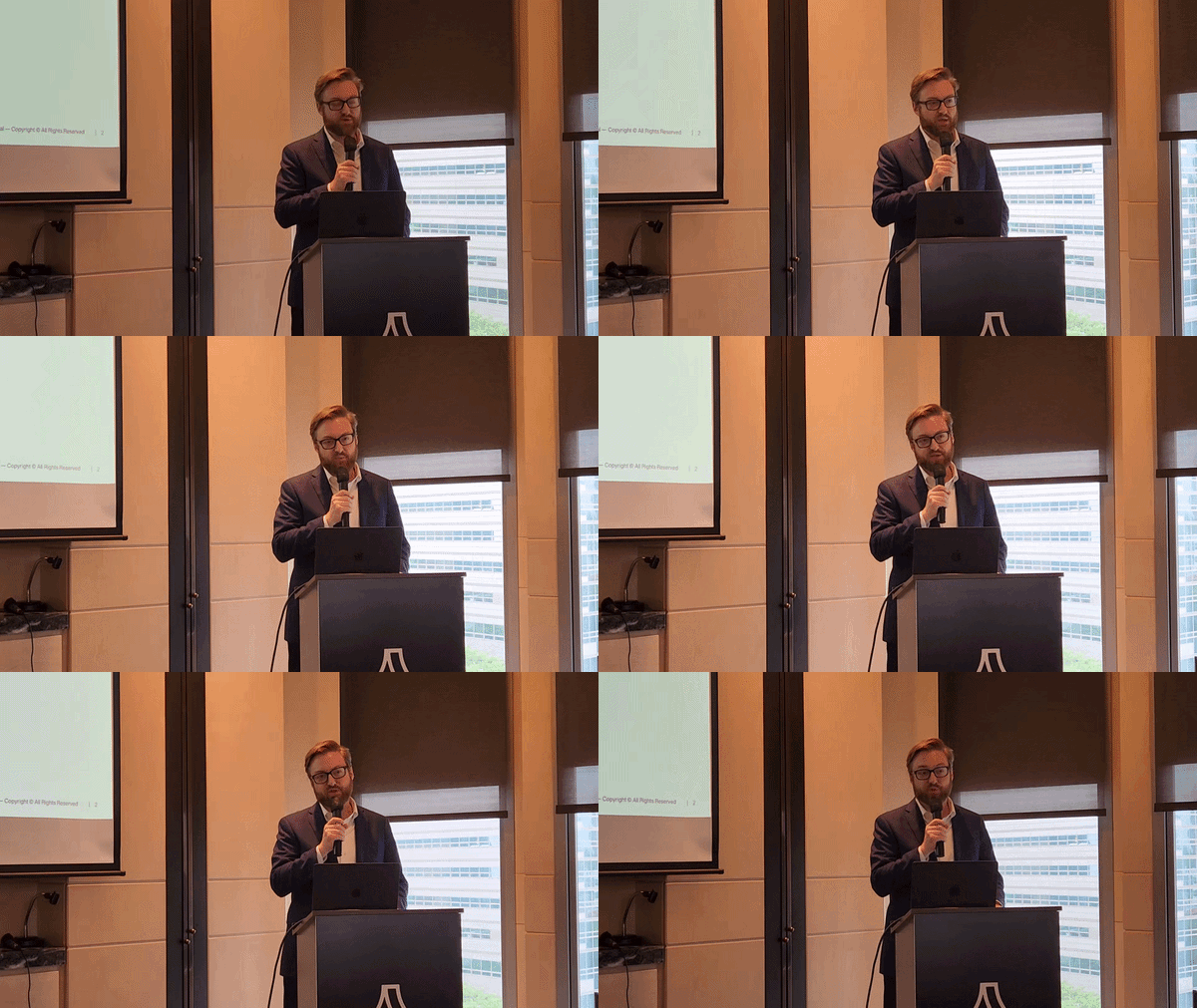
The rapid growth of Anduril is rooted in the war in Ukraine. In the process of countering Russian electronic warfare and drone attacks, the importance of autonomous weapons and AI command-and-control systems came to the forefront. Although some weapon systems revealed limitations in actual combat, the company explained this as a repetitive development process based on battlefield feedback.
Most importantly, demand from the U.S. and allied countries has surged. According to an investor letter released by Anduril alongside its funding announcement, annual revenue last year doubled year-on-year to reach $2.2 billion (approximately 3.3 trillion won). The substantial basis for this revenue comes from successive major contracts with the U.S. Ministry of National Defense. Representative examples include the Marine Corps anti-drone defense system and the Army AI command-and-control system integration contract. Other notable achievements include the completion of the first overseas Yangsan program for the Australian Navy and the autonomous flight demonstration of the U.S. Air Force unmanned combat aircraft program. The number of employees has nearly doubled from a year ago to 7,000.
CEO Shamp stated, "The funds secured this time will be used for manufacturing facilities and infrastructure construction, as well as R&D (research and development) investments." In particular, a significant portion will be allocated to 'Arsenal-1', a massive autonomous weapon production facility currently under construction in Pickaway County, Ohio. The factory aims to produce tens of thousands of autonomous weapon systems annually. Production of the unmanned combat aircraft Yangsan is also scheduled to begin this year. As the largest single job creation project in Ohio's history, 4,000 direct jobs are planned.
Foreign media outlets noted that Anduril's rapid growth symbolizes the popularity of defense startup investments. According to the global corporate information platform Crunchbase, defense startup investment amounts as of mid-May this year have reached $13.6 billion (approximately 20.4 trillion won), already surpassing the record total of last year ($8.8 billion).
"A 'full 10 years' drug development formula, a startup aiming to change it with AI"
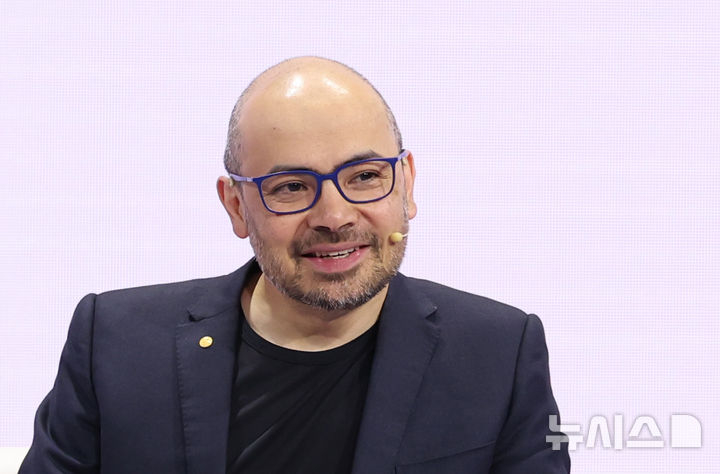
"The average time required to develop one new drug is 10 years, and the necessary cost is in the trillions of won." A startup aiming to break this traditional pharmaceutical industry formula with AI has secured record-breaking investment funds.
According to Bloomberg and Yahoo Finance, Isomorphic Labs, an AI drug design company spun off from Google DeepMind, recently raised $2.1 billion (approximately 3.1 trillion won) in its Series B funding round. This marks the largest scale in the history of the AI drug development sector.
Scribe Capital led this round, with existing investors such as Alphabet and Google Ventures (GV) participating. New investors on the list include MGX, the Abu Dhabi sovereign wealth fund; Temasek, the Singapore sovereign wealth fund; the UK Sovereign AI Fund; and Google's capital arm, CapitalG.
The founder and CEO of Isomorphic Labs is Demis Hassabis, a Nobel Prize laureate in Chemistry. He founded DeepMind in 2010 and sold it to Google in 2014, yet he continues to oversee operations as DeepMind's CEO. It was also Hassabis who separated the responsible organization from DeepMind in 2021 to commercialize drug development after DeepMind developed AlphaFold, which solved the decades-old challenge of predicting protein 3D structures.
Isomorphic Labs' core product is 'IsoDDE', an AI drug design engine unveiled last February. The company explains that this integrated platform predicts binding structures between proteins and drug candidate substances and estimates binding affinity to design new drug candidates, demonstrating performance surpassing AlphaFold 3 in major benchmarks.
The company has currently signed strategic R&D partnerships with Novartis, Eli Lilly, and Johnson & Johnson. Revenue generated solely from these partnerships reached approximately $80 million (about 120 billion won) as of 2024.
The timeline for clinical trials has been slightly delayed. Although the initial plan was to enter clinical trials for AI-designed drugs by the end of last year, a new goal has been set to start Phase 1 clinical trials by the end of this year. Hassabis stated, "Since it has been proven that the AI drug design approach is fundamentally valid, we will now focus on expanding the technology as much as possible," adding, "The funds secured this time will be used to build up the drug design engine on a large scale."
What happened after placing hundreds of robots in a U.S. electric vehicle factory
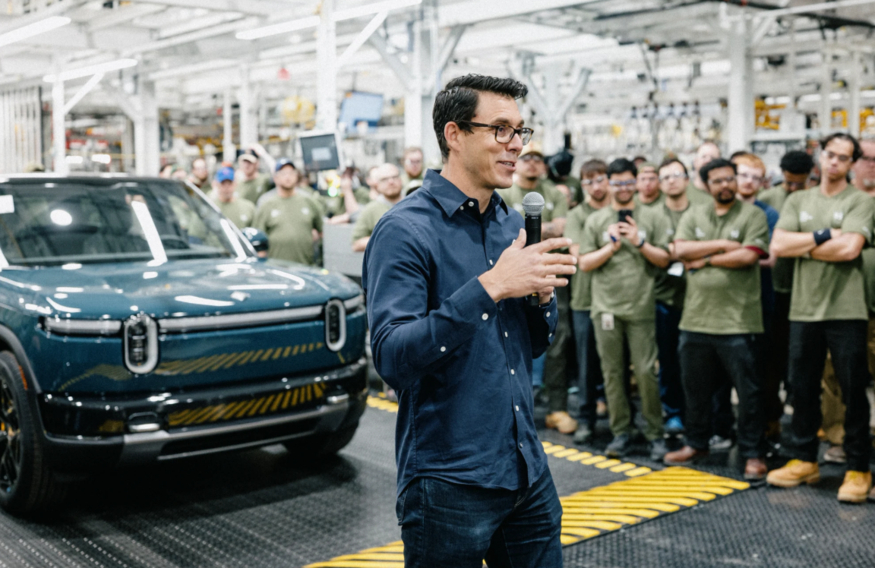
"EV mogul" Rivian founder RJ Scaringe attracted attention by raising over $1 billion (approximately 1.5 trillion won) in cumulative investment just six months after entering the industrial robot business.
According to The Wall Street Journal, CNBC, and TechCrunch, Mind Robotics, an industrial robot startup, recently secured an additional $400 million (approximately 60 billion won) in a funding round led by Kleiner Perkins. This follows a $115 million seed round at the end of last year and a 5 billion won Series A round in March this year, occurring just two months later. The cumulative fundraising amount has exceeded $1 billion, and the corporate valuation is estimated to be over $3 billion (4.5 trillion won).
Existing investors such as Andreessen Horowitz (a16z), Accel, Eclipse, and Bain Capital Ventures participated in the round. New investors include Meritech Capital, Redpoint Ventures, SV Angel, and the venture arms of Volkswagen and Salesforce.
Mind Robotics was established in November last year through a spin-off from EV startup Rivian. Scaringe serves as CEO of Rivian while also acting as chairman of Mind Robotics. The origin of Mind Robotics is 'Project Synapse', an internal project at Rivian. Under the judgment that existing robot startups were not sufficiently prepared to automate complex industrial sites, the goal is to develop robots with human-like dexterity.
The core strategy is to utilize the Rivian factory in Illinois as a real-world learning environment. Data from the production site obtained by directly operating hundreds of robots in the factory are continuously fed into AI model relearning. The company is simultaneously creating a brain (foundation model) that understands the interior of the factory and the robot hardware capable of executing tasks with that brain.
Scaringe stated, "Unlike existing industrial robots that repeat fixed motions, Mind Robotics' robots operate as adaptive robots that make their own judgments and handle situations even when component positions change or working conditions shift."
[MoneyToday startup media platform Unicorn Factory]

 in FUTURE


