

[For more diverse corporate information on the startup mentioned in this article, please visit the Unicorn Factory big data platform 'Data Lab'.]
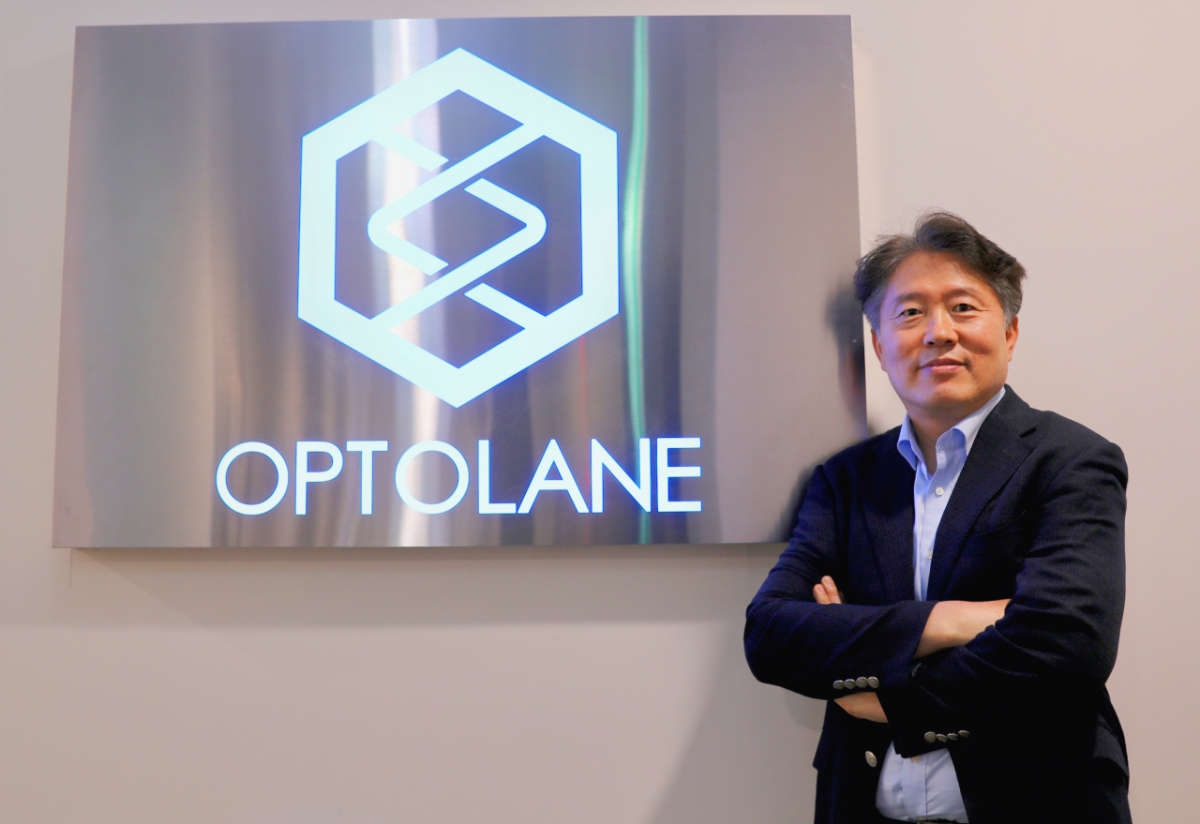
"Just as semiconductor technology created new industries such as smartphones and AI (artificial intelligence), I believe that semiconductors will drive the next major innovation in the field of biotech."
Lee Do-young, CEO of Optolane, a semiconductor-biotech convergence molecular diagnostics company established in 2012, made these remarks in an interview with MoneyToday's startup media platform, Unicorn Factory.
Optolane is targeting diverse biotech application markets, including infectious diseases, animal diseases, agricultural product quality control, and precise cancer diagnosis, using a single CMOS (complementary metal-oxide-semiconductor) molecular diagnostics platform.
Second Startup After Exiting Silicium File
This vision stems from experience accumulated in the semiconductor field. Lee Do-young, formerly an engineer at SK Hynix, left his company in 2002 to found Silicium File, which developed CMOS image sensors (CIS) that serve as the 'eyes' of smartphones. CIS is a sensor that converts light into electrical signals to create images and video information.
Silicium File went public on KOSDAQ in 2008. Lee Do-young grew the company to a scale of 132 billion won in revenue (as of 2013) before selling it to SK Hynix in 2014. Thereafter, Lee Do-young embarked on a second startup to commercialize next-generation semiconductor technology based on image sensor technology and semiconductor business experience. The company founded through this process is Optolane.
'Optolane' means 'a path where light travels.' The company originally started as a developer of optical interconnect technology, which connects semiconductor chips with light. However, the collaboration with key research personnel fell through, making it difficult to continue the optical interconnect business. With the need to find new growth drivers, Lee Do-young turned his attention to biotech.
Lee Do-young believed that the optical signal detection technology accumulated while developing image sensors could be directly applied to molecular diagnostics. PCR (polymerase chain reaction) testing is a technology that repeatedly amplifies specific DNA present in trace amounts in blood or tissue until it reaches a detectable level. In cancer diagnosis, genes related to cancer or mutated DNA mixed among normal DNA in the blood are amplified, and the fluorescent signals generated during this process are measured to confirm the presence of target DNA.
The performance of PCR testing depends on how accurately minute fluorescent signals appearing when DNA is amplified can be read. Lee Do-young determined that this principle is essentially the same as the way image sensors in smartphones convert light into electrical signals. Although semiconductors and biotech appear to be entirely different industries, they were connected for him by a common denominator: 'technology that reads light.'
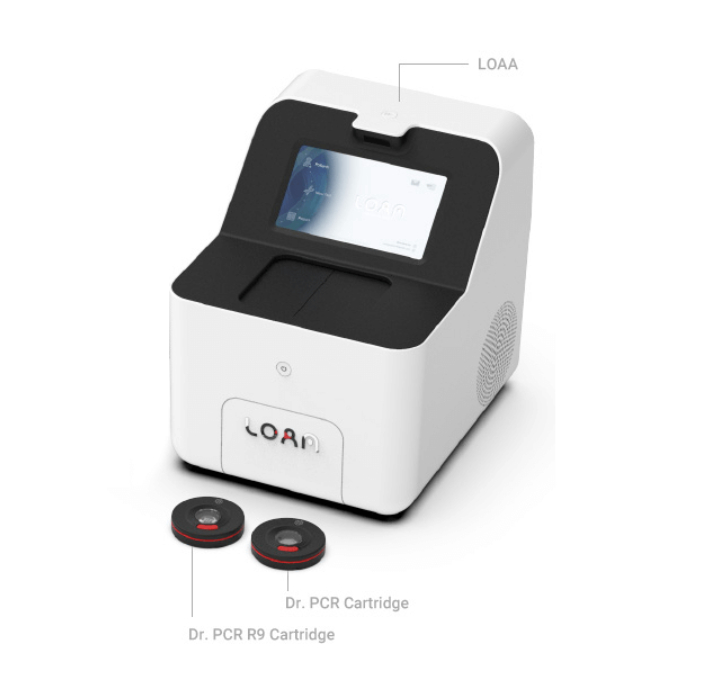
Existing PCR equipment had separate thermal control devices for DNA amplification and optical devices for measuring fluorescence, making the equipment large and structurally complex. Optolane utilized semiconductor technology to implement a cartridge where PCR reactions occur and a CMOS-based reader that reads fluorescent signals into a single compact platform. In this system, DNA amplification and temperature control take place within the PCR chip inside the cartridge, and the CMOS sensor in the reader reads and analyzes the fluorescent signals generated during the process. This is how molecular diagnostics can be performed on-site without requiring a separate large-scale laboratory.
Commercialization results are also emerging. Optolane currently sells dedicated reagents, dedicated cartridges, and readers (diagnostic devices) and forecasts revenue of 7 billion won this year. Based on this, the company plans to pursue an IPO in 2028.
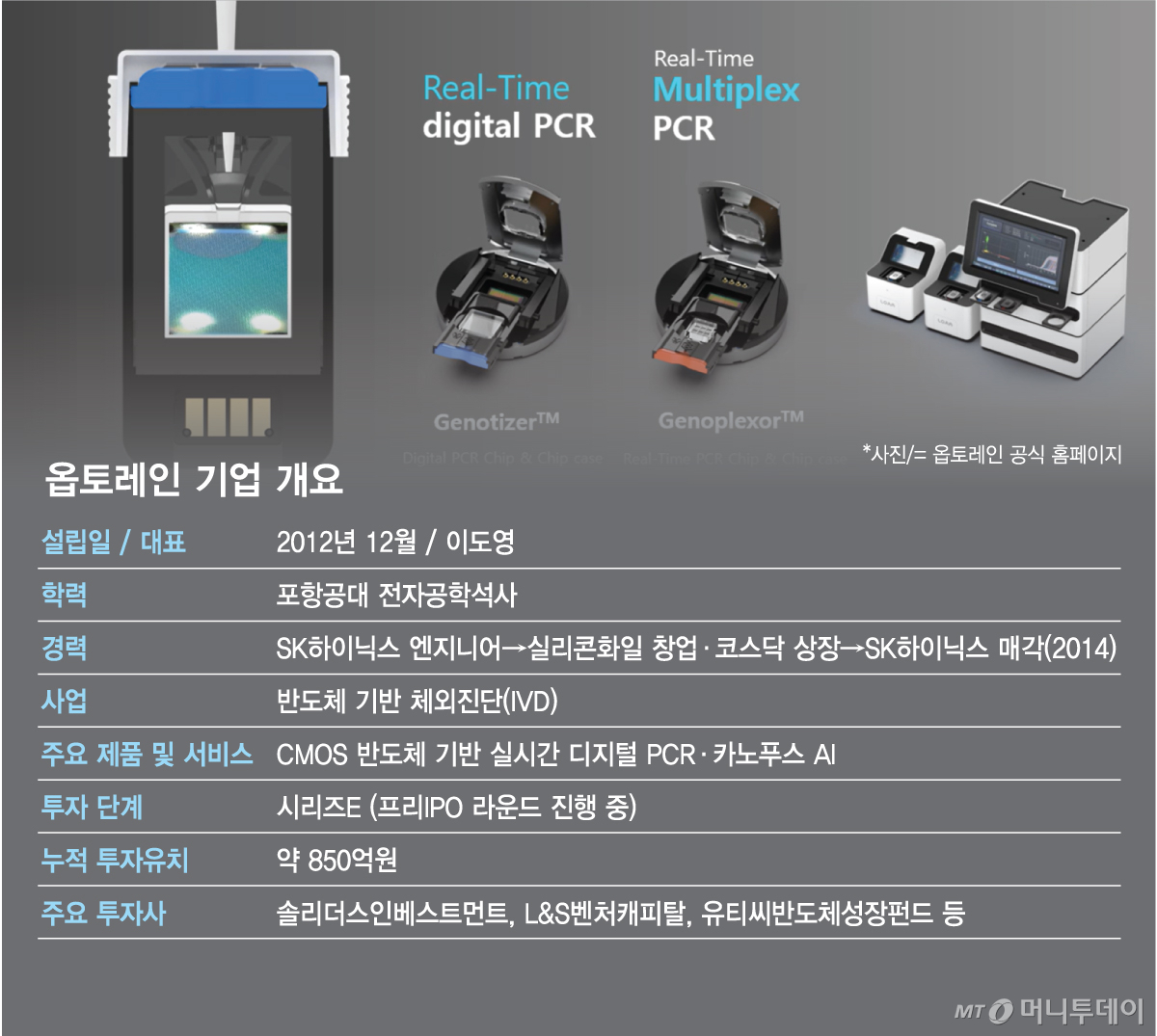
Differentiated by Real-Time Digital PCR Technology... "Challenging Early Cancer Diagnosis with a Single Drop of Blood"
Currently, the area where the company is putting the most effort is early cancer diagnosis. Existing liquid biopsies have limitations in detecting trace amounts of cancer-related DNA in blood. Optolane has implemented 'real-time digital PCR' technology that uses CMOS sensors to read minute fluorescent signals generated during the DNA amplification process in real time.
In the early stages of cancer, only a very small amount of cancer DNA (ctDNA) exists in the blood, making the fluorescent signal extremely weak. Existing digital PCR measures fluorescence only once after DNA amplification is complete, which can cause it to miss minute signals. In contrast, Optolane continuously measures fluorescent changes generated during the DNA amplification process in real time using CMOS sensors. Simply put, instead of taking a single photo, it observes the change process continuously like recording a video.
By analyzing how fluorescent signals change over time in this manner, it is possible to more accurately distinguish between signals generated by actual DNA amplification and background noise. This increases the possibility of detecting trace amounts of cancer DNA.
In addition, the company also developed its own AI platform 'CANOPUS' for automatic analysis of test results. CANOPUS comprehensively analyzes fluorescent signals generated in approximately 20,000 ultra-micro wells on Optolane's semiconductor and changes in the melting temperature of DNA to distinguish between normal DNA and damaged DNA. Previously, skilled experts had to manually interpret results, but AI now automatically analyzes them, reducing reading bias and improving test speed and consistency. Through this, medical professionals can more quickly and objectively confirm the degree and pattern of DNA damage.
Lee Do-young stated, "Current cancer diagnosis focuses on detecting cancer after cancer cells have sufficiently formed," adding, "Our goal is not simply to see whether cancer has occurred, but to measure how much DNA damage has accumulated and how its rate of increase differs from the normal aging process, thereby capturing the progression to cancer at an early stage."
[MoneyToday startup media platform Unicorn Factory]

 in FUTURE


