

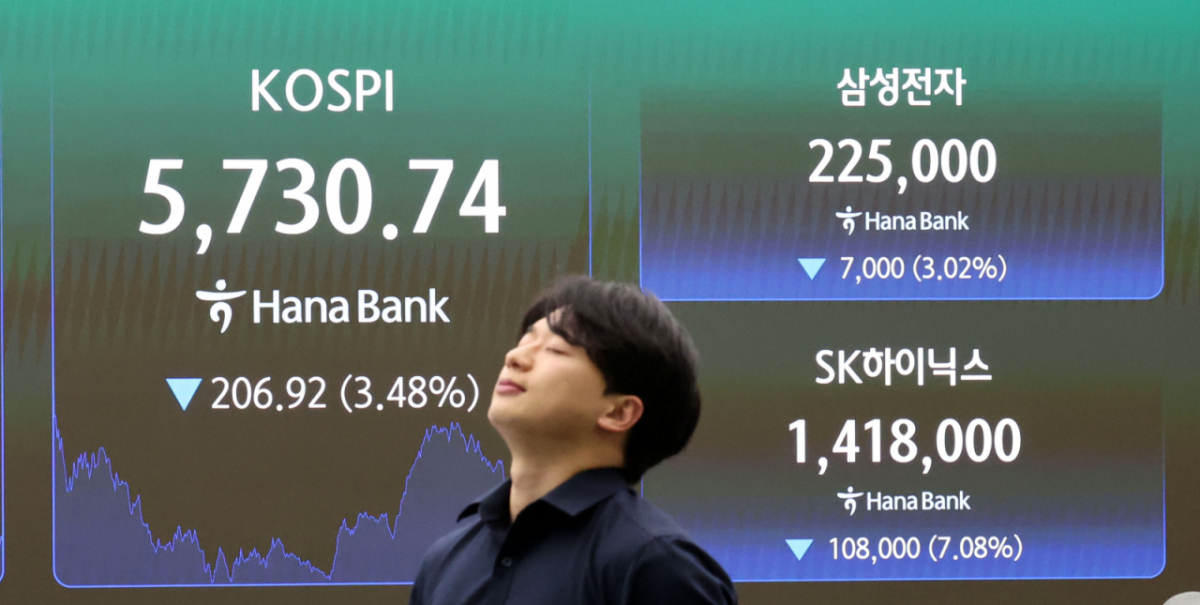
Domestic stock markets fluctuated sharply as doubts about AI (artificial intelligence) resurfaced following the earnings releases of major big tech (large IT companies). The KOSPI, which had recovered the 6,000 mark last week, retreated back to the 5,000 range as semiconductor stocks wobbled. Analysts predict that stock market volatility will continue for the time being depending on upcoming big tech earnings and outlooks.
According to Korea Exchange on the 1st, the KOSPI index closed at 5,730.47 last week, up 180.44 points (3.25%) from Jeonju (5,550.30). It had recovered the 6,000 mark after rising by over 3% and 6% for two consecutive days on the 27th and 28th of last month, but gave back those gains as semiconductor stocks plunged on the 30th of last month.
In the early part of the week, semiconductor stocks rose due to factors such as AI startup Anthropic's push for an IPO (initial public offering), SK hynix's surprise earnings in the third quarter, and the announcement of a shareholder return policy worth 10 trillion won, leading the KOSPI to record 6,012.44 on the 28th last month. This marked the first time the KOSPI recovered the 6,000 mark on a closing price basis in 10 trading days.
However, semiconductor stocks plunged on the 30th of last month, causing the KOSPI to fall below the 6,000 mark again. The KOSPI was even pushed below the 5,600 range as an intraday selling sidecar (futures market circuit breaker) was triggered. Samsung Electronics dropped by 3% from the previous day in a single day, while SK hynix fell by 7%. This came as doubts about the sustainability and profitability of AI investments grew again following earnings releases from Alphabet, Intel, Amazon, and others.
Alphabet's third-quarter revenue fell short of market expectations, and revenue in its core profit source, the search advertising sector, failed to meet expectations. In this situation, free cash flow (FCF) recorded a deficit of approximately $9.1 billion due to large-scale AI infrastructure investments. Amazon also saw growth slow down in its existing e-commerce business, and FCF posted a deficit of approximately $35.5 billion amid a surge in AI infrastructure investment.
As the market begins to focus on profitability relative to investment and the potential for cash flow improvement rather than the scale of AI investment itself, analysts say that market volatility is unavoidable for the time being.
Jo A-in, a researcher at Samsung Securities, stated, "Domestic stock markets will continue to experience high volatility for the time being depending on the earnings and outlooks of AI companies, as well as changes in macro (macroeconomic) and supply-demand conditions." She added, "Whether this correction will be limited to a temporary decline in investor sentiment or lead to downward revisions in the earnings outlook for AI-related companies will be the key variable determining the future direction of the market."
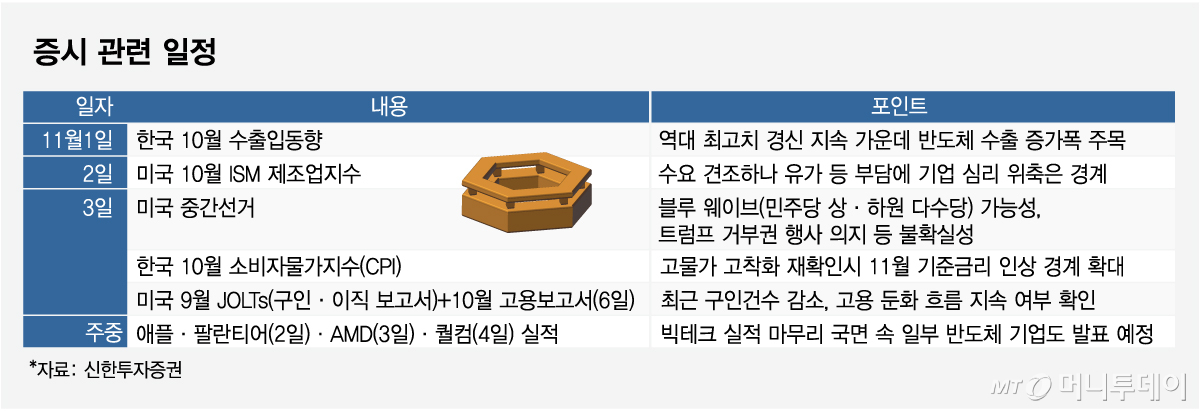
This week's neocloud earnings and the results of the U.S. midterm elections are also expected to impact the stock market. Kang Jin-hyuk, a researcher at Shinhan Investment Corp, said, "Earnings releases from neoclouds, which are the weak link in AI capital constraints, will continue, making it difficult to feel at ease." Neoclouds are companies that secure large quantities of GPUs (graphics processing units) and provide computing resources to AI companies and others. Recently, concerns over poor performance, financial burdens, and fundraising have grown surrounding global neocloud companies.
Na Jeong-hwan, a researcher at NH Investment & Securities, explained, "There is a high probability that the Democratic Party will retake the House of Representatives and also secure a majority in the Senate in the U.S. midterm elections on the 3rd (local time)." He added, "If this materializes, legislative initiatives by the Trump administration are expected to be constrained, but given that curbing China is a bipartisan stance, benefits for companies such as Korean semiconductors will continue even after the midterm elections."

 in STOCK

