

[For more diverse corporate information on startups, visit Unicorn Factory's Big Data Platform Data Lab.]
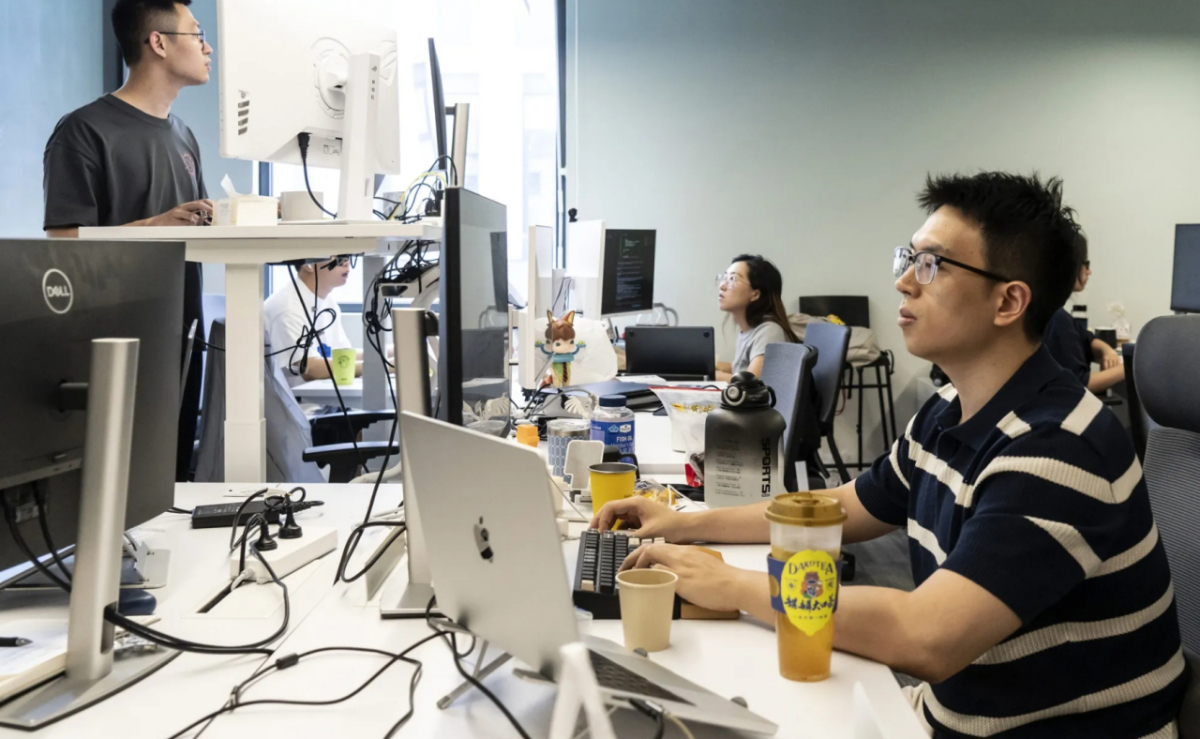
Wu Song-won (35), who worked at a trading company in Shanghai, resigned in 2024 after suffering from chronic sleep disorders due to excessive work stress. Determined to start his own business, he developed an application called 'TideFlow' that uses AI (artificial intelligence) to record sleep patterns and recommend meditation content. Wu said, "Although we still have few paying customers and are operating at a loss, I am happier and more fulfilled than ever before compared to when I worked for a company."
"Chinese youth are turning to solo startups as they grow weary of fierce workplace competition or severe unemployment. With the advancement of AI, non-specialists without technical backgrounds can now handle everything from planning to development and marketing alone, leading to the spread of solo entrepreneurship among those in their 20s and 30s as a social phenomenon.
Surge in 'Solo Startups' Leveraging AI… Government Actively Supports as a Solution to Unemployment
Recently, The Wall Street Journal (WSJ), citing Chinese state media, reported that the number of new solo startups established in China last year exceeded 7 million. This represents a 42% increase from the previous year, with many of these startups operating generative AI as their core tool.
According to an actual survey by 'Honghub,' a startup incubator in Hangzhou, China, which investigated 1,500 solo companies, 75% of solo AI entrepreneurs were non-specialists who did not study coding or development at university. Avin Chen, a 25-year-old entrepreneur developing a dedicated AI microphone device, said, "In the past, technical limitations meant many ideas remained just concepts, but now we can execute them immediately." He added, "AI has transformed the startup environment."
Another background for the surge in youth solo startups is the Chinese government's active support. The Chinese government views solo entrepreneurship as a card to simultaneously address two challenges: competing with the U.S. for AI dominance and resolving youth unemployment, and is offering various support measures. Local governments in cities such as Hangzhou and Shenzhen are encouraging youth entrepreneurship by providing housing and office spaces, as well as AI computing vouchers.
Support from the private sector is also increasing. This is exemplified by Hong Heo-beu-ga (CEO), established by Hong Kong investor Johnny Zhou in Hangzhou last September. More than 50 solo startups have moved into this space, with many receiving initial startup funding of up to $50,000. About one-third of the resident entrepreneurs are serial founders, and another third come from big tech companies.
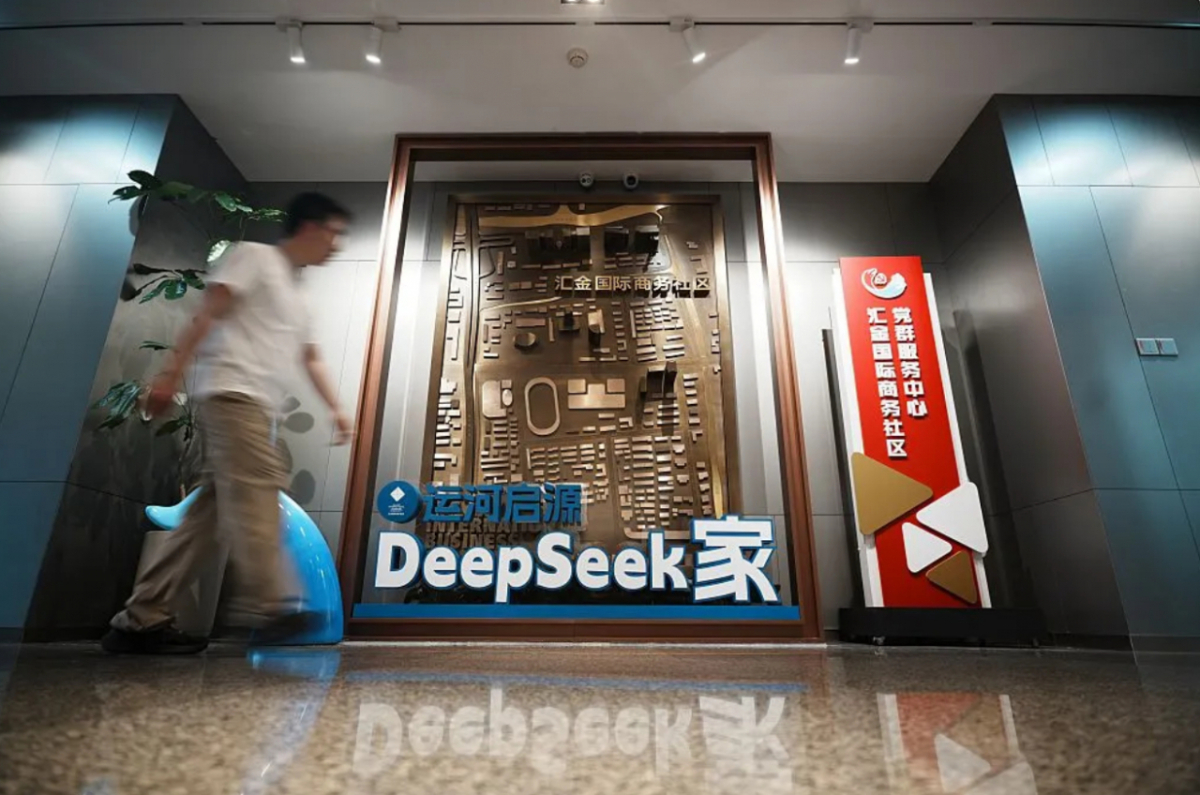
The WSJ noted that as AI technology advances rapidly and government support measures align, many young people who were exhausted by the '996' (9 a.m. to 9 p.m., six-day workweek) workplace culture or failed to find employment for years after graduating from university have flocked to the startup front lines. Guo Shan, a partner at the Chinese consulting firm Houtong Research, evaluated that "While there are many concerns that AI will replace human jobs, in China today, it is becoming a new channel for employment by increasing solo startups."
However, behind the wave of solo entrepreneurship lies a harsh reality. Due to 'involution,' a unique form of bloodletting competition in China, only a tiny fraction of companies generate actual profits. Even in Honghub's survey, more than half of respondents said their monthly revenue did not even reach $1,000.
A representative from BVF, a venture capital (VC) firm based in Shanghai, pointed out that "Many solo startups are merely copying existing products, making it difficult to find investment targets," and noted that "many startups lack long-term strategies." Due to such limitations, some analysts argue that the wave of solo companies is unlikely to become a fundamental solution to China's youth unemployment problem.
While building massive tech giants like Alibaba founder Jack Ma was the goal of previous generations, the WSJ notes that today's Z generation places greater value on maintaining a modest livelihood and regaining control over their lives. Hao-wei Liu (29), who worked as a software engineer at a retail company in New York before returning to China to develop AI games, said, "I decided to start my own business to survive the wave of layoffs in the AI era." He added, "The greatest charm of entrepreneurship is the freedom to leave the gears of corporate life and rest whenever I want."
"Leave space transport to me"… Big Money Pours into Space Tugboat Startups

Investment is pouring into U.S. startup 'Impulse Space,' which develops cargo transportation technology between space orbits. Many investors highly valued the fact that a founding member of SpaceX went independent to pursue space transport rather than launch vehicles.
According to Bloomberg, Impulse Space recently raised $808 million (approximately 1.1 trillion won) in its Series D funding round. Although it had originally planned to raise $500 million, funds poured in at the last minute, allowing the company to close the round at a scale far exceeding its initial plan. Major existing investors such as 137 Ventures, Lux Capital, and Valor Equity Partners participated heavily in this investment. Cumulative funding now exceeds $1 billion (approximately 1.4 trillion won).
Impulse Space was established in California, U.S., in 2021. Founder and CEO Tom Mueller is a veteran in the aerospace field who was a founding member of SpaceX and led the development of the Merlin engine used on the Falcon 9 rocket.
Impulse Space is focusing its efforts on developing spacecraft and engines based on the concept of 'space tugboats' that move satellites or cargo that have entered space orbit to their target orbits or destinations. Its main models, 'Helios' and 'Mira,' are responsible for providing propulsion to carry other customers' payloads into higher orbits.
Mueller, who has been developing rocket engines for decades, focused on the 'space last mile' business model when founding Impulse Space. At the time, there were many reactions asking, "Why is Mueller building yet another launch vehicle?" but recently, evaluations have emerged that he "accurately identified a market blind spot."
The funds raised this time are planned to be used for expanding personnel and developing spacecraft products. In an interview with Bloomberg TV, Mueller said, "This round of funding is a result showing how much customers and investors appreciate what we do," and added, "As the combination of space and AI accelerates, vitality is spreading throughout the industry."
Meanwhile, in the recent space startup market, large investments are following one after another. After U.S. 'Stoke Space' (developing reusable rockets) raised $1 billion, Europe's 'The Exploration Company' (space transport) also completed a funding round of 450 million dollars.
"Prioritizing High Returns Over Risk Management"… Family Offices Investing Directly in AI

Family offices managing the family assets of ultra-high-net-worth individuals are actively entering AI investments. Super-rich individuals, for whom stable fund management was once the top priority, are increasingly making direct investments in core AI companies rather than venture capital (VC) funds.
U.S. IT and investment specialist media TechCrunch, citing Deloitte's figures, projected that global family office assets under management reached 5.5 trillion won as of 2024 and will grow to 9.5 trillion won by 2030.
The biggest change in the family office market, which possesses such massive capital power, is the increased proportion of risk investments. In JP Morgan Private Bank's latest survey, 65% of global family offices cited AI as their top investment priority even amidst inflation and geopolitical crises.
Duane Pal, an advisory committee member at Atlas Capital, a Silicon Valley asset management platform in the U.S., explained, "If you have a green energy deal that yields three times the return in three years versus an AI deal that yields three times the return in three months, where would you invest?" He added, "This is why family offices choose the latter."
Changes in investment methods also warrant attention. In the past, family offices mainly remained as limited partners (LPs) entrusting management to VC funds. However, recently they are moving away from structures where funds are locked for about 10 years by entrusting money to fund managers, and are instead directly purchasing company shares or engaging in secondary transactions. Pal noted, "The stocks family offices want are AI leaders," adding that this reflects the trend of younger-generation asset owners who prefer to invest directly in single stocks.
In fact, in the over-the-counter market, there is fierce behind-the-scenes competition to secure stakes in representative AI companies such as Anthropic and OpenAI. Startup analysis institutional investor PitchBook evaluated that these leading companies' stakes are currently the 'best egg assets' where the most intense battles are taking place in the venture capital market. However, some express concerns that the valuation of AI startups has been inflated too much and that they could suffer serious damage if a market bubble bursts in the future.
[MoneyToday startup media platform 'Unicorn Factory']

 in FUTURE


