

[For more diverse corporate information on the startup featured in this article, please visit Data Lab on the Unicorn Factory big data platform.]
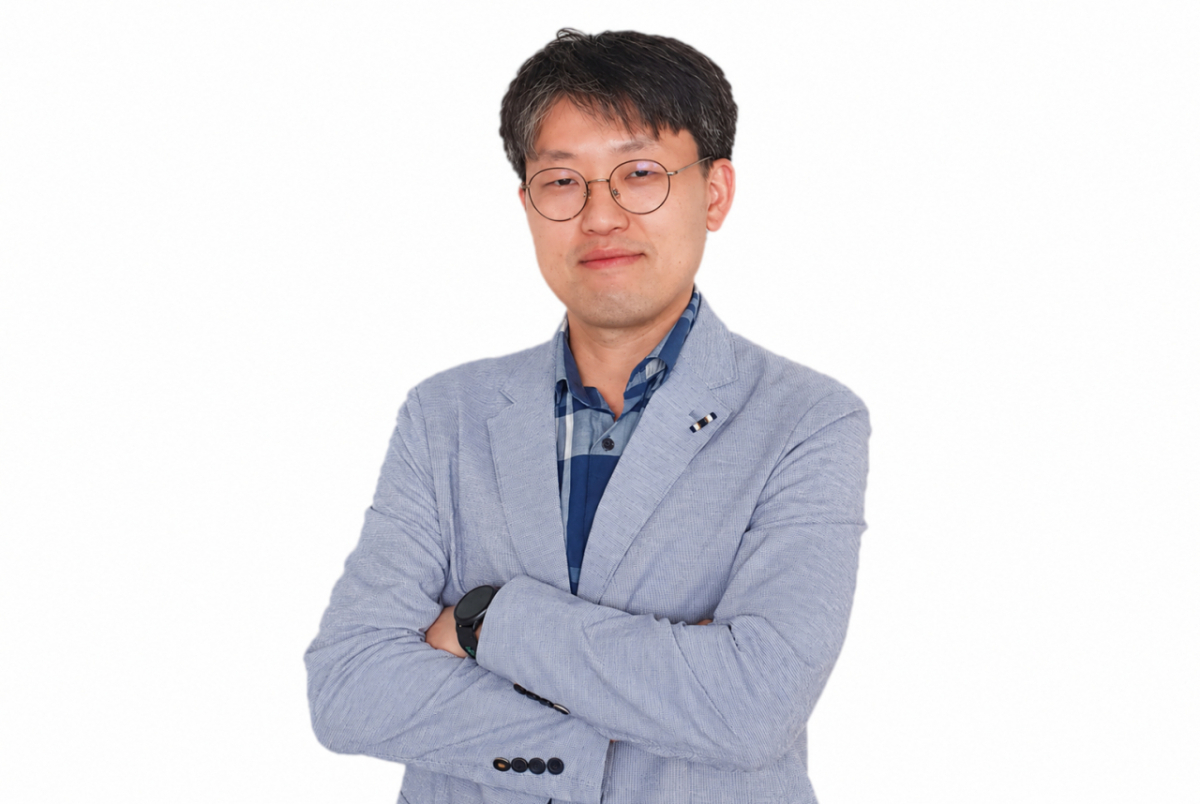
"Even artificial satellites built at a cost of hundreds of billions of won are discarded when their fuel runs out, no matter how well-functioning their other equipment may be. If a car runs out of gas, you can simply refill it, but that is not yet possible for satellites. If we could refuel in space as well, we could use functioning satellites for much longer without discarding them."
Kim Tae-gyu, CEO of Space Lab, recently met with MoneyToday’s startup-specialized media platform, 'Unicorn Factory,' and said the following. The future Kim (CEO) envisions is an era where refueling in space becomes as routine as refueling a car. His plan is to realize 'on-orbit refueling' by deploying service satellites equipped with thrusters that fly to satellites running low on fuel, approach and dock (couple) with them, and then refill their fuel.
Founded in 2023, Space Lab develops thrusters, which serve as the 'engines' of artificial satellites. Thrusters generate the propulsion needed for satellites to change orbits, avoid collisions, and deorbit after mission completion. Currently, satellite thrusters are broadly divided into electric thrusters and chemical thrusters. Electric thrusters have high fuel efficiency but produce low thrust, limiting their ability to perform rapid orbit changes.
In contrast, chemical thrusters can generate significant force, but they often use catalysts that decompose propellants (fuel) to create thrust. The problem is that catalysts are also consumed with use. Even if propellant can be refilled in space, the catalyst inside the thruster is virtually impossible to replace. Consequently, once the catalyst’s lifespan ends, it becomes difficult to continue operating the satellite by simply refilling the propellant.
Space Lab solved this problem by eliminating the need for a catalyst. Like chemical thrusters, its system reacts propellants to generate significant force, but instead of using a catalyst, it decomposes the propellant with electricity to control combustion. Kim (CEO) stated, "Because electrically controlled chemical thrusters do not use catalysts, satellites can be utilized longer by simply refilling the propellant." Simultaneously, the company enhanced the safety of its propellants. Hydrazine, used in existing chemical thrusters, poses high toxicity and explosion risks, resulting in significant costs for safety management during production, storage, and handling. Space Lab independently developed a low-toxicity propellant to replace it.
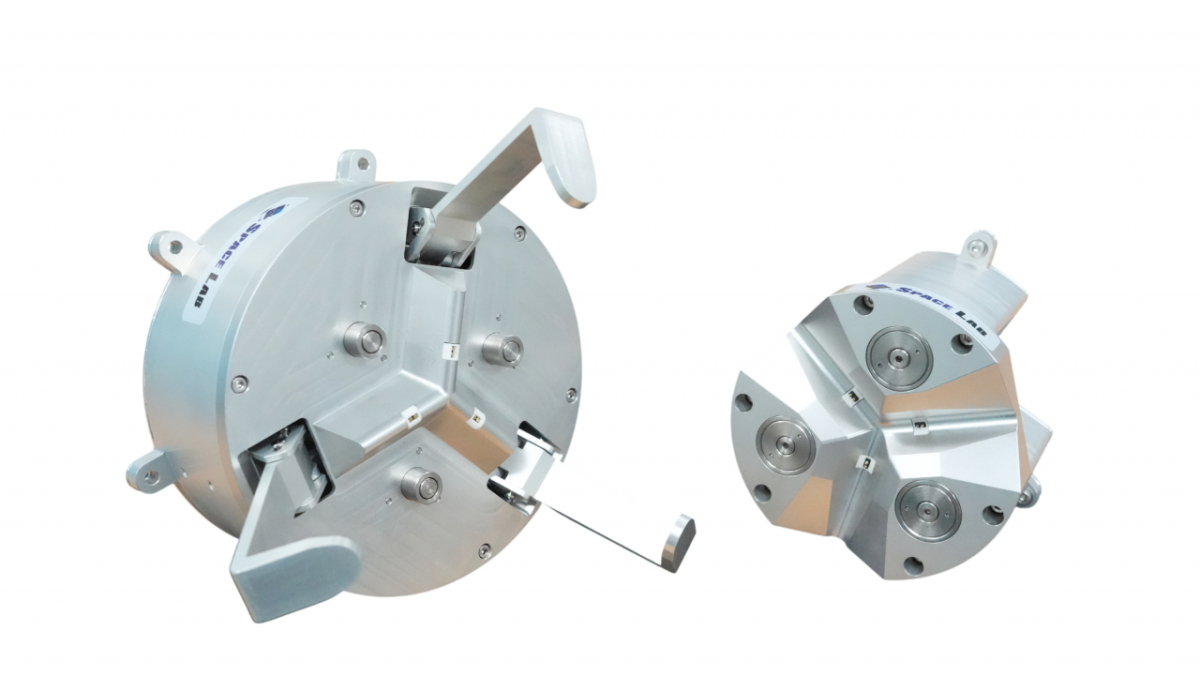
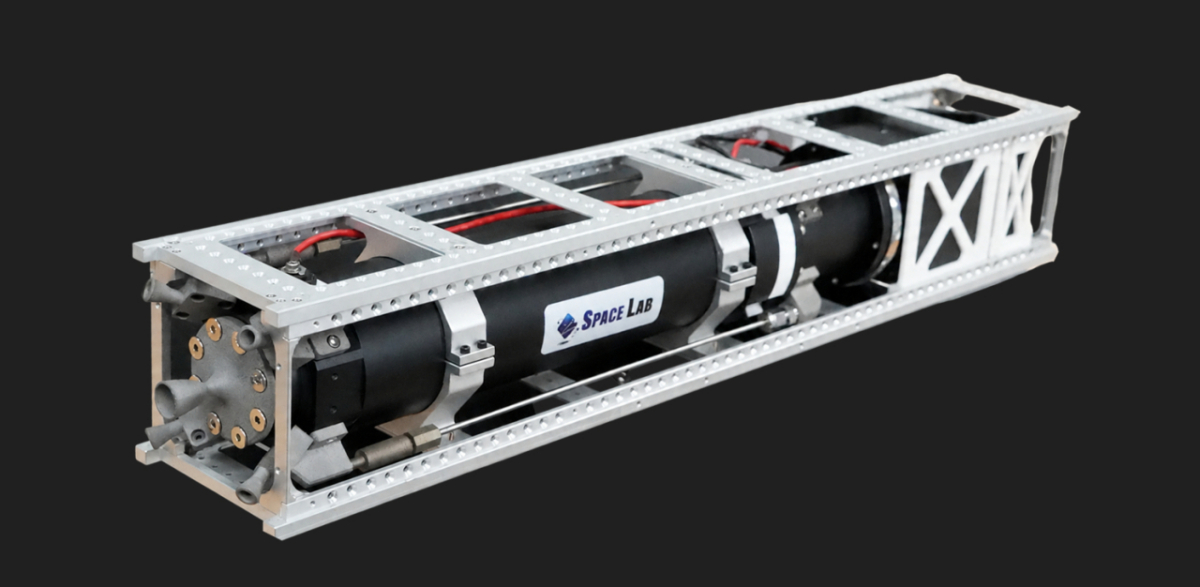
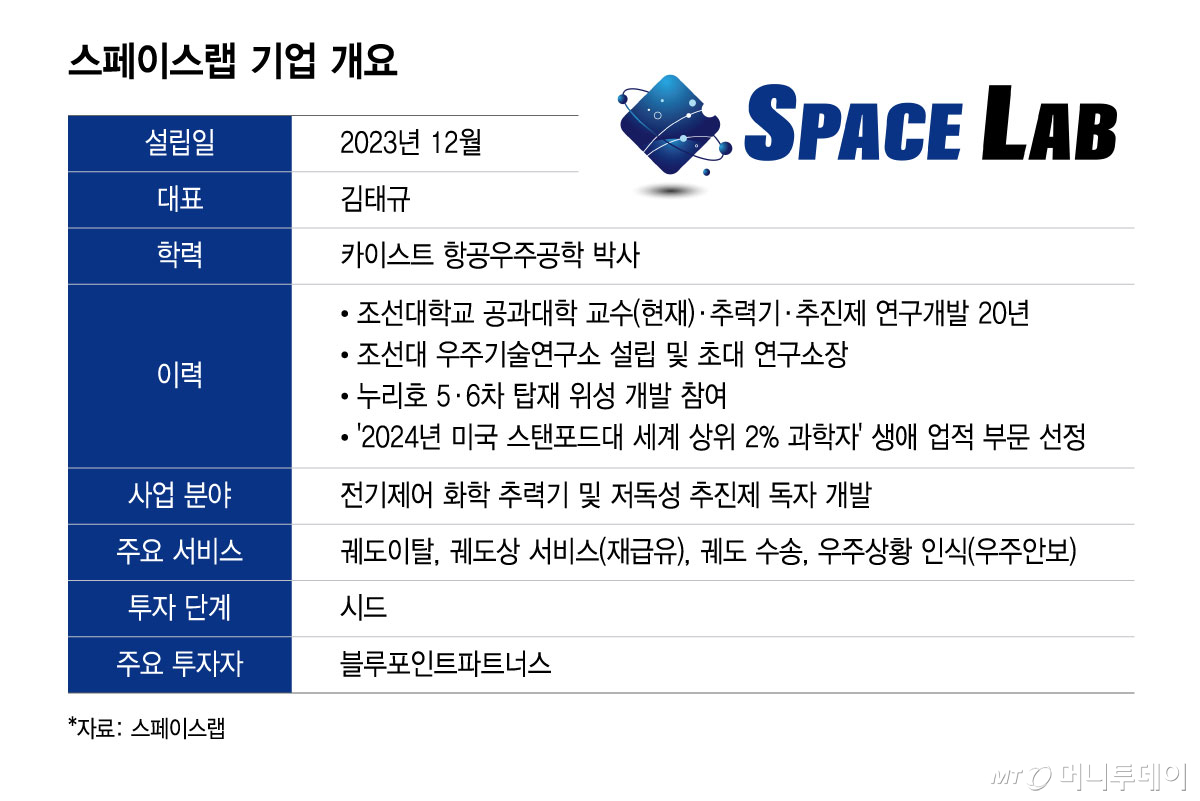
The background enabling Space Lab’s technological development lies in nearly 20 years of research conducted by Kim (CEO). A graduate from KAIST’s Department of Aerospace Engineering, Kim (CEO) has researched thrusters and propellants while serving at Jo Seon-dae (Prof.). In 2023, he established the Chosun University Space Technology Research Institute and served as its inaugural director. Currently, Kim (CEO) and his research team are also participating in the development of satellites to be carried on the 5th and 6th Nuri rocket launches.
The company name "Space Lab" is derived from the English name of the Space Technology Research Institute, 'Space Lab.' Kim (CEO) personally launched the startup because he did not want the technologies developed in the laboratory to remain solely as papers or research projects. Kim (CEO) said, "I felt it was a great pity that even if one devotes their life to developing technology, it goes unused if it is not actually installed and used in an artificial satellite."
Space Lab is also moving forward with the development of service satellites equipped with its self-developed thrusters. The method involves a service satellite traveling to another satellite running low on fuel, approaching and docking with it, and then injecting fuel. Alongside refueling, the market Space Lab is currently focusing on is satellite 'deorbiting.' As the number of satellites and space debris increases, the importance of maneuvering capabilities for avoiding collisions or removing end-of-life satellites from orbit is growing. Indeed, regulations requiring the prompt removal of end-of-life satellites from orbit are becoming increasingly stringent worldwide.
Space Lab plans to secure its first 'space heritage,' which is key to market entry, through the 6th Nuri rocket launch next year. The company is pursuing a proximity maneuver mission in which a Gwangju satellite equipped with a thruster will approach a Suncheon satellite launched alongside it, capture images, and transmit them to the ground. In the medium to long term, Space Lab aims to expand its business scope beyond on-orbit services to orbital transport between different orbits. To this end, Space Lab is also developing maneuvering satellites equipped with its own thrusters.
Kim (CEO) stated, "In the future, maneuverability will become important not only for artificial satellites but for all space vehicles, including orbital transporters," adding, "Our goal is to leap forward as a company supplying propulsion solutions required for various space missions."
[MoneyToday startup media platform Unicorn Factory]

 in FUTURE


