

[For more diverse corporate information on the startups mentioned in this article, please visit the Unicorn Factory big data platform 'Data Lab'.]
As controversy over military service exemption targets has arisen in connection with the Asian Games, attention is turning to whether changes will be made regarding military service exemptions for startup founders. The Lee Jae-myung administration has declared a "National Entrepreneurship Era" and promised comprehensive support for entrepreneurship, while the conservative camp also conducted related discussions during the Park Geun-hye administration in 2015. However, there are also significant counterarguments that caution is needed because the justification for military service exemptions is unclear and there are side effects such as the misuse of entrepreneurship as a means to evade military service.
According to the Military Manpower Administration on the 7th, the government has been allowing startup founders to postpone their enlistment date until the age of 30 to support continuous entrepreneurial activities. However, the obligation for military service itself is not exempted, meaning they must eventually step away from company management and serve as active-duty soldiers for 18 months. In fact, Lee Sang-min, founder of Newbility, and Ahn Seo-hyung, founder of Bitnow, have stepped down from their representative positions to fulfill their military service.
Those who hold a master's degree or higher in science and engineering, or possess technical qualifications, can perform alternative service as industrial functionaries or specialized research personnel. However, alternative service is not possible at the company where one serves as the representative. Founders have a low preference for alternative service because the service period of 34 to 36 months is longer than active-duty enlistment. This has led to concerns that the management vacuum will be significant.
The industry points out that the growth momentum of startups tends to stall during founders' military service periods. An industry official, who requested anonymity, said, "From the perspective of a startup that must grow rapidly and continuously, the absence of the founder, who is the largest shareholder, has a major impact," adding, "It is worth considering limited military service exemptions for founders not just for the individuals, but for national industrial competitiveness."
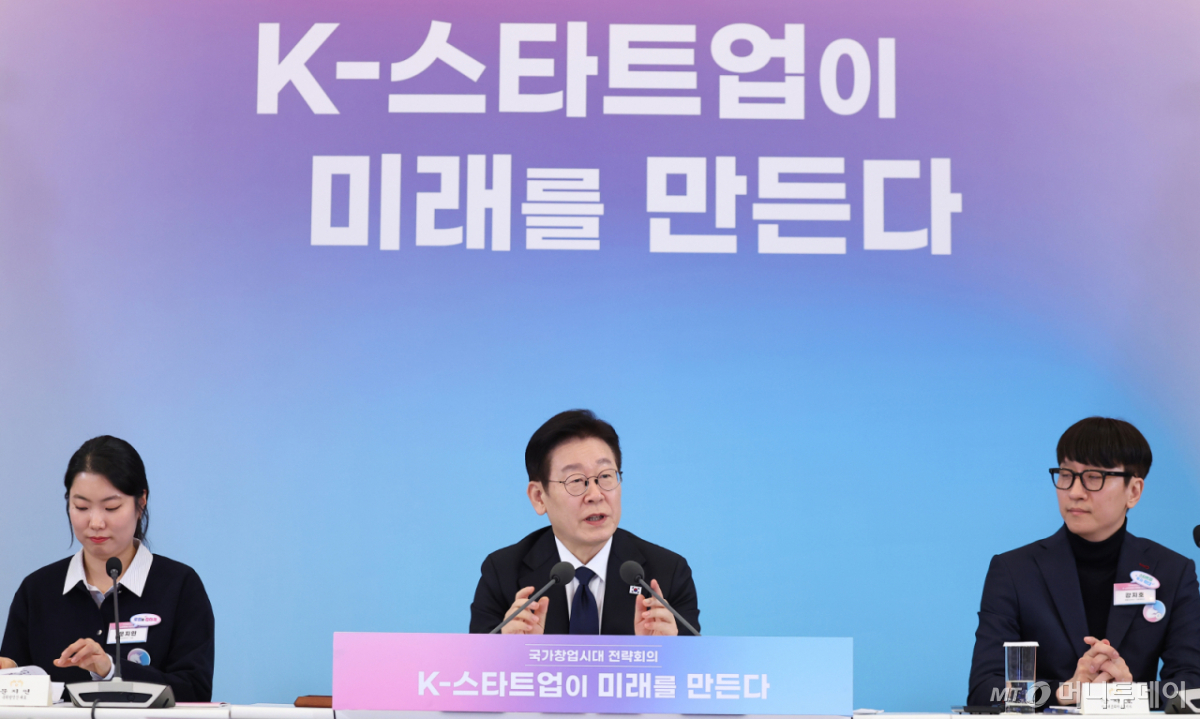
These demands are growing even larger as the Lee Jae-myung administration positions entrepreneurship as a representative support policy for the youth demographic. President Lee Jae-myung emphasized in early this year that the state would take responsibility for entrepreneurship to support young people when he declared the "National Entrepreneurship Era." The flagship initiative, "Entrepreneurship for All," has held policy briefing sessions centered on universities, with 10- and 20-year-olds accounting for 51.8% of all applicants (based on the second recruitment round). While the government is encouraging youth entrepreneurship, it has yet to present a concrete solution to issues such as management vacuums caused by military service.
However, concerns about side effects remain. This stems from the possibility that entrepreneurship could become a means of evading military service. In 2015, the Park Geun-hye administration also discussed exemptions, such as allowing founders to serve as specialized research personnel at their own companies to promote entrepreneurial activity, but abandoned the plan due to concerns about these side effects.
There are also criticisms that providing military service exemptions for entrepreneurship, which is a personal profit-seeking activity, is inappropriate. According to the Survey on the Status of Startups released by the Ministry of SMEs and Startups in early this year, 64.8% of founders cited "greater economic income" as the reason they attempted to start a business. Issues of fairness compared to founders who have completed military service and female entrepreneurs are also being raised. An industry official said, "It is impossible to establish criteria such as the purpose of entrepreneurship or its contribution to the nation when providing military service exemptions," adding, "While the industry quietly raises the necessity, it will not be easy to gain social consensus."
[MoneyToday Startup Media Platform Unicorn Factory]

 in FUTURE
