

[For more diverse corporate information on startups, visit the Unicorn Factory big data platform 'Data Lab'.]
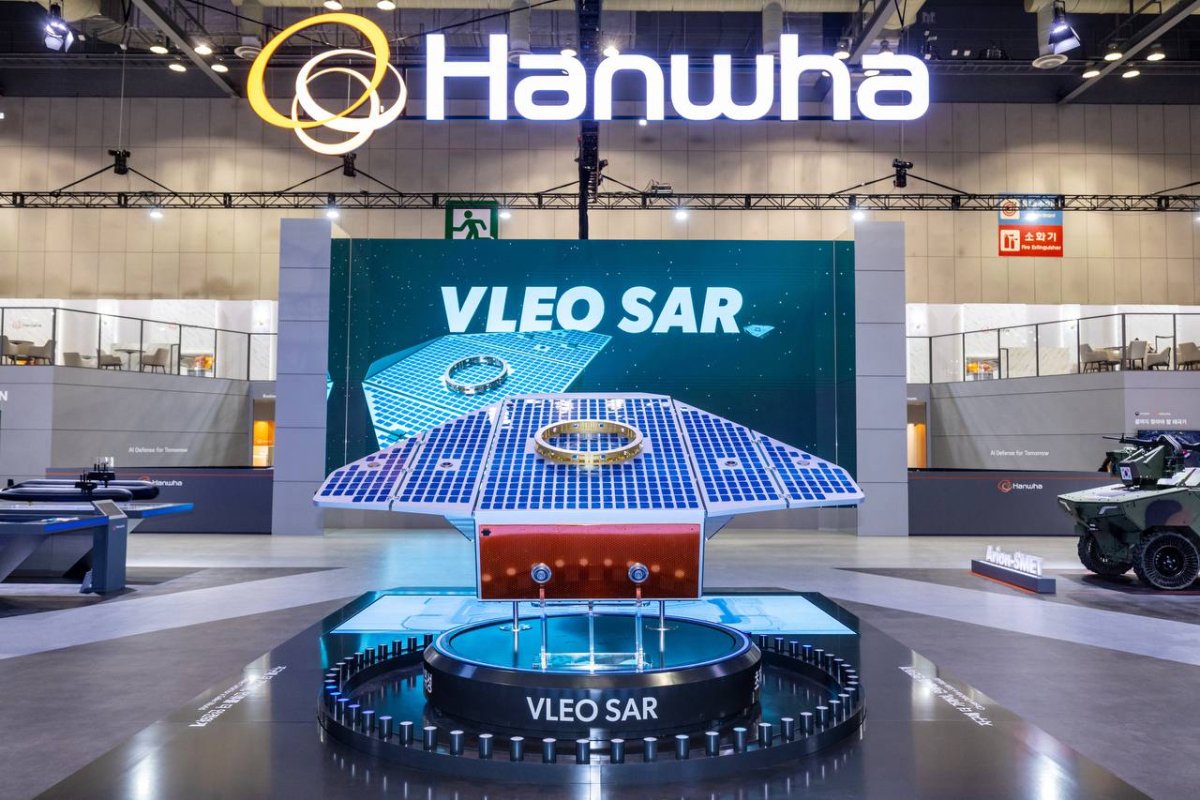
The key battlegrounds in the low Earth orbit (LEO) market are broadly three: launch vehicles, satellites, and services. The critical factors are how cheaply and frequently launches can be conducted, how quickly a large number of satellites can be deployed, and what services those satellites provide. This is also why SpaceX, the world's leading space company, has integrated rockets, satellites, and communication services within a single corporation. Hanwha Group is the only domestic entity to have established vertical integration by possessing all three pillars at the group level.
At the core of this are five space-related subsidiaries, including Hanwha Aerospace, Hanwha Systems, and Satrec Initiative. Hanwha Group's vision is to bundle these entities into a single collaborative structure and link them with land, sea, and air weapon systems to grow both defense and space sectors together. In July, Hanwha announced plans to invest 5.5 trillion won in the space aviation and artificial intelligence (AI) fields by 2040. Hanwha Aerospace is set to invest approximately 2.3 trillion won in launch vehicles, while Hanwha Systems will allocate approximately 2 trillion won to satellites, space AI data centers, and low Earth orbit communication networks.
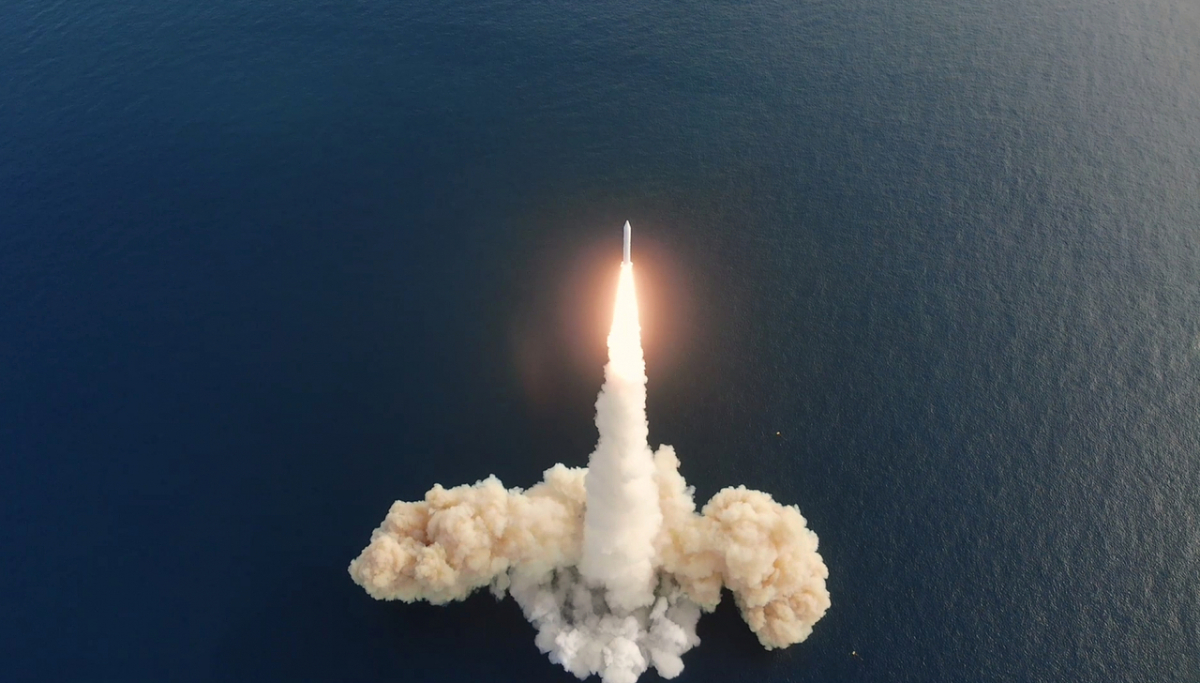
Hanwha Aerospace handles the launch vehicle segment. As the system integrator for the Nuri rocket, Hanwha Aerospace has overseen the entire manufacturing process and demonstrated its civilian-led operational capabilities during the fifth Nuri launch conducted on the 7th. The company played a key role in transferring a significant portion of the practical launch operations previously led by the Korea Aerospace Research Institute (KARI) to the private sector.
The next challenge for the launch vehicle business is improving launch efficiency and economic viability. As low Earth orbit satellite projects gain momentum, the importance of launch capabilities that can stably and continuously transport multiple satellites into space is growing. Accordingly, Hanwha Aerospace is participating in the government's development project for next-generation reusable launch vehicles. Hanwha has begun detailed design work on a methane engine equipped with recovery and reuse features, aiming to fully operationalize reuse by launching a performance verification satellite on this vehicle in 2031.
Satellite manufacturing is led by Satrec Initiative and Hanwha Systems. Satrec Initiative, founded by the development team behind South Korea's first satellite, 'Uri Byeol-1,' has demonstrated unrivaled technological capabilities by developing a 25cm-class ultra-high-resolution optical satellite since being incorporated into Hanwha Aerospace in 2021.
Hanwha Systems is pursuing differentiation with an 'ultra-high-resolution (UHR)' synthetic aperture radar (SAR) satellite targeting the 'very low Earth orbit (VLEO)' environment at altitudes below 400km. A SAR satellite with a resolution of approximately 25cm is scheduled for launch within this year, and a more precise 15cm-class satellite capable of finer analysis is also under development. In December last year, the company completed the Jeju Space Center on a 30,000-square-meter site in Seogwipo, Jeju, consolidating satellite development, assembly, and testing facilities. The center has a production capacity of up to 100 satellites per year.
The next step is expanding into service areas that can be scaled through satellites. In the satellite communication sector, Hanwha Systems has completed the development of a communication system and terminals that link the Eutelsat OneWeb network with military tactical networks, with plans to build an independent low Earth orbit communication network in the long term. In the Earth observation sector, the company is expanding its business scope centered on satellite image sales and artificial intelligence (AI) video analysis services.
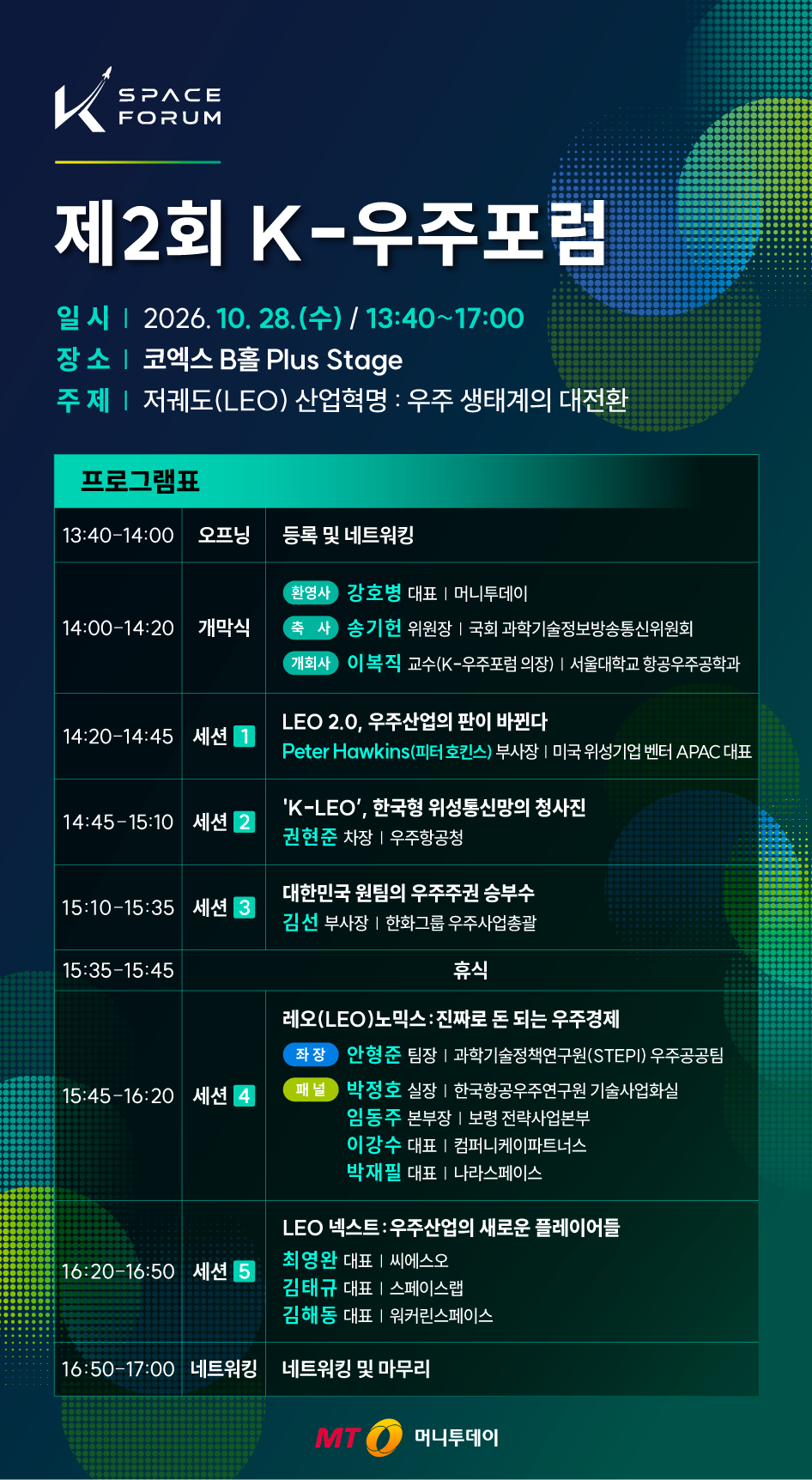
Hanwha's vertical integration strategy and specific blueprint for space-defense synergies in the rapidly changing global low Earth orbit market will be unveiled at the '2nd K-Space Forum' to be held at COEX in Seoul on the 28th. Kim Sun, Vice President and Head of Space Business at Hanwha Group, is scheduled to take the stage personally that day to present Hanwha's strategy for building a space value chain in the low Earth orbit industry, as well as a vision for expanding space territory through joint efforts between the government and private enterprises.
[MoneyToday startup media platform 'Unicorn Factory']

 in FUTURE


