

[For more diverse corporate information on startups, you can view it on the Unicorn Factory big data platform 'Data Lab' .]
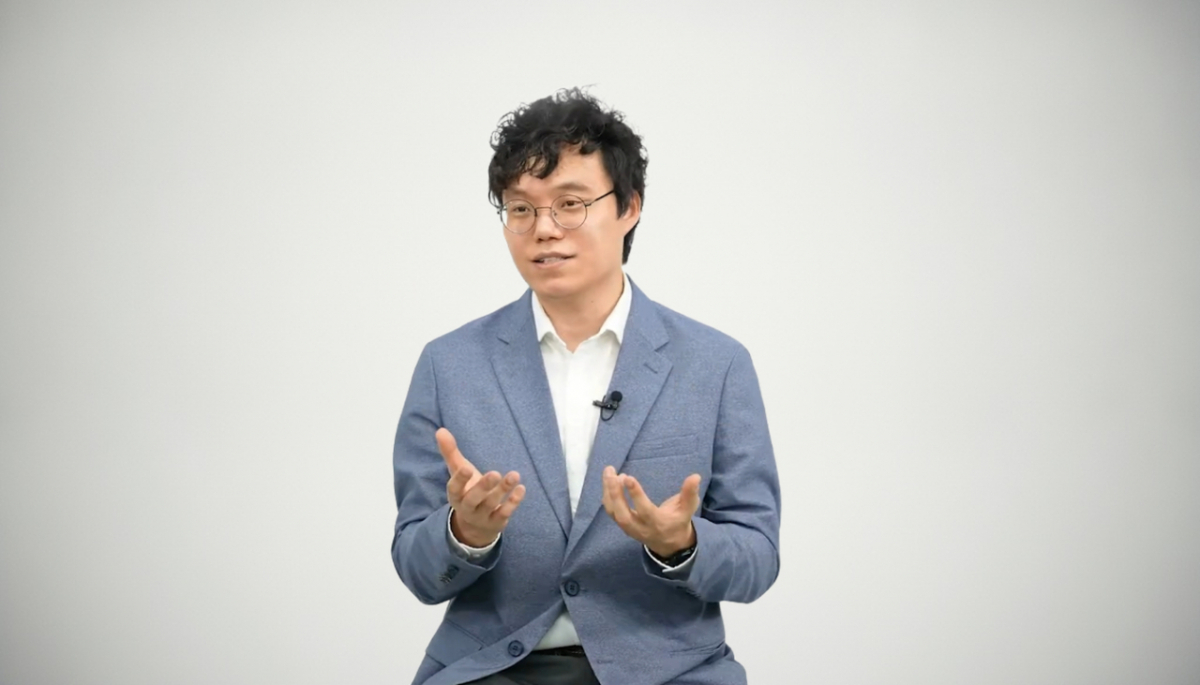
"We have implemented an automated platform that makes cell-free protein synthesis technology much faster and cheaper, allowing components to be freely swapped out as needed."
Lee Jun-gu (CEO) of Aesellon, a faculty-founded startup from Pohang University of Science and Technology (POSTECH), explained this regarding the company's self-developed cell-free protein synthesis platform, 'POPFLEX.'
To discover new drug candidates, one must repeatedly create numerous proteins and peptides (substances formed by amino acids, the basic units of proteins, linked in short chains) and compare their performance.
However, existing cell-based production methods require multiple stages from cell culture to protein expression and purification, resulting in significant time and cost.
Aesellon solved this problem with cell-free protein synthesis technology, which places the components necessary for protein production into a test tube instead of culturing cells themselves to create desired proteins. This method allows for the production of proteins or peptides by adding the gene (DNA) of the protein the user wishes to synthesize.
POPFLEX is a reconstituted cell-free system combining purified ribosomes (cellular organelles that synthesize proteins within cells), energy-related substances, and translation factors required for protein synthesis. It can be utilized for the production and initial screening of various substances such as antibody fragments, peptide therapeutics, and enzymes.
The core competitiveness lies in productivity and price. Lee Jun-gu (CEO) stated, "POPFLEX demonstrates up to six times higher protein synthesis performance compared to competing commercial products, while reducing manufacturing costs by approximately 95% through in-house production."
Expanding from repeat-purchase reagents to bioprinting screening
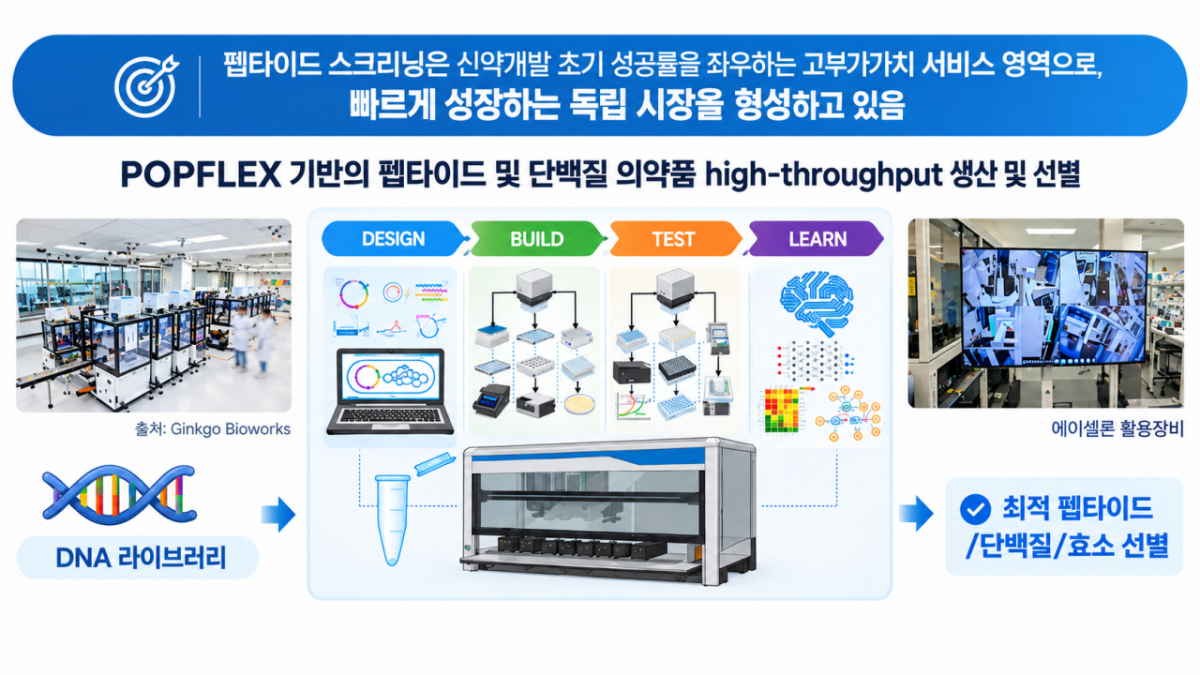
The technology's competitiveness has also been confirmed in actual research. According to research results published in the international academic journal 'Trends in Biotechnology,' the automated reconstituted cell-free system showed higher protein production yields than commercial kits and reduced preparation costs by up to 96%. The system preparation period was also shortened from the previous four days to two days.
General reconstituted cell-free systems require each component necessary for protein synthesis to be produced and purified individually, making the manufacturing process complex. Aesellon applied automated liquid dispensing equipment to reduce human intervention and process errors, standardizing the mixing and production processes of the components.
POPFLEX's modular structure is also a strength. Specific components can be added or removed according to the intended use, allowing non-natural amino acids that do not exist in nature to be introduced at desired positions within proteins.
The company explained that this can be utilized to improve the stability, activity, and half-life of existing proteins, or to design peptides and proteins with new functions.
Aesellon's strategy is to grow POPFLEX not as a simple research kit, but as a core consumable for 'bioprinting.' Bioprinting refers to facilities that rapidly repeat the process of designing, manufacturing, and testing biological substances using automated equipment.
Additionally, POPFLEX can be installed in automation equipment based on 96-well and 384-well plates. By inputting multiple types of DNA simultaneously, various protein candidates can be produced in parallel and their performance evaluated, which is said to accelerate the initial discovery speed of candidate molecules compared to methods that produce new drug protein candidates one by one.
The business model will be expanded in stages. First, starter kits will be sold to universities, government-funded research institutions, and biotech companies. Subsequently, high-throughput reagents for large-scale experiments and customer-customized systems will be supplied.
Lee (CEO) said, "A characteristic of the revenue model is that it consists of consumables that must be purchased repeatedly," adding, "In the long term, we plan to provide services in the form of CROs (Contract Research Organizations) that produce and screen protein and peptide candidate molecules on behalf of clients."
On the 30th, six science and technology specialized universities compete at COEX; 12 student- and faculty-founded companies clash
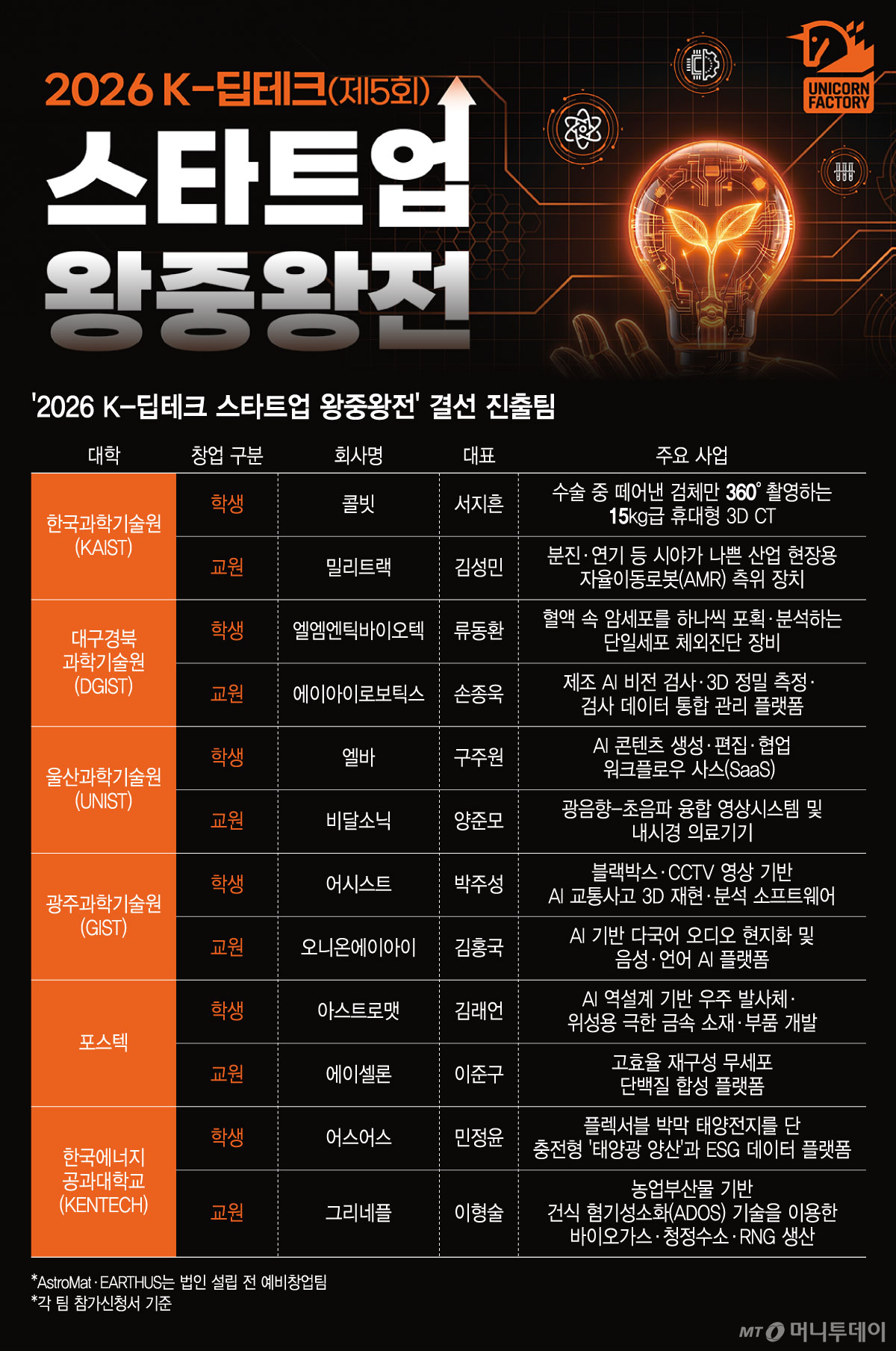
Aesellon will participate as a representative of POSTECH faculty-founded startups in the finals of the '2026 K-Deep Tech Startup King of Kings' ( Spectator registration: https://forms.gle/McNBqdiBts8RJazVA), to be held on the 30th at Hall B Plus Stage, COEX in Seoul Samsung-dong.
Now in its fifth year, the King of Kings is hosted by MoneyToday's startup media platform 'Unicorn Factory' and co-hosted by KAIST (Korea Advanced Institute of Science and Technology), DGIST (Daegu Gyeongbuk Institute of Science and Technology), UNIST (Ulsan National Institute of Science and Technology), GIST (Gwangju Institute of Science and Technology), POSTECH (Pohang University of Science and Technology), and KENTECH (Korea National University of Science and Technology).
The judging panel includes deep tech investment and commercialization experts from Samsung C Lab Outside, GS Vents, Ecopro Partners , L&S Venture Capital , LB Investment , Blue Point Partners, Series Ventures, CNTech, Korea Technology Holdings, and the R&D Special Zone Promotion Foundation.
Participants range from large corporate CVCs (Corporate Venture Capital) to deep tech-specialized VCs, early-stage investment ACs (Accelerators), and public technology commercialization institutions, comprehensively evaluating the commercialization potential and investment attractiveness of the technologies.
The finals feature a total of 12 teams, with six each in the faculty-founded and student-founded categories. The event will be conducted in the format of actual investment recruitment IR (Investor Relations) presentations, with 10-minute presentations and 10-minute Q&A sessions for each team. Evaluation is based on a total score of technology (30 points), marketability (20 points), business viability (40 points), and team capability (10 points).
The Grand Prize will be awarded to one team in each of the faculty-founded and student-founded categories. The two Grand Prize teams will receive the Minister's Award from the Ministry of Science and ICT, which is the Deputy Prime Minister's award, along with a prize money of 3 million won. Four Excellence Award teams will receive the R&D Special Zone Promotion Foundation Lee (President) Award and 1 million won in prize money, while six Encouragement Award teams will each receive the MoneyToday CEO Award and 500,000 won in prize money.
Winning teams will be provided with benefits such as linkage to CVC open innovation and bonus points when participating in the Global Digital Innovation Network (GDIN) overseas expansion program. Regardless of winning status, all 12 finalist teams will receive support for a one-year follow-up scale-up program, including corporate promotion, expert consulting, and networking with investment firms.
<5th K-Deep Tech Startup King of Kings Spectator Registration >
-Date: October 30 (Fri) 9:30~17:00
-Location: COEX Hall B PLUS STAGE, Seoul
-Target: Deep tech field startups and investment VC reviewers
-Hosts: KAIST, DGIST, UNIST, GIST, POSTECH, KENTECH, MoneyToday Unicorn Factory
-Application: https://forms.gle/McNBqdiBts8RJazVA
[MoneyToday startup media platform 'Unicorn Factory' ]

 in FUTURE


