

Verification of software (SW) code created by artificial intelligence (AI) has emerged as a new challenge. Whether written by humans or AI, deploying code to actual services without review can lead to errors and security incidents. The procedure to prevent this is 'code review,' which involves examining the functionality, quality, and security issues of the code.
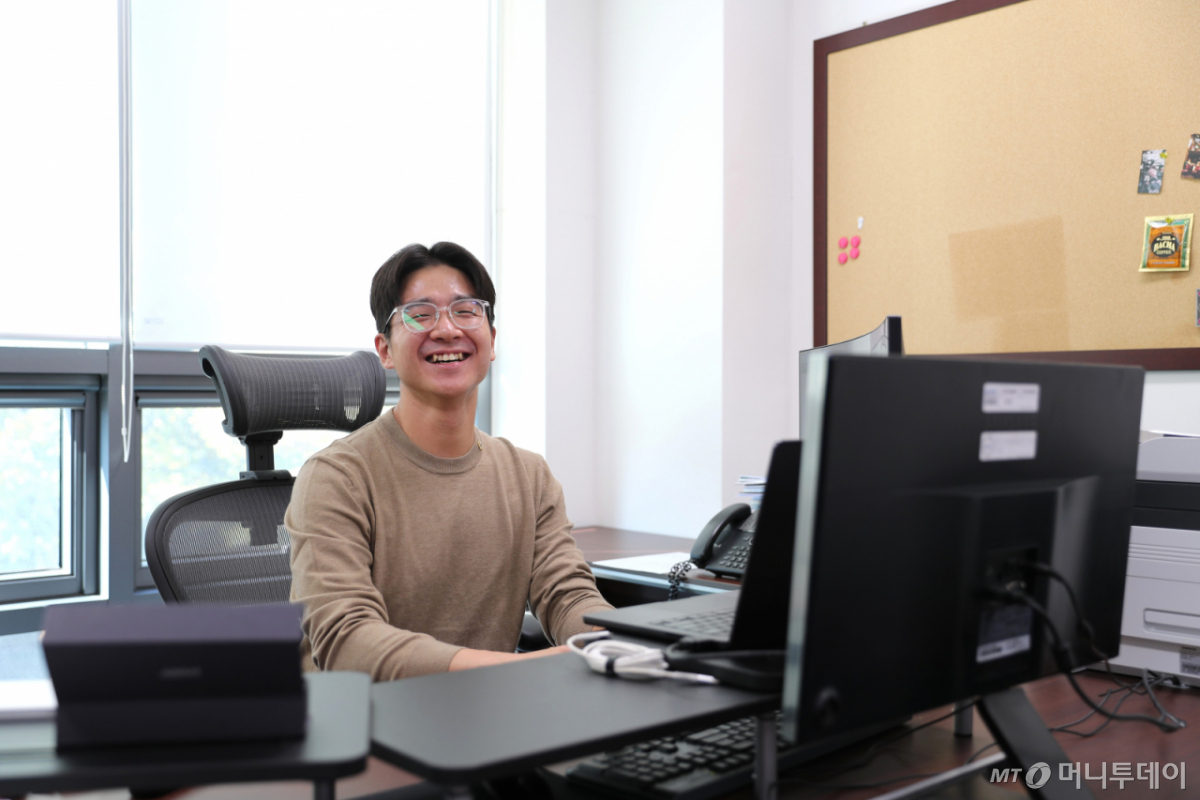
Because such code reviews also require significant time and cost, research has continued on automating them with AI. Most approaches have centered on a single AI reviewing the entire codebase. Kim Ki-seop, Professor in the Department of Electrical, Electronic and Computer Engineering at Daegu Gyeongbuk Institute of Science and Technology (DGIST), said, "If compared to construction supervision, it would be like one supervisor checking everything from design to finishing alone," adding that this is "inefficient in terms of time, cost, and other aspects."
Professor Kim's research team created an 'AI Supervision Team' where multiple AIs with divided roles review code together. One AI checks whether the code was implemented according to the design, while another looks for security vulnerabilities. Yet another AI verifies compliance with the code writing rules established by the team.
However, as the number of AIs and items to review increases, errors may occur where the code review deviates from its original purpose. The AI agents continue conversations among themselves, effectively forgetting the initial supervision objective. To prevent this, the research team added an AI called a 'QA (Quality Assurance) Checker' that oversees the entire supervision team. Its role is to correct course when there is a risk that the AI agents will lose the direction of the code review.
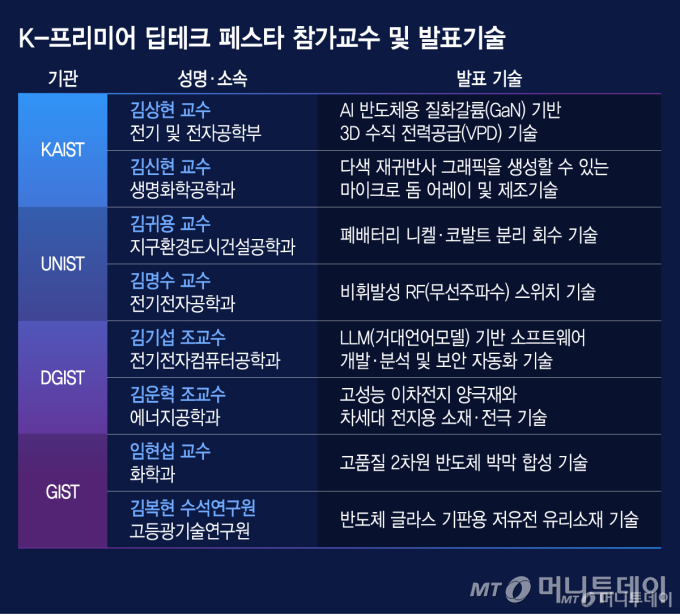
Professor Kim said, "The core function of the QA Checker is to ensure that the AI code review team properly reaches its initial goal." Professor Kim's research team will directly introduce this technology at the '2026 K-Premier Deep Tech Festa' (Registration: https://vvd.bz/buvX) to be held on the 29th at COEX in Seoul.
Professor Kim is also conducting research into examining the thinking processes of AI models. Just as stimulating specific areas of the human brain activates language or physical functions, this research involves identifying neurons within AI that handle specific functions. Professor Kim said, "I was curious whether there are separate neurons responsible for each language inside an AI, and whether deleting those parts would truly disable that language capability."
Analysis results showed that deleting neurons responsible for a specific language actually lowered the ability in that language. However, there were also cases where abilities in other languages declined simultaneously. Professor Kim explained, "If we only delete the neurons responsible for Japanese but Korean becomes clumsy as well, we must leave the neurons affecting Korean intact," adding, "This way, we can accurately delete only the target to be removed while using the remaining knowledge as before." The research team is also conducting studies on enhancing specific neurons to boost corresponding capabilities.
This research connects to technology for erasing knowledge that AI has already learned. In December 2024, the Indian Publishers Association, with participation from Bloomsbury, the publisher of Harry Potter, filed a lawsuit against OpenAI, claiming that ChatGPT provided book summaries without permission. The publishers demanded that if license agreements would not be signed, the training data should be deleted. However, retraining an AI from scratch to erase already learned content costs tens of billions of won.
Professor Kim is researching methods to store knowledge in locations where it can be easily erased from the learning stage itself. Citing a classroom environment composed of multiple separate blackboards as an example, he said, "If we need to erase Harry Potter content, it would be like removing only the Harry Potter auxiliary blackboard," adding, "It will be possible to design AI from the start to be amenable to 'partial deletion.'"
Professor Kim emphasized, "The technologies I research will fundamentally align with the concerns of most AI companies," stating, "I want to better understand the needs of domestic companies and provide technology that can be directly utilized, thereby contributing to the economic development of our country."
<Registration for 'K-Premier Deep Tech Festa (Technology Transfer and Commercialization)'>
- Date: October 29, 2026 (Thu) 1:00 PM
- Location: Hall B PLUS STAGE, COEX, Samsung-dong, Seoul
- Target Participants: Companies considering technology transfer, joint research, or new business ventures; family companies of government-funded research institutes; investment firms
- Participation Fee: Free (Pre-registration required)
- Hosts: Ministry of Science and ICT, KAIST, GIST, DGIST, UNIST, MoneyToday Unicorn Factory
- Sponsors: Korea Institute of Science and Technology Information (KISTI), Korea Commercialization Agency for Science and Technology (COMPA)
- Application: https://vvd.bz/buvX
[MoneyToday startup media platform Unicorn Factory]

 in FUTURE

