

[For more diverse corporate information on startups, please visit the Unicorn Factory Big Data Platform 'Data Lab'.]
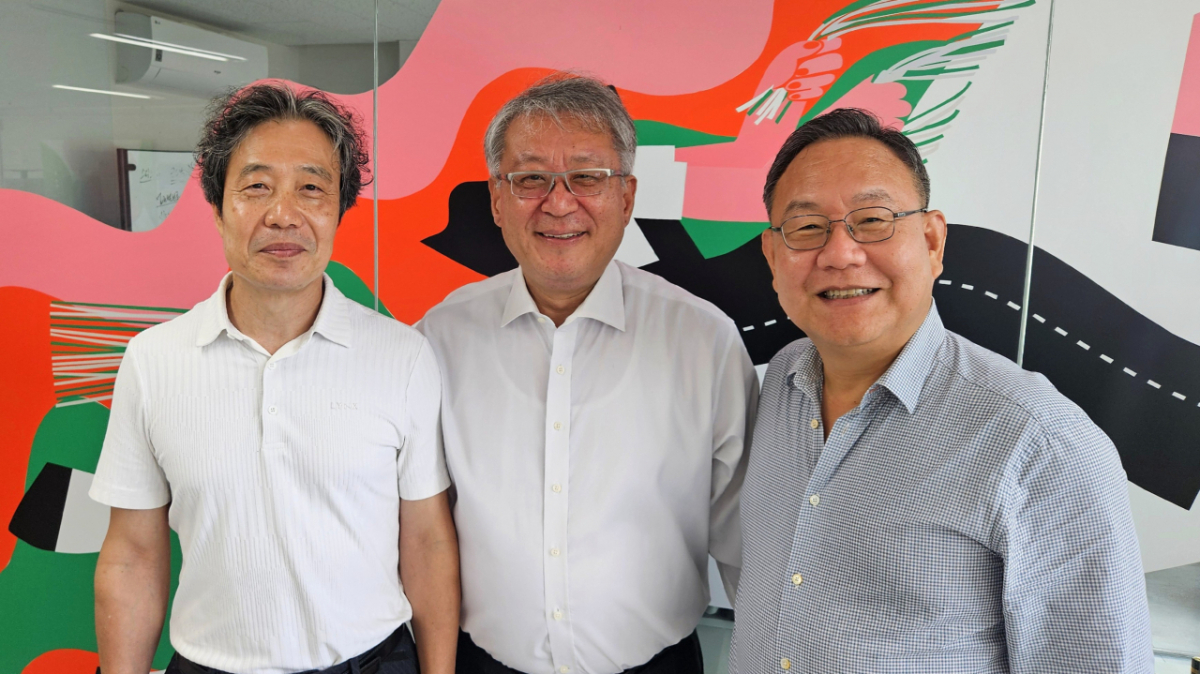
"Conventional leakage circuit breakers cut off electricity when they detect danger. We continue to supply electricity while controlling only the dangerous leakage current to a safe level."
Cho Gwang-sung, CEO of RF Devices, explained it this way regarding their self-developed "Active Leakage Current Control System." Unlike the conventional method of cutting off power from the source when a leakage accident occurs, the core of the technology is controlling fault currents that can cause electric shock and fire while maintaining the necessary current.
Leakage current refers to current flowing outside its normal path from wires or electrical/electronic devices. When insulation damage, insulation degradation, or flooding occurs, current flows through grounding or a person's body, potentially leading to electric shock or fire.
A typical leakage circuit breaker cuts off power when it detects leakage current above a certain level to prevent accidents. However, for facilities where even a brief power outage leads to significant damage—such as hospitals, communication facilities, semiconductor factories, AI (artificial intelligence) data centers, and aquaculture farms—the act of cutting off power itself poses another danger.
RF Devices' technology is useful for such facilities where not even a momentary power outage is permitted. A representative example of its application is the eco-friendly hospital ship "Jeonnam 512," built by the Jeonnam Province to provide medical care to residents of island areas.
CEO Cho Gwang-sung stated, "A hospital ship operating at sea requires both safety and power continuity because if power is cut off during treatment, the entire medical service could be suspended." He added, "We need technology that not only prevents the risk of electric shock but also controls leakage current while maintaining electrical supply to medical equipment."
Controlling Leakage Current Below 5mA Without Cutting Power
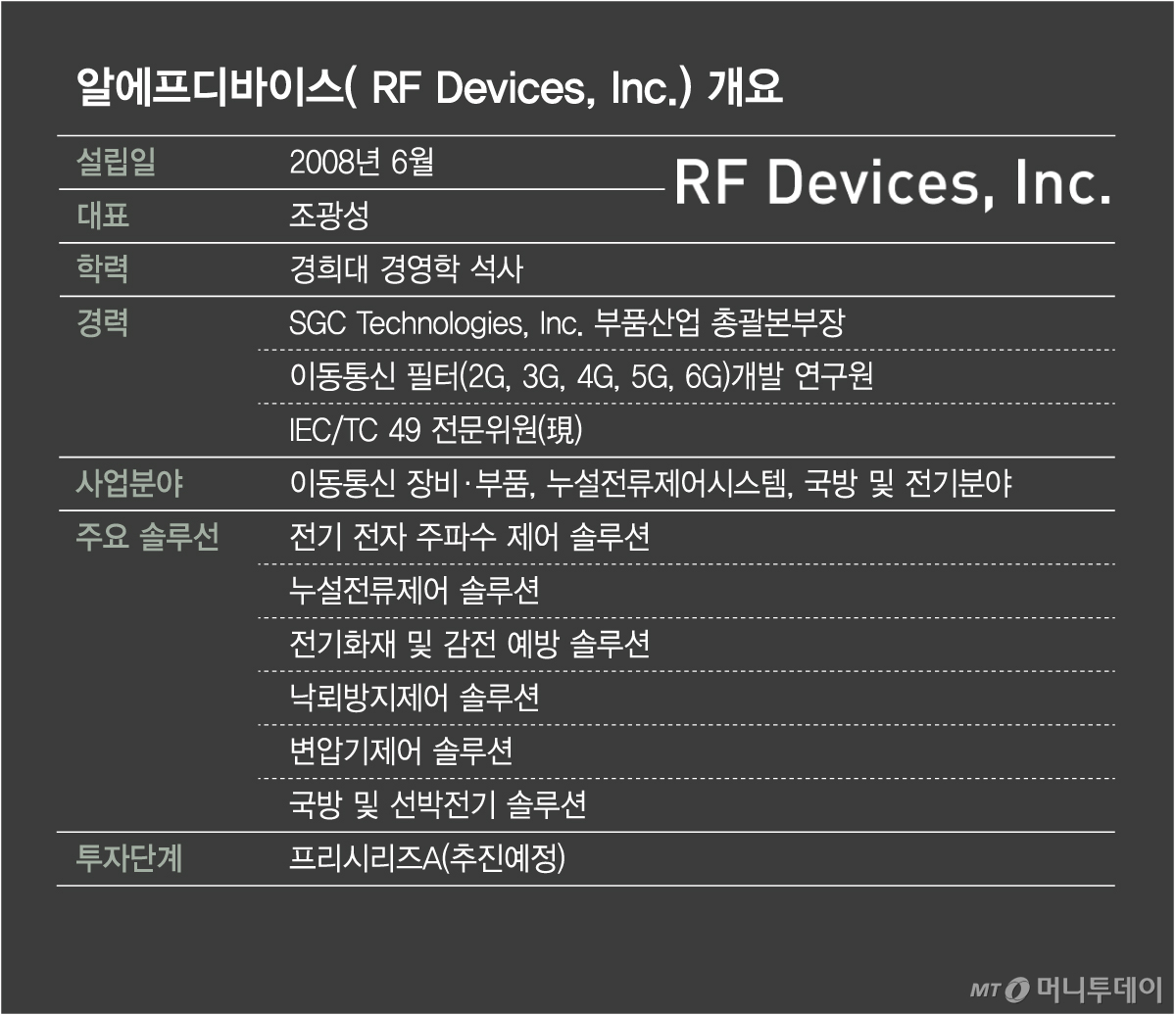
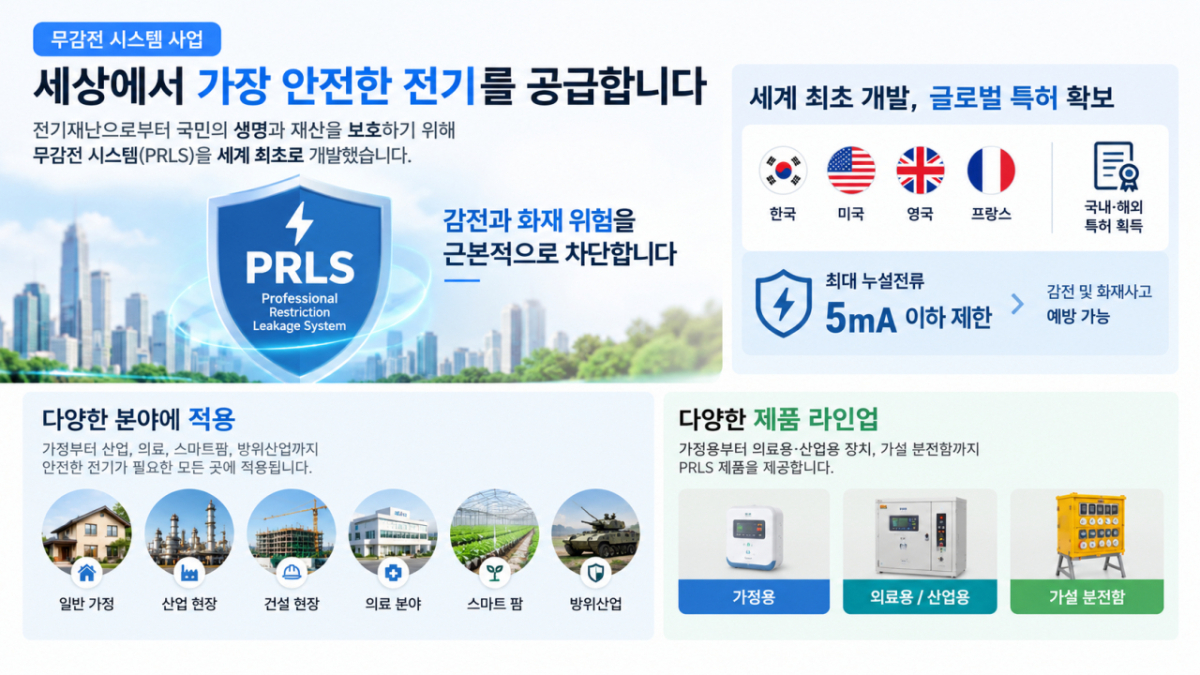
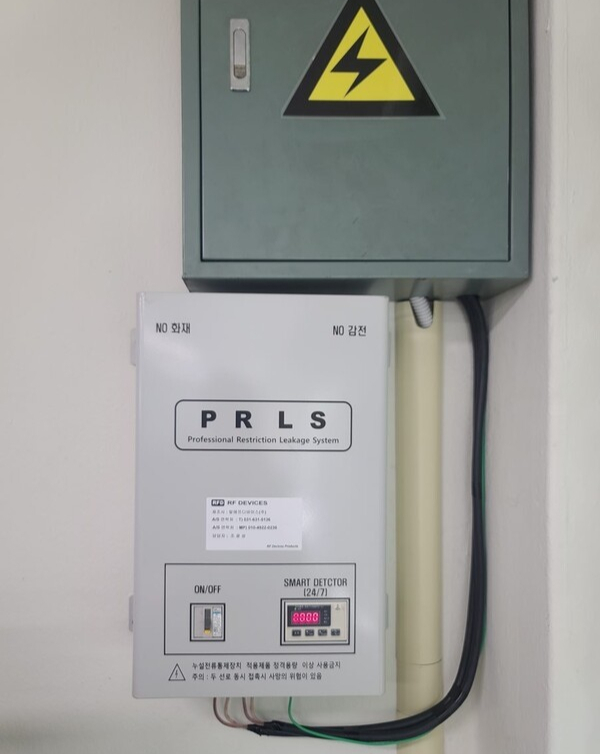
RF Devices controls the leakage current problem by maintaining normal power supply while reducing dangerous currents, utilizing insulation transformer structures, coil design, and sensor/control technologies.
The core principle is Ohm's Law (V=IR). Leakage current does not disappear even if it flows into the ground through grounding. It follows the path of least resistance back into the building, generating heat and causing fires and electric shocks.
RF Devices placed resistance in the path where this current returns, reducing leakage current to below 5mA, which is harmless to the human body, while allowing normal current to flow as usual. In tests conducted by the Korea Fire Research Institute assuming ground faults, leakage, and human contact conditions under AC 220V, the leakage current was measured at a maximum of 2.42mA.
Even when a power-connected multi-outlet was submerged in water, the leakage circuit breaker did not trip, and no sparks occurred. In typical electrical installations, this situation would raise concerns about electric shock or short circuits, but with RF Devices' leakage current control system, power was supplied normally.
Kim Hong-il, CEO of K-Unicorn Investment, evaluated, "The key is to view the fact that leakage current can occur at any time as a risk variable and control it within a safe range." He added, "It has changed the perspective on electrical safety from post-accident response—cutting off power after an incident—to proactive prevention by constantly managing the causes of accidents."
The performance is being proven in various fields. In addition to the Jeonnam Province's hospital ship, a case with the Korea Rural Community Corporation is also representative. Seismometers installed in reservoirs and dams were vulnerable to lightning strikes, frequently damaging equipment worth around 100 million won per unit. However, after adopting this technology, it is reported that the circuit breakers have never tripped once.
The Navy also reached out first. RF Devices is consulting with military units that have suffered equipment damage from lightning strikes regarding trial installations, and is in discussions with the Agency for Defense Development (ADD) on ways to apply the technology to warships and submarines.
Transplanting Mobile Communication Filter Technology into Electrical Safety
CEO Cho has been a component expert developing high-frequency filters for mobile communications since 1997. These components allow only designated frequencies to pass while filtering out unnecessary bands, requiring high-difficulty work such as mixing and molding ceramic raw materials, baking them at high temperatures, plating with silver, and finely adjusting circuit characteristics.
The turning point for the business came after 5G. He stated, "As investment in mobile communication infrastructure decreased, it became difficult to continue growth with existing components alone." He added, "After examining the electrical industry by dividing it into production, savings, and safety, we chose electrical safety as a new revenue source where we could utilize our existing coil technology without large-scale infrastructure."
The market RF Devices targets is diverse, extending beyond hospitals and ships to data centers and logistics centers with high costs for power outages, semiconductor/battery factories, communication facilities, as well as aquaculture farms, camping sites, public baths, and swimming pools that use both water and electricity.
Lee Jung-yoon, Vice President of RF Devices, said, "While risk factors differ by facility, the point is the same: leakage current must be controlled before it spreads into electric shock, fire, or power outages." He added, "By designing systems according to on-site capacity and accident types, we can expand application to all industrial sectors."
The challenge is changing market perception. Safety equipment tends to be viewed as a cost until an accident occurs, and especially since leakage is invisible, it is difficult to feel the necessity of preventive investment.
CEO Kim advised, "Simply explaining that the technology is good cannot create a market." He continued, "We must show data on changes in leakage current before and after installation, the effect of preventing power outages, and the losses that can be reduced when an accident occurs. Furthermore, if we present the effect of reducing insurance premiums, customers will be able to adopt it more easily."
Evolving into an IoT-Based Electrical Safety Management Platform
RF Devices has signed memoranda of understanding with the Korea Fire Insurance Association and DB Insurance, aiming to reduce fire insurance premiums for buildings where the product is installed by 20%, and is promoting related certifications. It is conducting a pilot project on streetlights in new cities with Korea Land and Housing Corporation, and is in discussions with Yeju City and Icheon City regarding the enactment of ordinances supporting installation.
Based on this, the goal is to evolve beyond a manufacturing company centered on product sales into an "electrical safety management platform." It is preparing a service that adds IoT (Internet of Things) functionality to products to collect leakage current and abnormal signals for each building in real time, allowing remote confirmation and management through a mobile application.
CEO Cho stated, "We will show data on where and when leakage occurred in a region and how much the system reduced dangerous currents." He emphasized, "Our goal is not just to sell equipment once, but to create a platform that continuously manages the risks of electrical installations."
He added, "Although we faced significant difficulties due to lack of funding over the past few years, references are accumulating one by one in hospital ships, public institutions, and industrial sites." He continued, "After verifying our technology and business model domestically, we will enter overseas markets with high demand for electrical safety, such as the United States and the Middle East."
He further stated, "When electricity is cut off, both industry and daily life stop, but unconditionally cutting off electricity for safety is not the answer either." He said, "We will present a new option to the global electrical safety market with technology that allows electricity to keep flowing while blocking only the danger."
[MoneyToday startup media platform 'Unicorn Factory']

 in FUTURE


