

[For more diverse corporate information on the startup featured in this article, please visit the Unicorn Factory big data platform 'Data Lab'.]
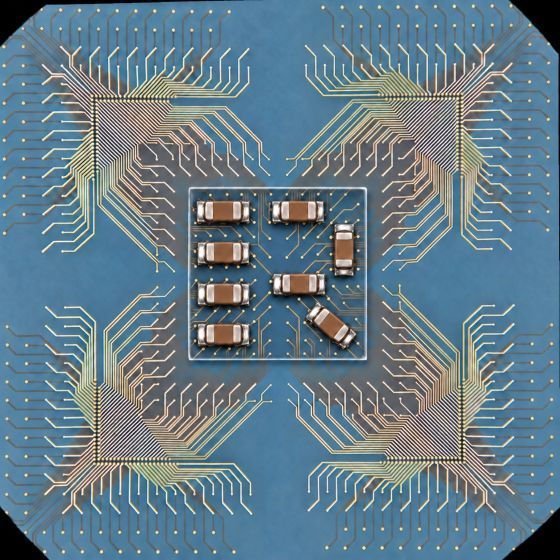
The glass substrate technology developed by Lumien, a semiconductor packaging company in Gumi, North Gyeongsang Province, for artificial intelligence chips, received the Best Innovation Award at 'CES 2027,' the world's largest IT and home appliance exhibition.
This technology was concretized by Seo Tae-min, vice president of Lumien, while attending DGIST's Graduate School of Engineering under the guidance of Pro. Seong Si-jun, head of the Materials Fundamental Research Division.
DGIST said Friday that Lumien's Multi-Layer Glass Substrate Interposer for AI Chip Packaging was selected for the Best Innovation Award after receiving the highest score in the 'Computer Hardware and Components' category at CES 2027.
The CES Best Innovation Award is given to products or technologies that receive the highest scores within their respective categories among Innovation Award winners.
An interposer is an intermediate substrate that connects multiple semiconductors, such as processors, high-bandwidth memory (HBM), and chiplets, within a single package.
As AI computations become more advanced, the amount of data exchanged between chips increases, causing bottlenecks; how densely wiring can be packed into a limited area determines performance.
MLG solved this problem by distributing electrical pathways across multiple layers of glass. By stacking five sheets of glass to create seven metal wiring layers, it achieved fine line widths and spacing.
Vertical connections between layers were handled with solid copper cores without undergoing complex electroplating processes. It was evaluated as having realized 'ultra-high-density 3D interconnects' required for high-performance computing (HPC) packages.
This achievement is drawing attention as a case where technical challenges in the corporate field were solved by linking them with university research and education.
DGIST's Graduate School of Engineering operates an 'on-site-centered education model' where working professionals use technical limitations encountered in their jobs as thesis research topics, and faculty provide close support throughout the entire process from problem definition to performance verification.
Prof. Seong said, "This is a fruit achieved by jointly considering and guiding on-site challenges of regional corporate leaders based on the unique curriculum of the Graduate School of Engineering," adding, "We are pleased that an achievement solving industrial field concerns with university research and education capabilities has been recognized on the global stage."
Seo said, "Thanks to practice-centered classes, projects, and the professor's guidance, we were able to concretize core ideas for new product development," adding, "We will use this award as a stepping stone to accelerate our entry into the global semiconductor packaging market and leap forward as a company leading next-generation packaging technology."
[MoneyToday startup media platform Unicorn Factory]

 in FUTURE
