

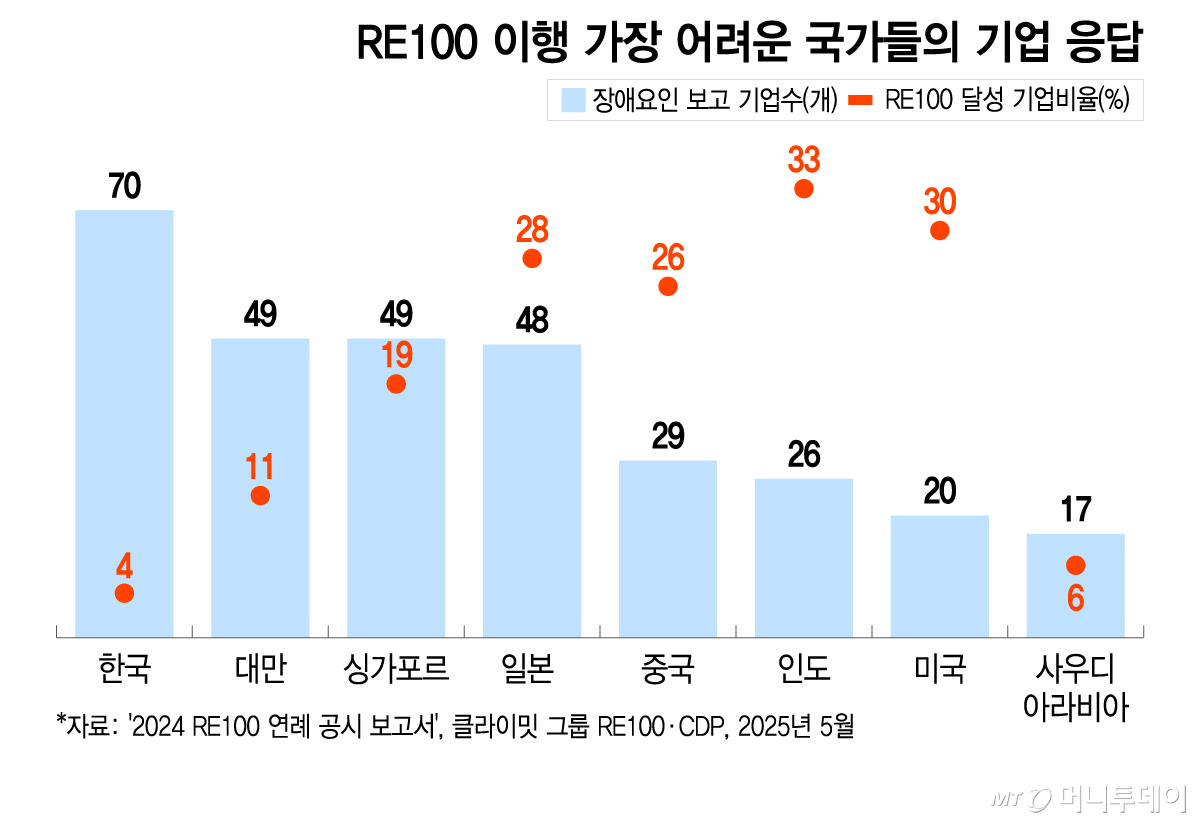
#. A major domestic company (Company A) was recently required by a global client to increase its share of renewable energy Power Purchase Agreements (PPAs) to a certain level. While numerous global clients have been requesting expanded use of renewable energy for several years, these demands have intensified since last year. Even Company B, a mid-sized Korean automotive parts manufacturer that has maintained the No. 1 market share globally in its sector, received an official notice from a European automaker in 2024 stating that participation in bids would be restricted if renewable energy usage was insufficient, prompting it to urgently secure renewable energy PPAs.
Domestic export companies are focusing heavily on procuring renewable energy due to escalating carbon reduction pressures within their supply chains. The year 2030 marks the deadline set by numerous global corporations, including major U.S. "big tech" firms and leading European manufacturers, as an intermediate target for achieving carbon neutrality. These companies are integrating and managing the carbon emissions of all suppliers within their supply chains. For domestic companies serving these entities, securing renewable energy has effectively become a "condition for survival."
"Use renewable energy"... Supply chain demands rise
In recent years, global supply chain demands for renewable energy have evolved beyond simple environmental recommendations into structured requirements. Since the 2020s, the European Union (EU) has comprehensively institutionalized regulations on carbon and resource circulation through mechanisms such as the Carbon Border Adjustment Mechanism (CBAM), Battery Passport, and Corporate Sustainability Due Diligence Directive (CSDDD). However, this is not the only factor at play.
Even earlier, in the 2010s, big tech companies like Microsoft (MS), Apple, Amazon, and Google began proactively securing renewable energy and decarbonizing their supply chains. Microsoft already signed a 110-megawatt (MW) onshore wind power PPA in Texas in 2013, while Apple expanded the adoption of low-carbon aluminum starting in the late 2010s to drive supply chain decarbonization.
The background for global companies' push toward expanding renewable energy includes both social responsibility to address climate change and market pressure from capital markets that fully embraced ESG (Environmental, Social, and Governance) terminology by the late 2010s. However, evaluations suggest that beneath these proactive moves lies a strategic calculation: to seize market leadership when carbon emission regulations begin functioning as full-fledged trade barriers. Since most domestic companies are integrated into supply chains led by these global corporations, structural changes demanding carbon reduction could exert comprehensive pressure on Korea's export industries.
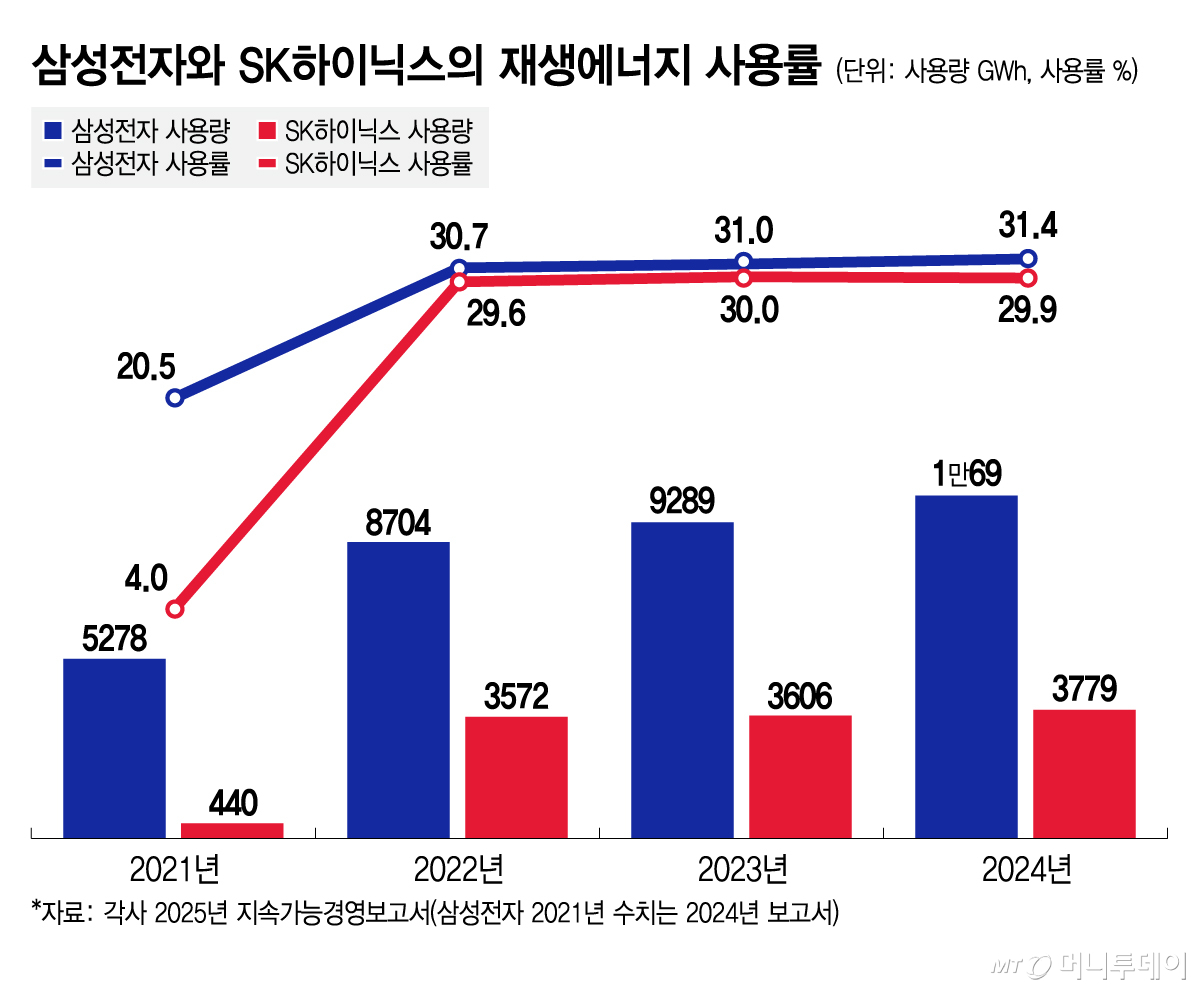
Nevertheless, it remains difficult for Korean companies to secure renewable energy domestically. While Samsung Electronics and SK Hynix have nearly completed securing renewable energy for their overseas facilities in the U.S., Europe, China, and elsewhere, their overall renewable energy transition rate across all operations remains around 30%. This is primarily because renewable energy supply within Korea—where their core production bases are located—is extremely limited.
Corporate demand surges, but supply growth lags, driving price increases
In recent years, the rapidly growing domestic corporate demand for renewable energy and the severely insufficient domestic renewable energy supply have ultimately led to increased cost burdens for companies.
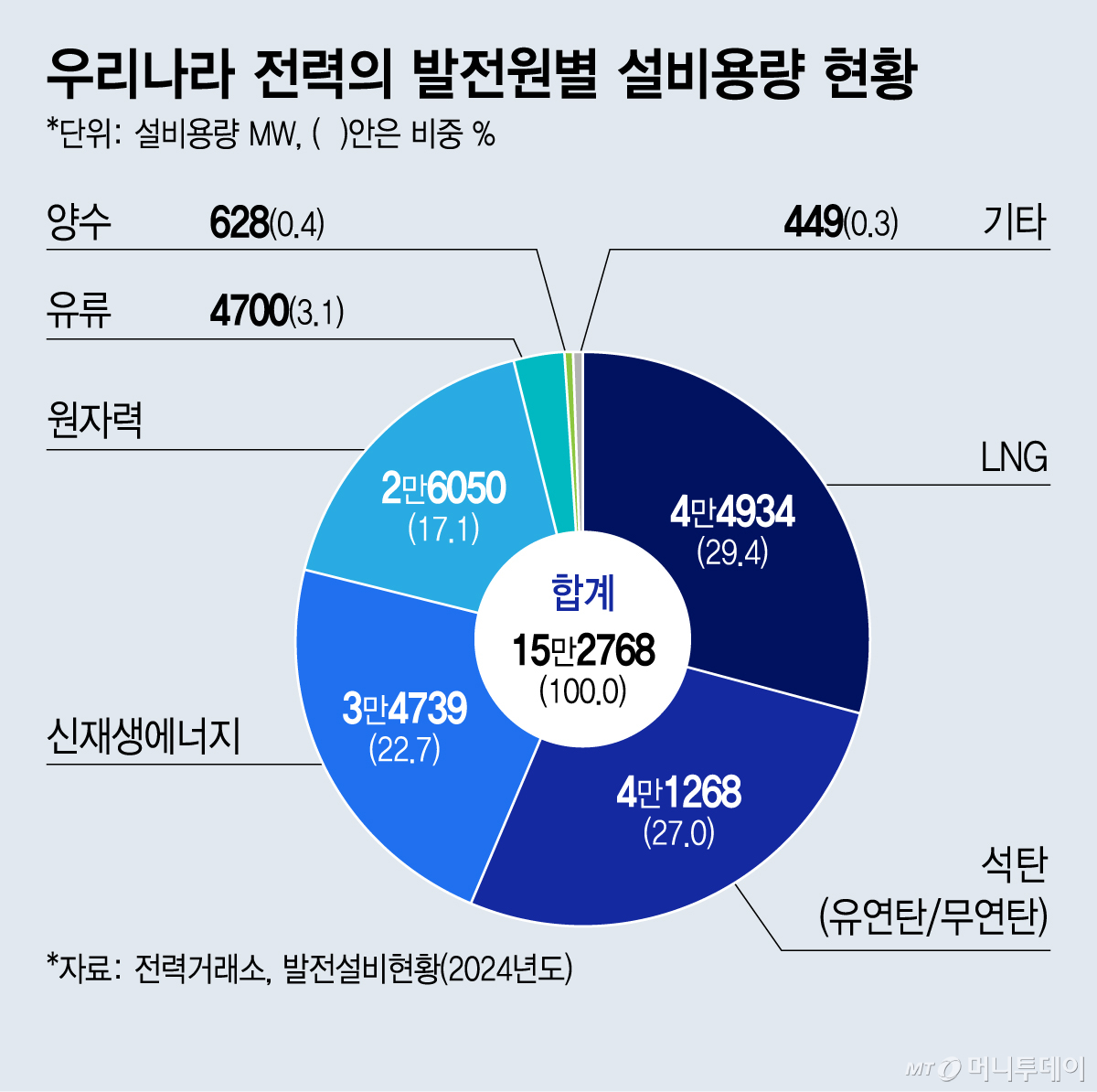
According to Korea Energy Agency's "Status and Policy Challenges of Domestic Renewable Energy," as of 2024, the share of renewable energy in Korea's power generation stood at 8.6%, trailing behind both the International Energy Agency (IEA) average (33%) and Japan (24%). Even based on installed capacity, domestic new and renewable energy facilities amount to approximately 35 gigawatts (GW), which is less than the volume of renewable energy contracts signed by a single Microsoft enterprise between 2020 and last year (approximately 40 GW).
The trend of companies competing for limited volumes has led to "price increases." In fact, the price of REC (Renewable Energy Certificate), one of the means through which companies secure renewable energy, surged from around 30,000 won in 2021 to approximately 70,000 won by 2025. Based on solar power, PPA contract prices jumped sharply from around 140 won per kilowatt-hour (kWh) at the early stage of PPA introduction to 180 won last year.
Starting with the 2024 industrial electricity rate hike, even major corporations have fully entered the PPA market, further intensifying excess demand for renewable energy. A representative from a renewable energy supply company stated, "Clients, especially European companies, began requiring their suppliers to use renewable energy starting in 2025, leading to a sharp surge in domestic corporate demand for renewable energy since around 2023 (considering construction periods)."
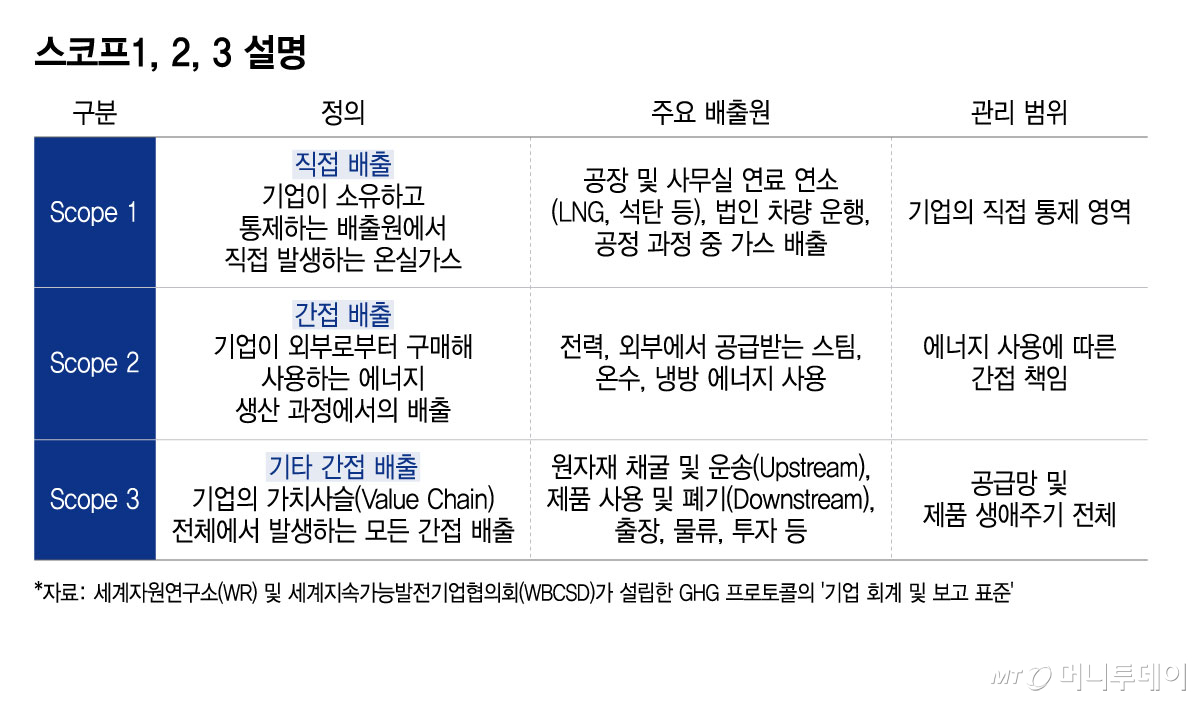
A representative from a major domestic corporation with high export exposure noted, "Global companies must manage Scope 3 emissions (all indirect carbon emissions occurring throughout the entire corporate value chain), so demands for renewable energy use among suppliers will continue." They emphasized, "Above all, it is crucial for the government to expand renewable energy supply while reducing policy uncertainty, creating an environment where companies can formulate long-term strategies."

 in INDUSTRY


