

LG Innotek is entering the core robot component market by unveiling next-generation vision sensing modules for physical AI (artificial intelligence) and tactile sensing modules that serve as a robot’s skin. The company plans to build sensing solutions that maximize robot perception performance by combining optical and ultra-precision design technologies with world-class sensor technologies.
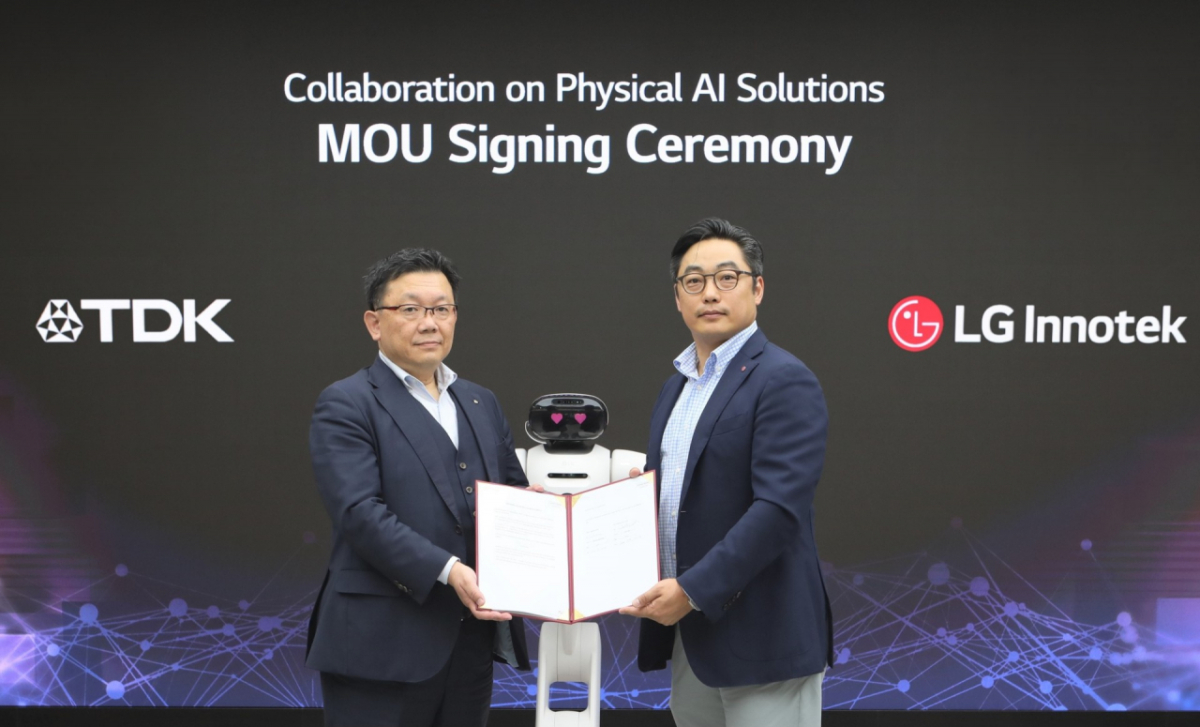
LG Innotek announced on the 28th that it has signed a strategic partnership agreement with TDK, a global electronic components company. Headquartered in Japan, TDK holds an extensive portfolio of sensors covering inertia, position, pressure, temperature, and more.
The two companies will conduct preliminary research to apply TDK’s inertia and position sensors and microphones to LG Innotek’s vision sensing modules. This aims to develop next-generation vision sensing modules that enhance robot perception performance by integrating motion, direction, and acoustic data. Equipping the system with TDK’s inertia sensors (IMUs) allows correction of video shake caused by robot movement, thereby improving accuracy. Robot manufacturers will also benefit from receiving sensors in integrated module form, reducing integration burdens.
An LG Innotek executive stated, “The possibilities for next-generation vision sensing modules that can be created through synergy with TDK, which possesses dozens of sensor technologies, are limitless. We plan to unveil modules equipped with inertia sensors by 2027.”
The companies will also jointly develop tactile sensing modules designed to function as a robot’s skin, targeting completion by next year. These high-value-added components attach to robot hands, arms, and torsos to recognize contact and pressure. By combining LG Innotek’s module integration and digital signal processing technologies with TDK’s ultra-precision tactile sensing capabilities, they aim to deliver optimized modules. According to market research firm Grand View Research, the global tactile sensor market is projected to grow from approximately $3.68 billion (about 5 trillion won) in 2025 to around $21.5 billion (about 29 trillion won) by 2033. As the robot industry expands, the market potential for tactile sensing modules is expected to grow accordingly.
Previously, LG Innotek has continued its efforts to penetrate the robot ecosystem. It invested in humanoid robot company Figure AI and is jointly developing a vision sensing system for Boston Dynamics’ next-generation Atlas robot. Earlier this year, it also entered the Yangsan facility for robot components, making related revenues visible.
In the future, both companies plan to expand their collaboration into various physical AI areas, including real-time analysis and processing technologies for sensor-collected data. LG Innotek also intends to continuously identify new business areas for robots, such as sensing, hands, and tactile sensors.
Moon Hyeok-su (President) stated, “As multi-sensing that combines numerous sensors gains attention in the robot field, we will lead the core component ecosystem for robots through our collaboration with TDK, which holds a wide range of sensors. Moving forward, we plan to accelerate our entry into the physical AI market by partnering with multiple companies to further enhance key technologies applied to robots’ eyes and hands.”

 in INDUSTRY
