

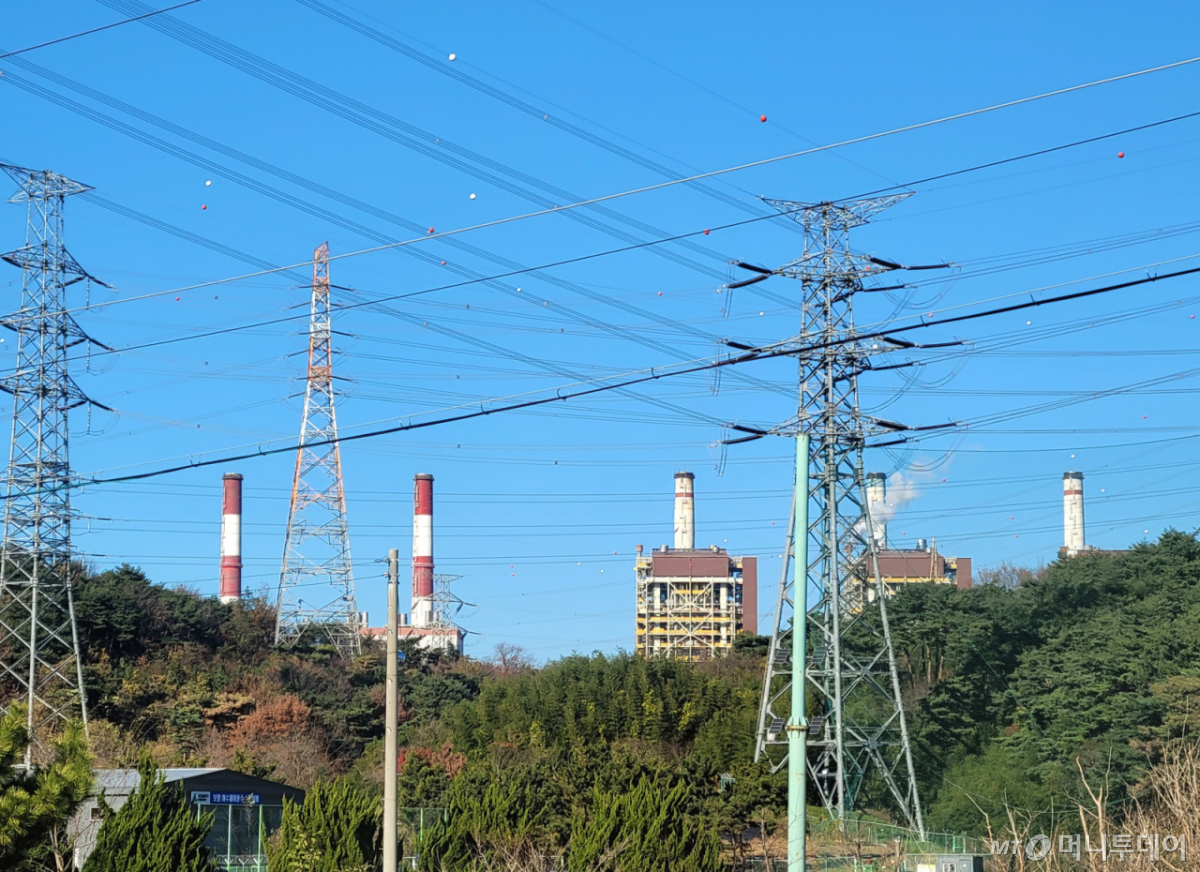
"We repeatedly requested that the government and the company provide education and support for obtaining necessary qualifications for job transition, but no clear measures were implemented. After the coal power plant closure, we established a cooperative to enable workers to remain in the region and continue working."
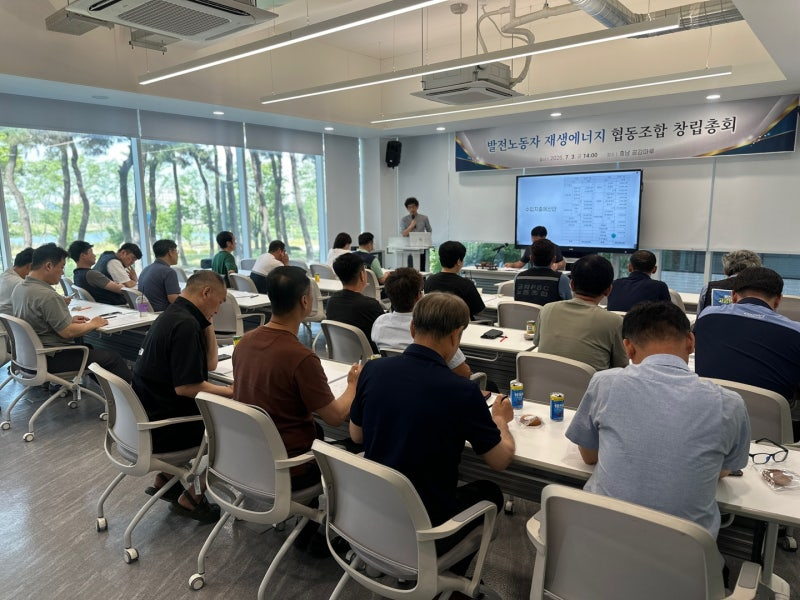
Choi Seong-gyun (CEO), representing the 'Energy Worker Renewable Energy Cooperative' led by laborers from subcontracting firms at coal power plants in Boryeong, Seochon, Taean, and Dangjin in South Chungcheong Province, explained the cooperative's founding background as follows. Starting with seven founding members earlier this year, the cooperative now has over 100 members. Most were formerly non-regular employees working for subsidiaries of public power companies. They held their inaugural general meeting last July to begin formal operations.
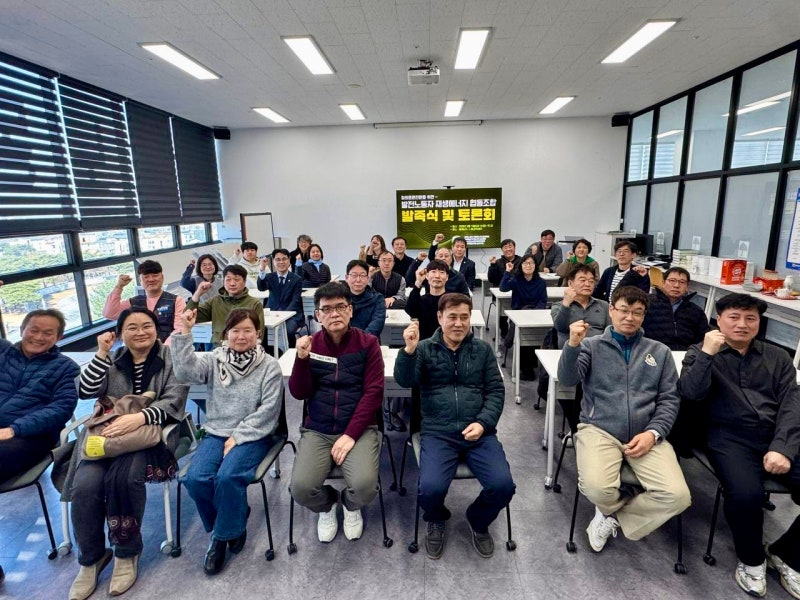
For these workers, a 'just transition' is not an abstract policy goal but an urgent practical challenge that must be addressed. The primary objective of forming the cooperative was also to create jobs.
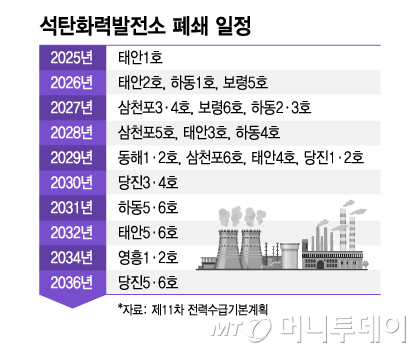
When coal power plants close, regular employees of power companies can be reassigned to newly constructed liquefied natural gas (LNG) combined-cycle power plants. However, the situation differs for subcontracting workers who operated and managed environmental equipment. LNG plants do not require many of the facilities used in coal plants. Choi (CEO) explained, "Workers like us, who have handled environmental equipment and greenhouse gas-related tasks, will have no relevant job roles even if transferred to combined-cycle power plants."
Rather than waiting, they chose to become renewable energy operators themselves. The cooperative's purpose extends beyond distributing generation profits to investors. Its first goal is to grow solar power generation and maintenance businesses to employ workers from closing power plants.
The cooperative's 'first project' is already underway. A solar power generation project with a capacity of approximately 268 kilowatts (kW) is being pursued in Boryeong, South Chungcheong Province, currently at the stage of negotiating lease agreements with landowners. Proposals for solar panel installation have also been received from four locations, including rooftops of buildings in Boryeong and Seoul. Discussions are ongoing with institutional investors to determine where to launch the first project.
In addition to constructing power plants themselves, the cooperative plans to make solar panel maintenance and operations (O&M) a core business. They have already received requests to manage facilities at three sites in the Boryeong area.
Looking ahead, the cooperative intends to launch projects using drones to inspect the condition of solar panels. To this end, some members are preparing for drone certification training. Choi (CEO) stated, "Power plant workers often hold qualifications such as electrician, industrial electrician, and skilled worker certifications, along with safety and facility maintenance credentials, and are familiar with on-site tasks like welding. With additional training, they can relatively quickly acquire technical skills in the renewable energy sector."
The cooperative is also exploring safety management roles that leverage their power plant experience. The plan includes identifying jobs such as safety personnel who monitor crane and heavy equipment operations at maintenance sites, provide hand signals to guide work directions, and ensure safe movement. Initially, they aim to hire 5–10 people within two years, with the goal of expanding operations to create up to approximately 90 jobs within five years.
The cooperative identifies securing project sites as its biggest challenge. They are requesting that idle land at power plants, public parking lots, and rooftops of public institutional investor buildings be leased at reasonable rates to enable the worker-centered cooperative to participate in projects. Choi (CEO) emphasized, "It would be greatly helpful if local governments and power companies could open pathways for utilizing shared or idle lands."
The decision by Choi (CEO) to establish the cooperative was also driven by a sense of crisis over regional decline. When coal power plants close, not only individual workers' jobs but also the local economy centered around the plant can be destabilized. He noted, "It is difficult for long-term local residents to leave their hometowns in search of work." He added, "We hope to establish a model first in South Chungcheong Province and, once successfully implemented, expand it to other regions facing coal plant closures, such as Samcheonpo and Hadong in Gyeongsangnam-do."

 in INDUSTRY


