

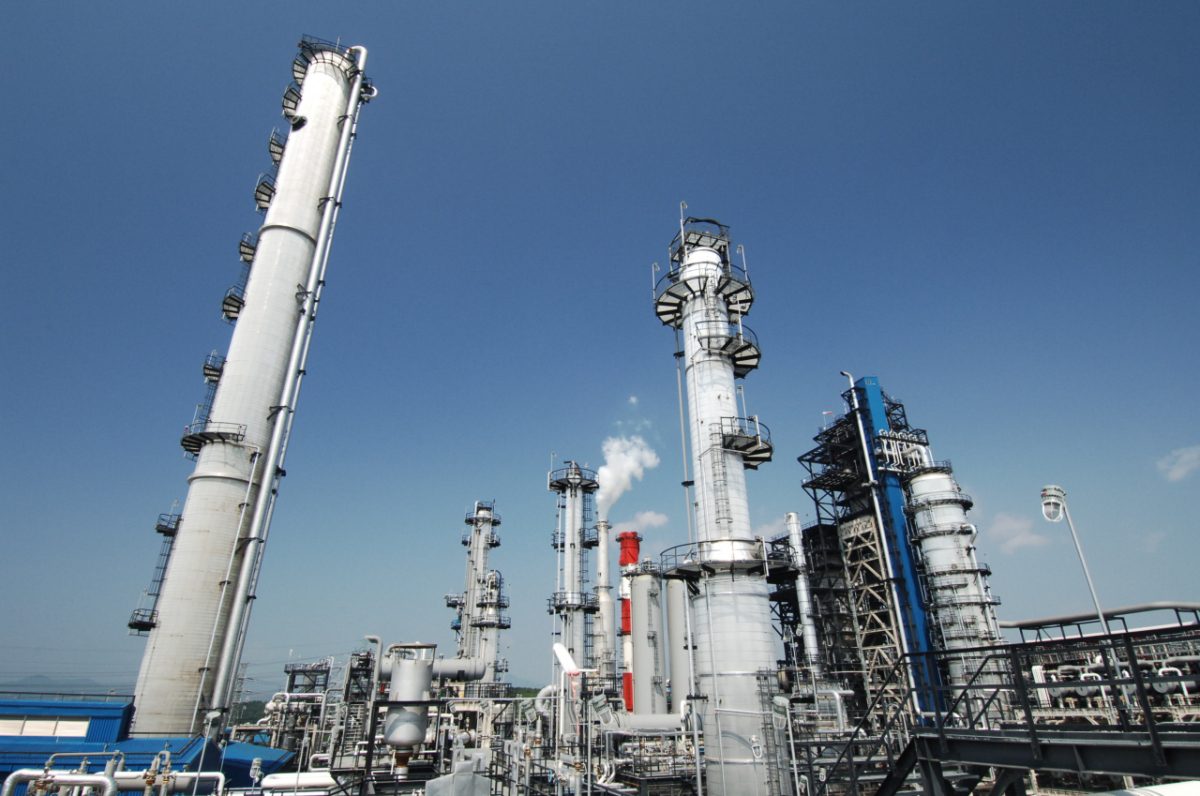
Entering the SK Innovation Ulsan Complex (CLX) located in Nam-gu, Ulsan on the 10th, a vast area spanning 2.5 million pyeong—about three times the size of Seoul's Yeouido—unfolded before us, featuring massive cylindrical storage tanks and towering steel structures. Between them stretched thousands of pipes of varying diameters, interwoven at 90-degree angles and extending endlessly. If all these pipes were connected end-to-end, they would total approximately 600,000 kilometers—a distance sufficient to travel from Earth to the Moon and back more than halfway. The brown rust settled on the steel framework connecting 98 processes vividly reflected the passage of time since the plant began operations in 1964.
At first glance, it appears to be a 60-year-old oil refinery, but opening the door to the Heavy Oil Cracking Process (HOU) control room revealed a different scene. Dozens of large monitors covering the walls displayed real-time numbers and graphs showing temperature, pressure, equipment status, and other data. While engineers watched the monitors, artificial intelligence (AI) continuously analyzed accumulating process data to calculate optimal operating conditions. Engineers then made final decisions based on AI recommendations to adjust operational parameters. This is why SK Innovation defines its AX (AI transformation) not as "factory automation," but as a "dual brain" combining AI with the experience of on-site engineers.
Jung Chang-hoon, team leader of the Ulsan CLX Manufacturing AI Team, explained, "The average age of our equipment is about 33 years, and facilities built in the 1960s, 1970s, and 1990s are mixed together, making management extremely difficult." He added, "With 98 interconnected processes, achieving optimal operation is also challenging." He further noted, "In a facility spanning 2.5 million pyeong, blind spots where humans cannot fully monitor may arise. The purpose of utilizing AI is to supplement human temporal and physical limitations and overcome fundamental issues in our industry."
Team leader Jung stated, "In the field of production optimization, we are currently developing and utilizing seven machine learning models, and have implemented more than 30 'AI sensors' that predict yield and product properties in real time. In particular, we are applying a model to find optimal operating points for steam supplied to processes, with plans to expand this to fuel, hydrogen, and electricity in the future."
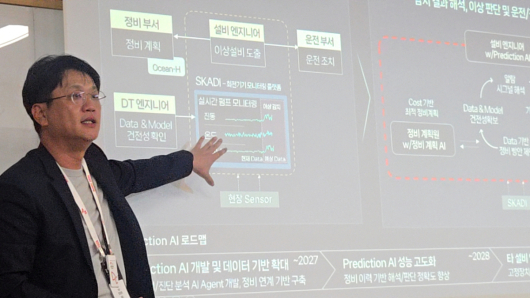
AI is also utilized to detect early warning signs of equipment abnormalities. The 'SKADI' rotating machinery monitoring platform, independently developed by Ulsan CLX, collects real-time data on vibration, temperature, and frequency from rotating equipment such as pumps and compressors to identify anomalies and their causes. After engineers inspect the equipment, their judgments and action results are accumulated back into the data system. SK Innovation plans to further enhance this capability by developing 'Prediction AI' by 2027, which will not only detect issues but also propose necessary maintenance measures.
In the safety sector, an integrated control platform called 'SHEILD' has been established and is currently in operation. This platform consolidates information accumulated through digital transformation (DX) over the years, including equipment management systems, geographic information systems (GIS), and smart work permit systems. It allows users to instantly grasp where high-risk operations are taking place and whether there are any irregularities in work permit procedures. In the future, SK plans for Vision Language Models (VLM) to analyze CCTV footage and for AI agents to take on control room responsibilities as well.
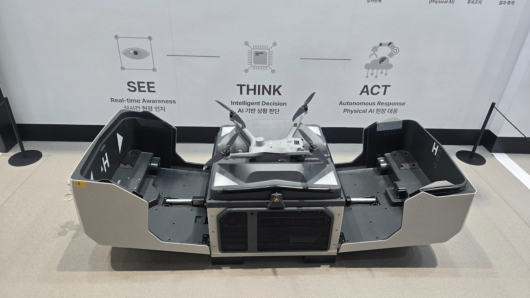
Robots and drones are also connected to this platform. SK Innovation is currently deploying one robot at the site and is considering expanding the number to approximately 10 units. Additionally, it plans to introduce more inspection drones beyond the existing three to patrol blind spots in CCTV coverage and verify abnormal situations.
SK Innovation's AX goals for CLX can also be confirmed numerically. Team leader Jung stated, "By fully integrating and optimizing Ulsan CLX, we aim to achieve an annual productivity improvement of approximately 100 billion won by 2030 and realize 'Zero' for equipment downtime and major accidents." He added, "In the long term, we are also considering expanding manufacturing AI developed and validated at Ulsan CLX into external business ventures."

 in INDUSTRY


