

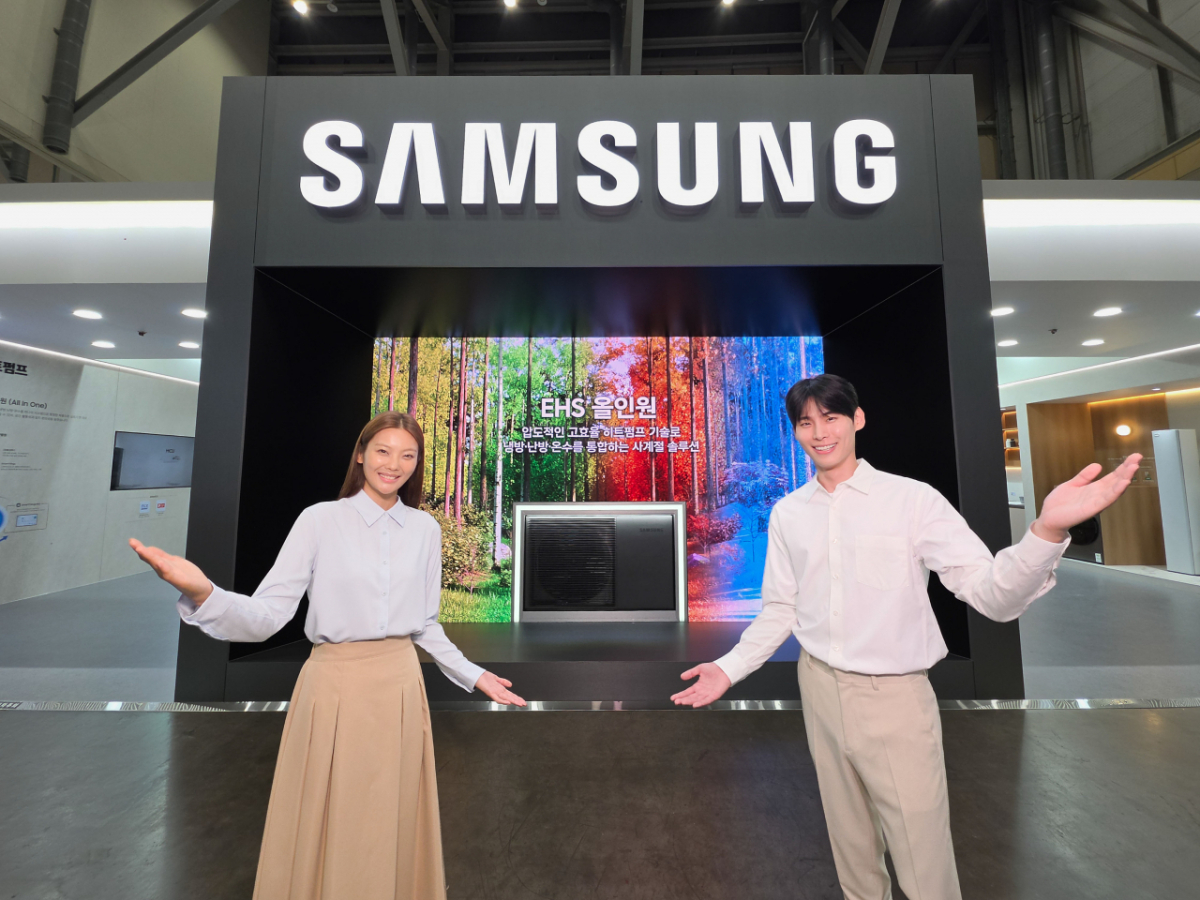
Samsung Electronics and LG Electronics are entering the energy solutions competition with high-efficiency heat pumps. They aim to expand their business scope from residential heating and cooling to air conditioning for AI data centers, positioning AX (AI transformation) and GX (green transformation) as new growth opportunities.
From the 16th for three days, Samsung Electronics and LG Electronics set up exhibition halls at the '2026 World Climate Expo (WCE)' held at Busan BEXCO, unveiling AI-based high-efficiency energy solutions. This year's fourth WCE is themed 'The Great Change Created by Climate Tech: A Leap Toward a Decarbonized World.' Approximately 550 domestic and international companies are participating.
Samsung Electronics prepared an exhibition hall of about 270 square meters, showcasing energy-saving technologies ranging from residential appliances to air conditioning for AI data centers and large commercial facilities. In particular, the high-efficiency heat pump solution 'EHS All-in-One' was placed at the forefront.
The EHS All-in-One is a residential heat pump that provides cooling, heating, and hot water with a single outdoor unit. Compared to the conventional method of installing air conditioners and boilers separately, it improves space utilization and installation convenience. The 'EHS Heat Pump Boiler' exhibited alongside uses ambient air heat and electricity to supply indoor heating and hot water. Recently, it has been fully introduced into the domestic market in connection with the government's electrification promotion program for heating.
The company also emphasized its B2B (business-to-business) air conditioning business targeting AI data centers. Samsung Electronics showcased advanced industrial parks and central air conditioning product lines for large buildings, along with an AI data center cooling solution developed in collaboration with Flextronics Group, which it acquired last year. It also introduced 'SmartThings Pro,' which monitors and controls power consumption in real time in multi-purpose commercial facilities and smart buildings to enhance energy efficiency.
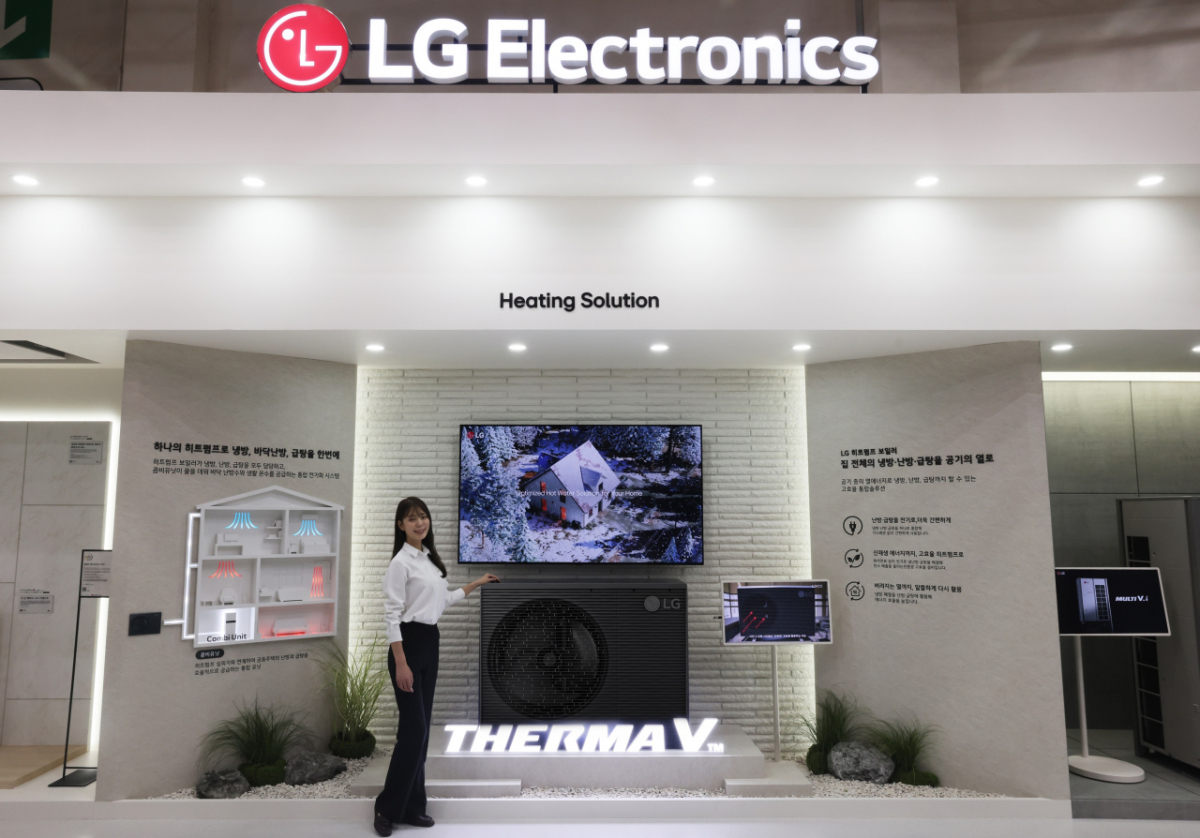
LG Electronics also presented a high-efficiency residential solution covering air conditioning from heating and cooling to home appliances and displays, centered on heat pumps. Its representative product is the recently launched all-in-one 'LG Therma V Heat Pump Boiler.' By utilizing air heat, it can generate thermal energy equivalent to about 4 to 5 times the input power. Compared to conventional fossil fuel boilers, it can reduce energy costs by approximately 40% to 60%.
The company also introduced technologies that reduce home appliance power consumption using AI. It exhibited systems with AI-based operation control technology, including system air conditioners, and washing machines and dryers equipped with energy efficiency Grade 1 and dual inverter heat pump technologies. It also unveiled the 'LG ePaper Display,' which reduces power consumption by more than 99% compared to conventional digital signage. Through 'LG Smart Cottage,' a modular home integrating AI appliances and heating and cooling technologies, it presented a future residential environment that efficiently manages energy for the entire household.
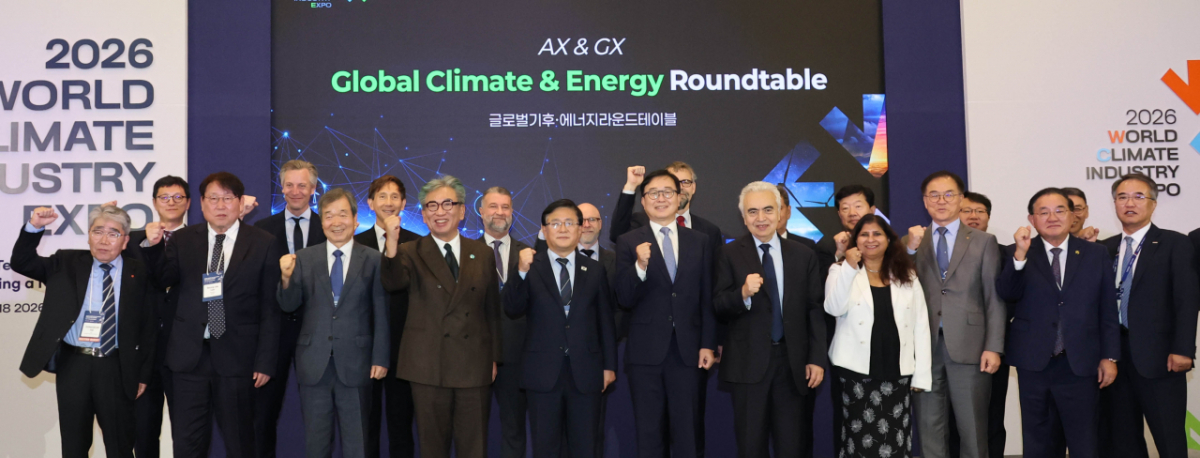
Industry experts predict that combining AI with high-efficiency and low-carbon technologies through simultaneous AX and GX transformation will create new markets. The Korea Chamber of Commerce and Industry held the 'Global Climate and Energy Roundtable' at BEXCO today, with participation from the International Energy Agency (IEA), the International Renewable Energy Agency (IRENA), Google, and others. Attendees noted that AI combined with renewable energy, batteries, hydrogen, carbon management, and other areas can create new businesses and markets.
Kim Jeong-il, Executive Vice Chairman of the Korea Chamber of Commerce and Industry, stated, "AX and GX are inseparable 'twin transformations.' We must accelerate green transformation through AI and support sustainable growth of AI with low-carbon energy and infrastructure." He added, "We need to jointly consider by government and industry what new industries and markets will be opened through twin transformations."

 in INDUSTRY


