

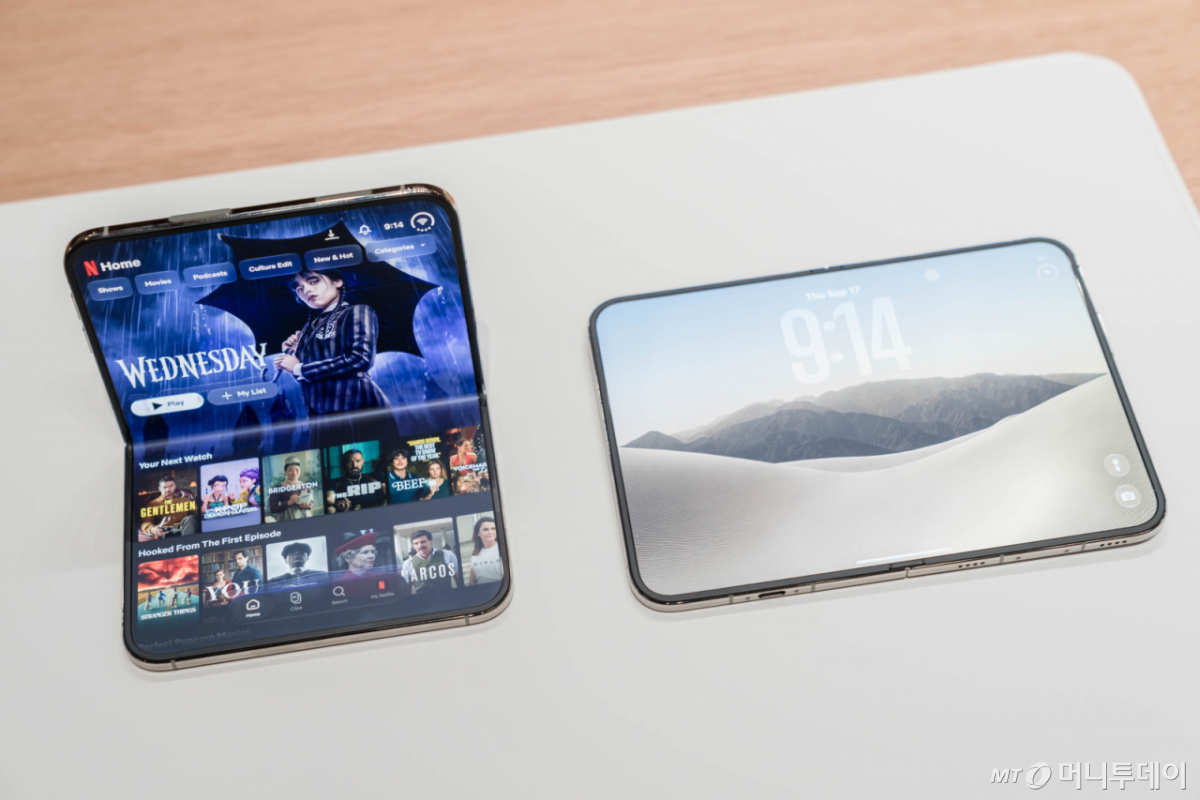
The iPhone 18 Pro and Pro Max were officially released on the 18th. However, initial reactions are not as enthusiastic as expected. Analysts suggest this is due to price hikes, limited product changes, and consumer demand waiting for Apple's first foldable smartphone, 'iPhone Duo', scheduled for release next month.
The sluggish start of the iPhone 18 Pro may actually be boosting expectations for the iPhone Duo. One of the parties most eager about Apple's entry into the foldable market is Samsung Display. This is because Samsung Display will essentially have a monopoly on supplying foldable OLED (organic light-emitting diode) panels not only for Samsung Electronics' Galaxy Z series but also for the iPhone Duo.
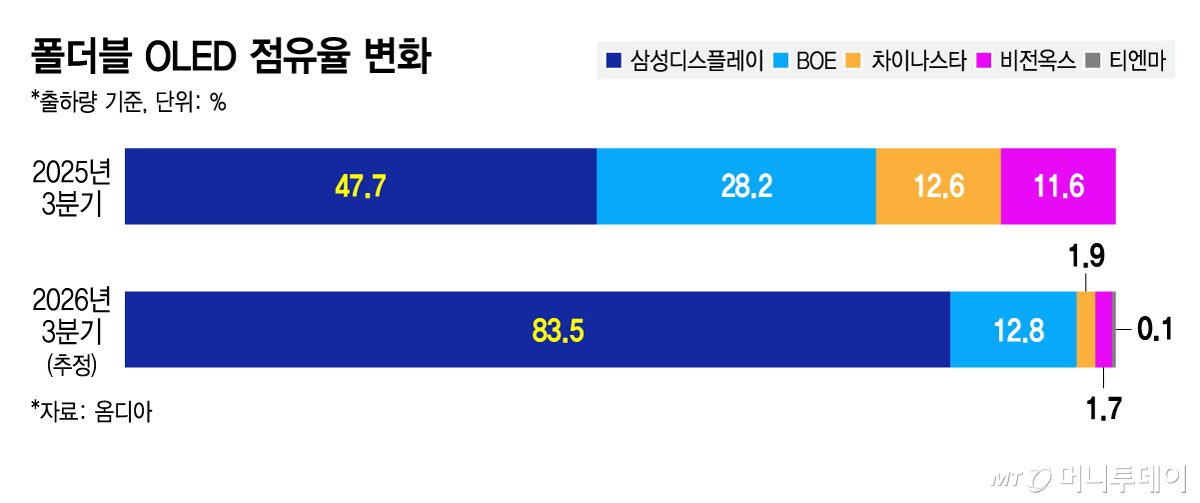
According to market research firm Omdia, Samsung Display's share of the global foldable OLED panel market is expected to reach 83.5% based on shipment volume in the third quarter this year. This represents a 35.8 percentage point (P) increase compared to the same period last year. Foldable OLED panel shipments for the third quarter are forecast to reach 7.95 million units, a 2.3-fold increase from the previous quarter.
Samsung Display also avoided the overall market downturn in the first half of the year. Global foldable OLED panel shipments in the first half totaled 9.455 million units, a 14.2% decrease compared to the same period last year, but Samsung Display's shipments actually increased by 4.8%.
The Apple effect will be fully reflected in the second half of the year. Samsung Display's revenue from foldable OLED panels in the second half of this year is estimated at $2.825 billion (approximately 385 billion won), reaching 4.3 times the first-half figure. The industry expects iPhone Duo shipments to reach approximately 5 million units this year. Some analyses suggest that the price per internal foldable panel could reach about $250 (approximately 340,000 won).
The arrival of the iPhone Duo is expected to become a turning point that reshapes the product landscape of the foldable smartphone market. Until now, foldable OLED panels driving market expansion were 'clamshell-type' models that fold up and down like the Galaxy Z Flip. Their compact size when folded and lower price compared to 'book-type' models that unfold left and right like the Galaxy Z Fold contributed to the mass adoption of foldable smartphones.
Recently, clamshell-type shipments have declined while book-type products are increasing. Book-type models offer large screens comparable to tablets when unfolded, making them advantageous for video viewing, document work, and multitasking. As thickness and weight decrease and durability improves, demand for the more versatile book-type models is growing.
According to Counterpoint Research, book-type product shipments accounted for nearly 80% of total shipments in the second quarter this year. This trend favors Samsung Display. Book-type products with larger screens have wider panel areas than clamshell types and involve higher technical complexity and prices. As the sales share of book-type products increases, both Samsung Display's shipment volume and revenue per panel can rise simultaneously.
Samsung Display's competitiveness stems from 'accumulated technology'. Samsung Display opened the foldable OLED market by supplying panels for Samsung Electronics' first foldable smartphone, 'Galaxy Fold', in 2019. Since then, it has consistently supplied panels for the Galaxy Z Fold and Z Flip series, advancing technologies related to durability, thinness, and wrinkle reduction.
Foldable panels are not simply products that can be folded. They must maintain performance even after hundreds of thousands of folding cycles, while also reducing panel thickness, weight, and power consumption. The ability to precisely combine hinges with panels and produce millions of units with uniform quality is also crucial.
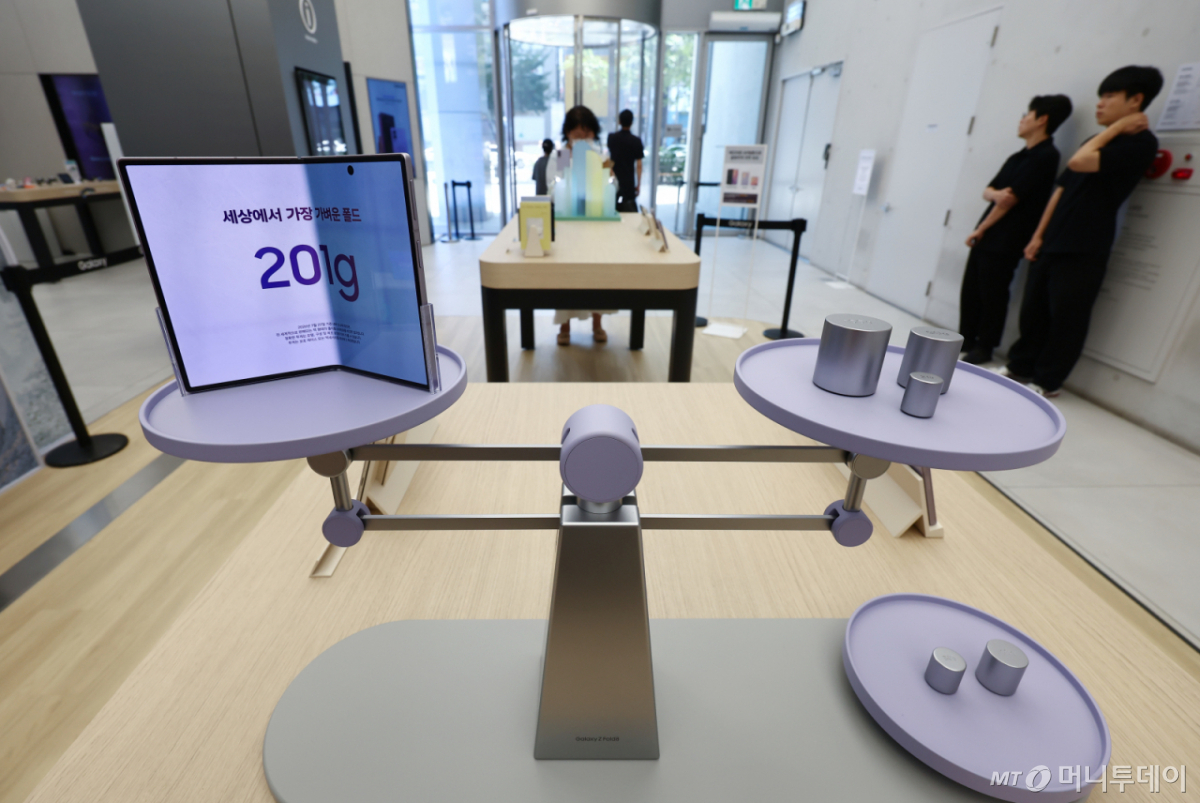
In fact, the thickness of Samsung Electronics' foldable smartphones has decreased from 17.1mm for the Galaxy Fold in 2019 to 8.9mm for the recent Galaxy Z Fold8. This result was supported by technological advancements across the entire foldable ecosystem, including panels, hinges, and component placement.
With Apple joining the foldable smartphone market alongside Samsung Electronics, the foldable OLED panel market is expected to enter a full-fledged growth phase. The share of foldable products in total smartphone OLED panel shipments is projected to expand from 5.8% last year to 11% by 2031.

 in INDUSTRY


