

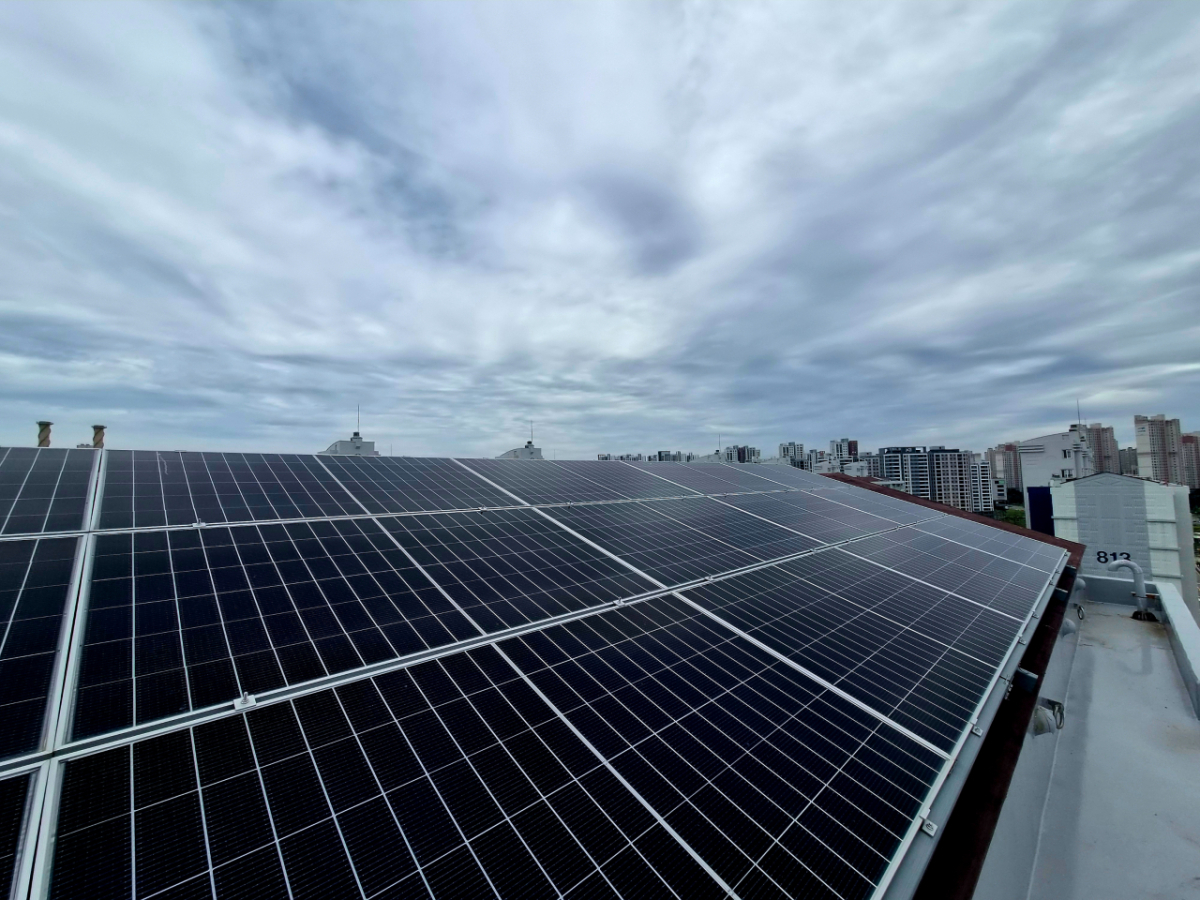
<"We've received many requests asking why our building hasn't been equipped with solar panels."
On the 10th, we visited D-Isle Apartments in Unjeong-dong, Cheongsok Village, Paju City, Gyeonggi Province. Lee Kwan-kwon, president of the residents' representative council, noted that residents' attitudes toward solar panels have changed. When solar panels were first installed on one building's rooftop last year, there was hesitation among some residents. Now, however, requests from residents to install more are frequent.
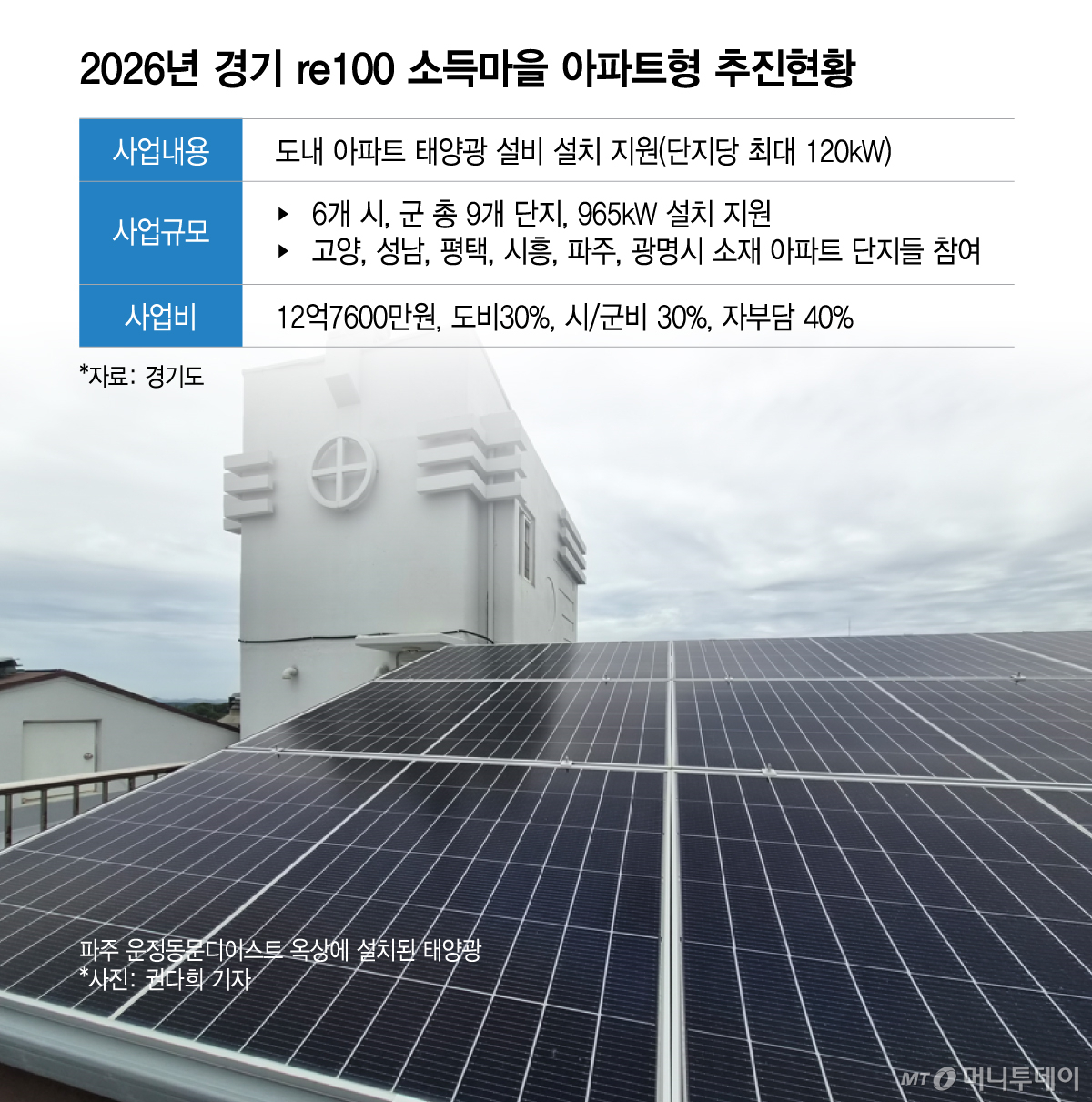
Residents desire solar panels because they can directly confirm the cost-saving effects of management fees. This apartment complex, home to 18 buildings and 1,026 households, was selected for Gyeonggi Province's Apartment Rooftop Solar Support Program and installed a 30-kilowatt (kW) solar system on the rooftop of Building 814 in October last year.
According to Lisa Management's records, the solar panels at Building 814 generated 37,160 kilowatt-hours (kWh) of electricity from November last year through August this year—a total of 10 months. This electricity is consumed within the complex rather than sold to Korea Electric Power Corporation. Lisa Management calculated that the electricity cost savings during this period amounted to approximately 8.41 million won. Based on the average monthly savings over the same period, the estimated annual savings are about 10.1 million won.
D-Isle Apartments participated in Gyeonggi Province's second round of the program this year and was selected as one of nine apartment complexes province-wide to install an additional 120 kW (30 kW per building across four buildings). Residents' support is also reflected in the approval rate for the additional project. About 83% of all households voted in favor during the second round of Gyeonggi Province's program this year, up from the roughly 70% approval rate during last year's initial phase.
said, "Showing residents concrete numbers proving that management fees have been reduced has earned their trust. In the early stages of participation last year, there were negative opinions, but after experiencing the installation firsthand, overall perceptions seem to have shifted."
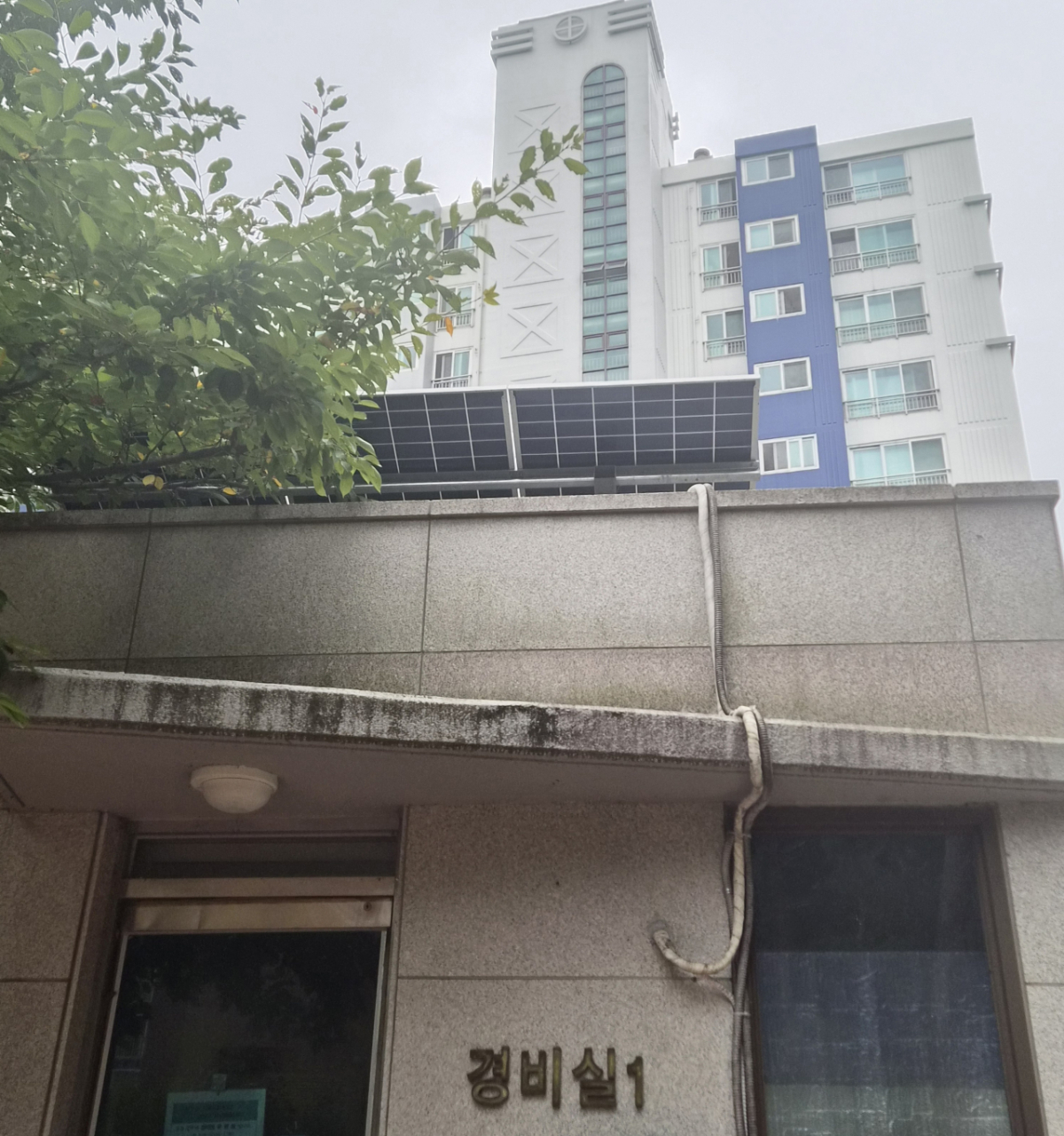
D-Isle Apartments' first step in adopting solar power began with rooftop solar panels on the guardhouses. The residents' representative council won 15 million won in prize money at a 2024 environmental competition for activities such as collecting rainwater and using it to feed streams within the complex. While deliberating how to use the prize money, they chose to invest in solar power. They installed a total of 16 kW of solar panels across five guardhouses and the management building.
The experience of directly generating electricity for shared spaces prompted them to turn their attention to Gyeonggi Province's Apartment Rooftop Solar Support Program the following year. After obtaining resident consent, holding explanatory meetings, and securing approval from the residents' representative council, they applied for the project.
It was not an easy process from the start. Persuading residents was necessary. Some residents held preconceived notions about solar panels. The residents' representative council distributed explanatory materials and informed them of the benefits that installation would bring.
In particular, they explained how rooftop solar panels in apartment complexes could enhance residents' economic benefits. D-Isle Apartments uses a single-contract billing method that combines electricity usage from individual households and common areas. When electricity generated by solar panels is used, the amount of electricity purchased from Korea Electric Power Corporation decreases. Especially during months when usage approaches tiered rate boundaries, this can lower the base fee by reducing overall consumption below those thresholds.
According to Lisa Management's electricity usage comparison table, the average monthly electricity usage per household in January and February last year was 403 kWh and 407.88 kWh, respectively, including common areas. Once the solar power facility is completed, there is a high likelihood that usage will drop below the 400th kWh threshold, further amplifying management fee savings.
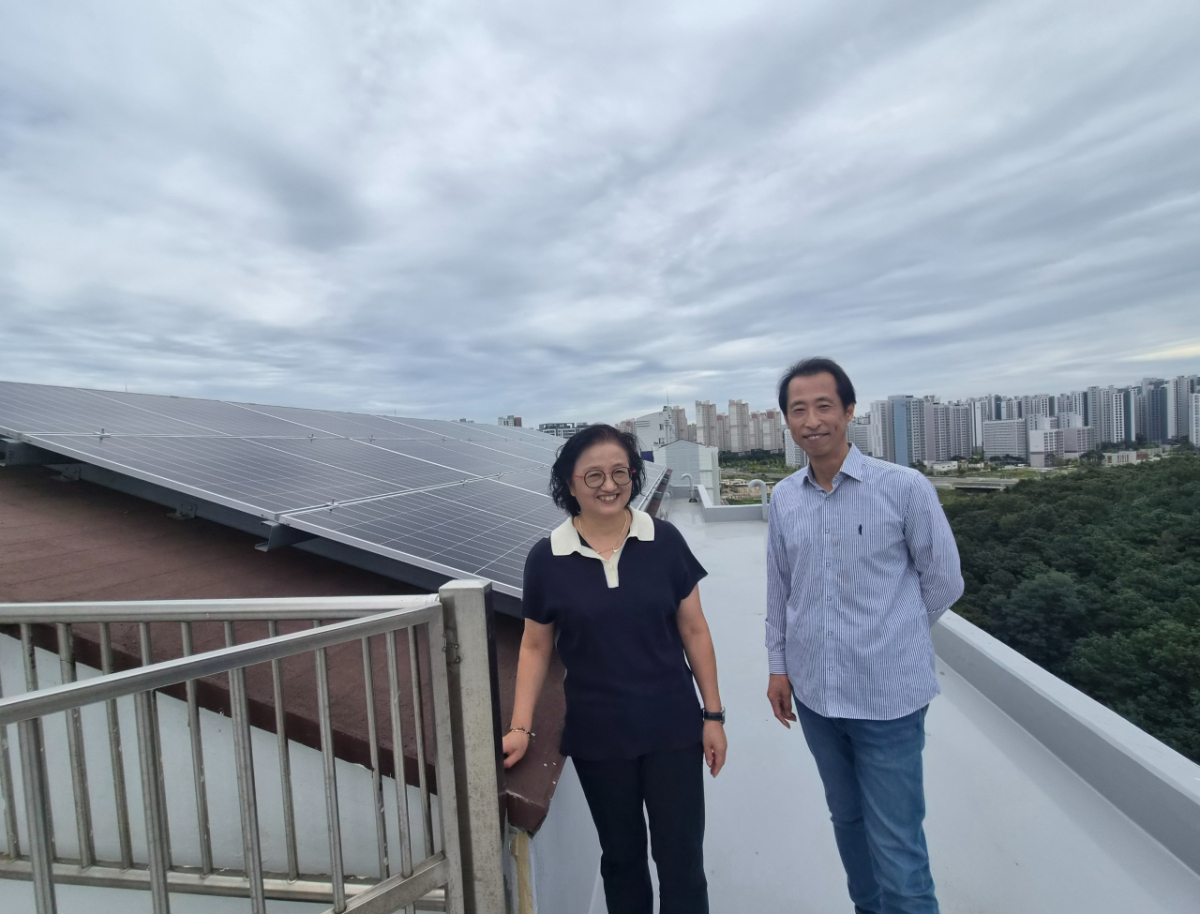
After completing the installation, residents were invited to the rooftops. The slogan displayed at the completion ceremony was "Our apartment is now generating power." This phrase carries dual meanings: both that electricity is being produced and that the apartment complex is improving.
Residents were allowed to personally inspect how the equipment was installed and how it connects structurally to the roof. stated, "Solar panels serve as shade and rain protection, which actually reduces waterproofing issues and slows down building aging caused by sunlight exposure. Seeing a structure that positively impacts the building in ways they hadn't anticipated increased residents' trust."
In addition to the five buildings already equipped with solar panels, D-Isle Apartments is also considering installing solar panels on another building's rooftop and allowing residents to subscribe to part of the generated power, with electricity bills reduced by the corresponding amount. Discussions are expanding further on how to distribute the profits from electricity generated on rooftops.
The remaining challenge is transforming a project that currently relies heavily on the will and individual capabilities of resident representatives into a more "sustainable system." Establishing institutional mechanisms to alleviate the burdens of public hearings, resident persuasion, and complaint resolution from individual resident representatives could be key to expanding rooftop solar projects to more apartment complexes. added, "We need to consider ways to lower the entry barriers and implementation burdens that residents actually feel."

 in INDUSTRY


