

The United States has imposed high tariffs on solar products from certain Southeast Asian countries in a move to block China’s indirect exports. As the U.S. accelerates its restructuring of supply chains away from China, Hanwha Solutions and OCI Holdings are expected to reap indirect benefits.
According to industry sources on the 20th, the U.S. International Trade Commission (USITC) recently finalized the imposition of anti-dumping and countervailing duties on crystalline silicon solar cells and modules from India, Indonesia, and Laos. Tariff rates vary by company and specific determination items, with the total tariff burden expected to range from a minimum of 147% to a maximum of 268%.
Notably, the USITC recognized an “emergency situation” for Indonesia among these countries and decided to apply the tariffs retroactively. This comes amid a recent surge in imports of Indonesian-made solar value chain products into the U.S., which authorities have judged as push-out shipments intended to circumvent tariffs.
This measure is expected to deal a blow to China-linked solar supply chains that have entered the U.S. market by routing through Southeast Asia. The U.S. had previously imposed tariffs on Chinese-made solar products.
Consequently, there has been criticism that Chinese companies have shifted production bases to countries such as Indonesia and Laos to continue exports to the U.S. If the price competitiveness of Southeast Asian products weakens due to this U.S. decision, it is inevitable that the indirect export strategies of Chinese firms will also face disruptions.
The United States is accelerating efforts to reduce its dependence on China while building a domestic-centric solar supply chain. U.S. President Donald Trump signed an executive order in August introducing a minimum import price system and tariffs, citing that imports of polysilicon and related products threaten national security.
As policies continue to restrict the entry of Chinese products while strengthening domestic production bases, the strategic value of companies that have established local production facilities or built supply chains outside China is also rising.
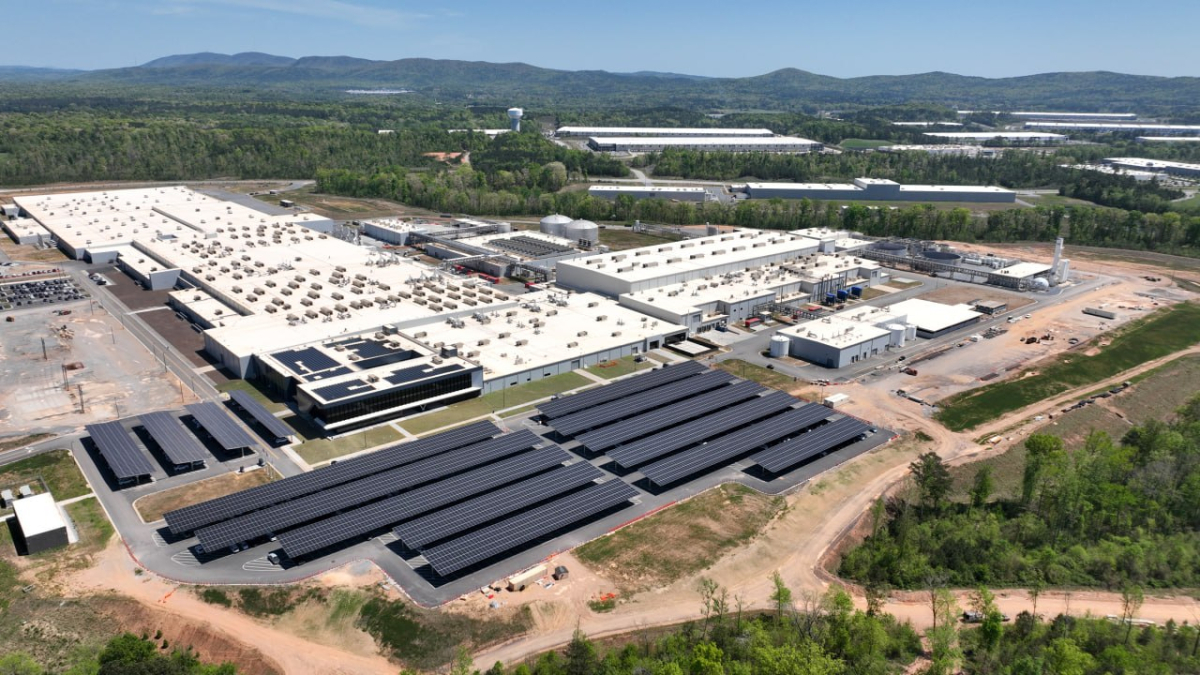
In this context, domestic companies are emerging as key suppliers to replace Chinese-made products. A prime beneficiary is Hanwha Solutions’ Q-Cells division (Hanwha Q-Cells), which has built and is operating “Solar Hub,” an integrated solar production complex in Georgia, U.S., covering ingots, wafers, cells, and modules.
Until now, low-cost Chinese modules and wafers have flowed into the U.S. market via Southeast Asia and other regions. With entry barriers rising for indirect export volumes, Hanwha Q-Cells’ competitiveness is expected to be relatively strengthened as it produces directly in the U.S.
OCI Holdings is also drawing attention. The company produces polysilicon through its Malaysian subsidiary, OCI TerraSus. If demand for polysilicon to replace Chinese products grows in the U.S., OCI could solidify its position as an alternative supplier in the global market.
Industry observers expect that if entry of low-cost Chinese products is restricted and the minimum price system is implemented, the profitability of polysilicon manufacturers will also improve.
Accordingly, the bargaining power of non-Chinese polysilicon companies, including OCI Holdings, is expected to increase. Lee Jin-ho, a researcher at Mirae Asset Securities, predicted that “a stronger aversion phenomenon will emerge regarding indirect export volumes from China in the future.”

 in INDUSTRY
