

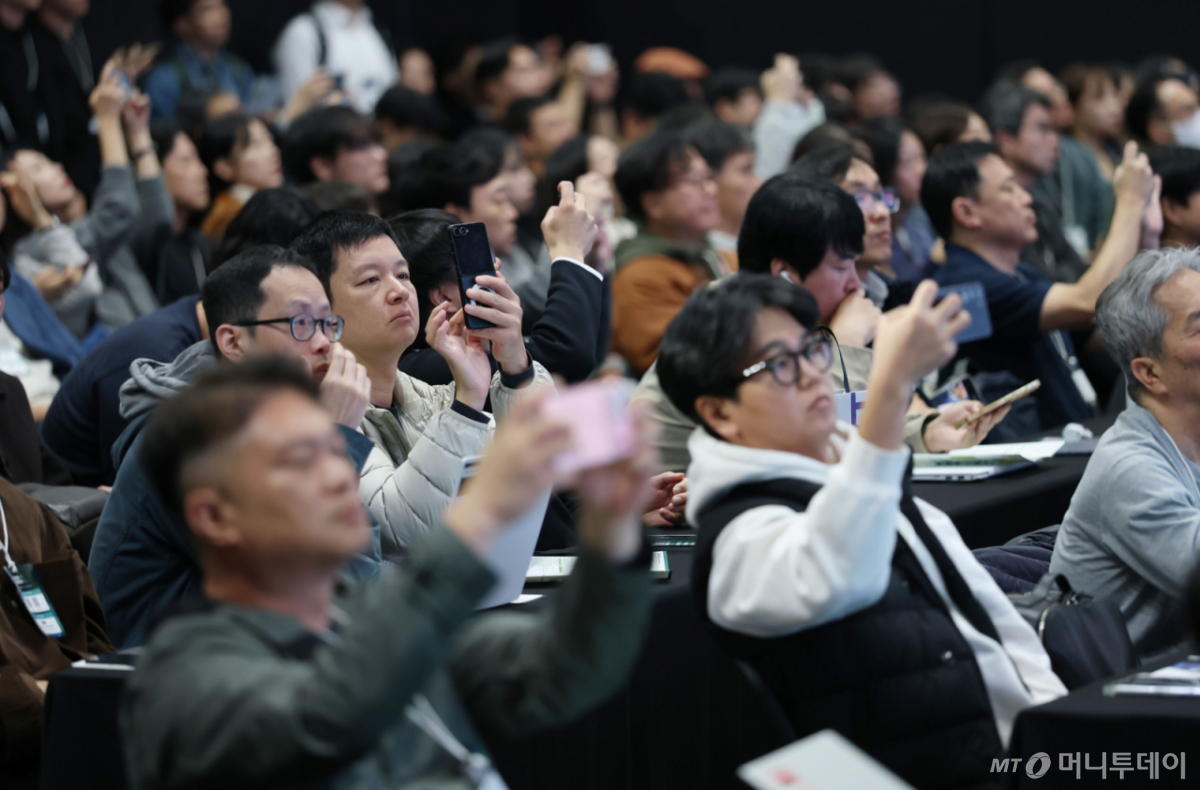
Smart Energy Plus (SEP) 2026, an event aimed at envisioning the future of the energy industry in the artificial intelligence (AI) era, concluded its three-day run on Friday.
During the event, visitors continued to flock to the exhibition booths of major companies to explore next-generation energy technologies and future mobility solutions. Various forums and conferences themed around AI and energy transition were also held, providing a platform to seek out development directions for the future energy industry.
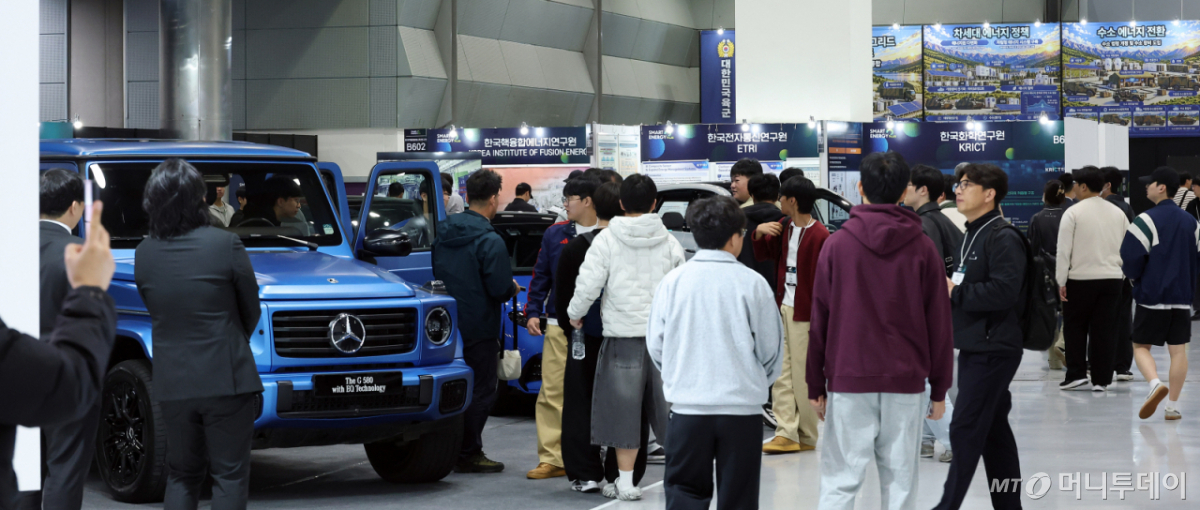
SEP 2026, held at Hall B of COEX in Samsung-dong, Seoul, featured participation from major domestic and international companies and research institutions, showcasing a wide array of technologies and products spanning AI, energy, and future mobility.
The exhibition introduced next-generation energy and mobility technologies, including small modular reactors (SMRs), gas turbines, hydrogen electric trams, and electric vehicles, attracting significant interest from visitors.
Doosan Enerbility presented a blueprint for its next-generation nuclear power business through an SMR model and renderings of dedicated manufacturing facilities. Hyundai Rotem showcased virtual reality (VR) experiences of hydrogen electric trams and demonstrations of multi-legged walking robots.
Complete vehicle manufacturers such as Mercedes-Benz and Kia also drew attention by unveiling electric vehicles and new models. In particular, long queues formed as visitors crowded to board major exhibition vehicles, including the Mercedes-Benz "G 580 with EQ Technology" (Electric G-Class / G-Vagon), an electric sports utility vehicle (SUV), to inspect their interiors.
Alongside the exhibitions, various forums and conferences held over the three days addressed core issues such as power supply and demand in the AI era, energy transition, and carbon neutrality.
On the opening day, the 28th, the "3rd Army Energy Policy Forum," hosted by the Republic of Korea Army, was held for the first time at the SEP event, drawing considerable attention. Discussions focused intensively on military energy self-sufficiency and plans to establish next-generation energy supply systems. A multilateral memorandum of understanding (MOU) for next-generation army energy cooperation was also signed.
The "2nd K-Space Forum," held on the same day, was attended by more than 200 people, including domestic and international space companies, venture capital (VC) firms, academia, and military officials, who discussed the future of the low Earth orbit (LEO) satellite industry.
Participants emphasized the importance of securing space sovereignty through the establishment of an independent space communication network and explored ways to expand private investment and commercialize the space industry. A special session was also arranged to explore the potential of SMRs as a power source in the era of AI data centers.
On the 29th, major domestic companies shared insights on industrial changes in the AI era and energy response strategies under the theme "AI Revolution, Great Energy Transition."
Samsung Electronics and SK hynix focused on semiconductor manufacturing innovation utilizing AI and the power efficiency issues of memory. Hyundai Motor and POSCO Holdings introduced physical AI technologies applied to robots and industrial sites, while LG Electronics presented cooling technologies designed to resolve heat generation problems in AI data centers, outlining response directions for each industry.
At the "Carbon Neutrality Academy Networking Session," discussions centered on corporate renewable energy procurement strategies, covering the current status of RE100 compliance, domestic renewable energy procurement conditions, and corporate power procurement directions.
A conference was also held to examine the development direction of the AI data center industry and infrastructure construction challenges. A company official attending the session said, "It was practically very helpful as we could look into the realistic difficulties companies face in the renewable energy procurement process and their response strategies."
On the final day of the event, the 30th, an "AI Gold Rush" session was held. At a conference featuring officials from the three major domestic battery makers—LG Energy Solution, Samsung SDI, and SK On—schedules were conducted to introduce energy storage system (ESS) technologies and business strategies aimed at responding to power demand in the AI era.
HD Hyundai Electric presented forecasts on transformer demand driven by the spread of AI data centers, while OCI Power announced plans for responding to power load.
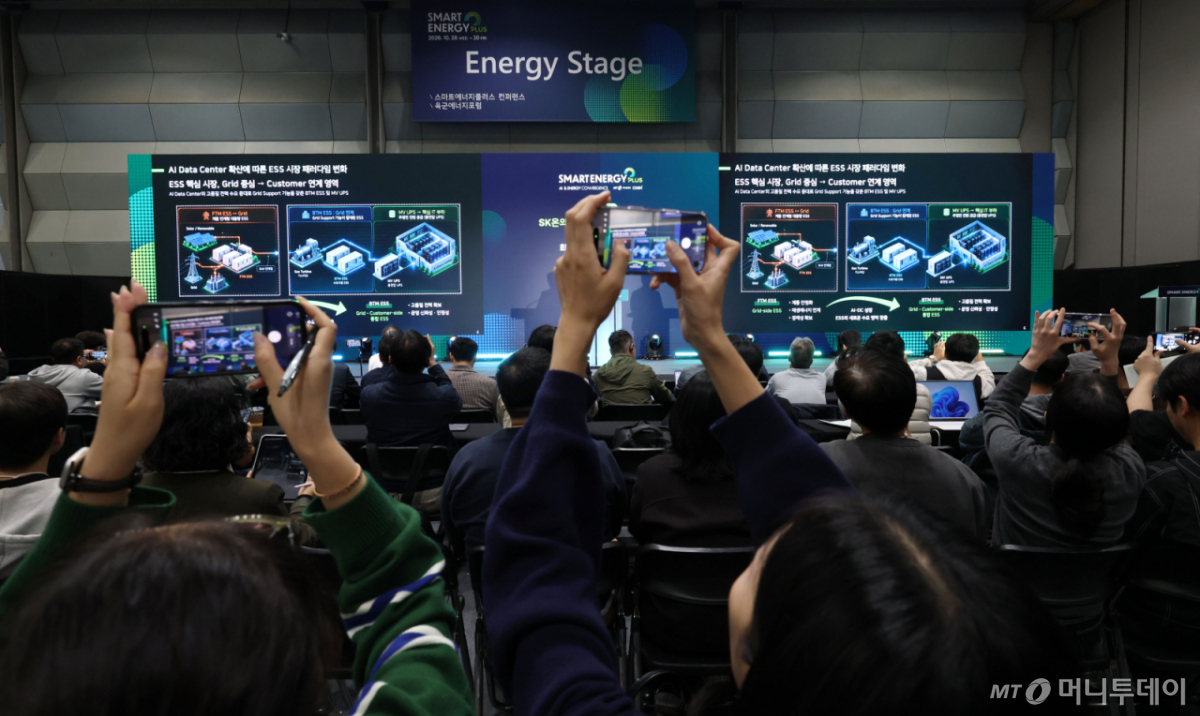
The conferences held over the three days attracted particularly intense interest. The Energy Stage, serving as the main stage, received such high response from attendees that all 200 seats provided in the venue were filled. The Open Stage (70 seats), where the SMR special session was held, was also packed to capacity.
At conferences such as the one by the three major battery makers, some attendees who could not secure a seat inside listened to presentations from outside the venue. Scenes of attendees continuously photographing presentation slides with their mobile phones were also captured.
A forum for technology exchange to foster industry-academia-research cooperation was also established. At the "2026 K-Deep Tech Festa," featuring participation from domestic science and technology specialized universities such as KAIST, GIST, DGIST, and UNIST, programs were conducted to share research and development achievements and commercialization potential in advanced technologies including semiconductors, batteries, and next-generation materials.
Another company official said, "I arrived a bit late and had to listen to the presentation from outside because there were no empty seats inside the venue," adding, "I didn't realize that interest in the AI and energy industries would be this high among people of all ages."

 in INDUSTRY


