

POSCO Future M said Monday that it recorded consolidated revenue of 834.8 billion won and operating profit of 82.1 billion won in the third quarter of this year.
Revenue decreased by 4.6% compared to the same period last year, while operating profit increased by 23.2%. Compared to the previous quarter, revenue rose by 22.9%, and operating profit surged by 207.8%.
The battery materials business recorded revenue of 459.6 billion won and operating profit of 51.8 billion won. These figures represent increases of 40.2% and 1,972%, respectively, compared to the previous quarter.
Performance in cathode materials improved due to the recovery of sales volume to existing customers, rising selling prices, and the inclusion of compensation from customers. For anode materials, sales volume to overseas customers increased despite the reflection of inventory valuation losses.
The basic materials business recorded revenue of 375.2 billion won and operating profit of 30.3 billion won, representing increases of 6.7% and 25.2%, respectively, compared to the previous quarter. The improvement in performance was influenced by rising selling prices for chemical products linked to crude oil prices and increased sales volume of lime (quicklime).
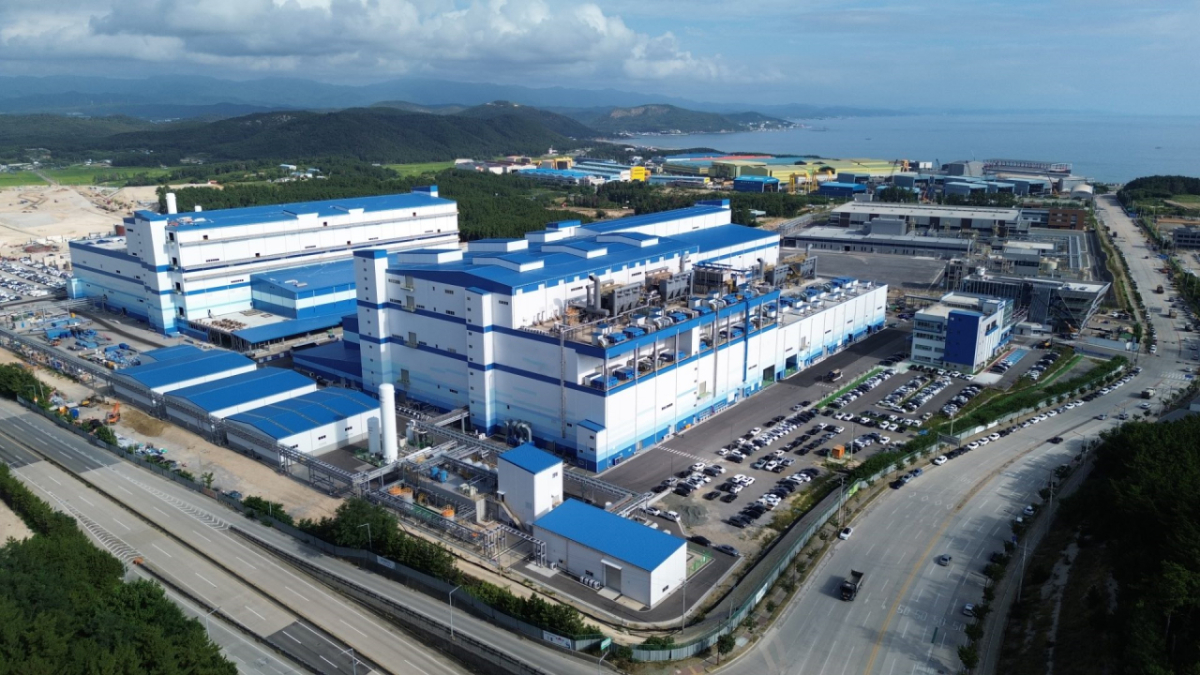
POSCO Future M is also accelerating its expansion into the lithium iron phosphate (LFP) cathode material business. To meet demand for battery materials for energy storage systems (ESS) and entry-level electric vehicles, the company converted part of the production lines at its Pohang cathode material plant to LFP cathode material production lines. The company plans to pursue additional conversions in line with future order expansions, aiming to increase production capacity to 105,000 tons annually.
In addition, the company is advancing the development of next-generation high-density LFP cathode materials and the commercialization of a precursor-free process. Through these efforts, it aims to secure cost competitiveness and lead the non-China-produced (Non-PFE) LFP cathode material market.
In the field of artificial graphite anode materials, the company plans to respond to demand for non-China-produced materials by expanding investments in its Vietnam subsidiary, among other measures.
The company is also strengthening its research and development (R&D) capabilities. Centered on natural gas-based low-cost, high-density natural graphite technology, it aims to enhance product competitiveness and prepare for mass production of cathode materials for all-solid-state batteries.
The company is also pursuing the commercialization of a continuous graphitization process for artificial graphite anode materials that reduces power consumption and processing costs, as well as simultaneous development of positive and negative electrode materials for sodium-ion batteries (SIB) to enter the market at the appropriate time.

 in INDUSTRY
