

"Clean power is no longer just a climate issue. It has become an issue of competitiveness, national security, and investment, just as much as climate goals."
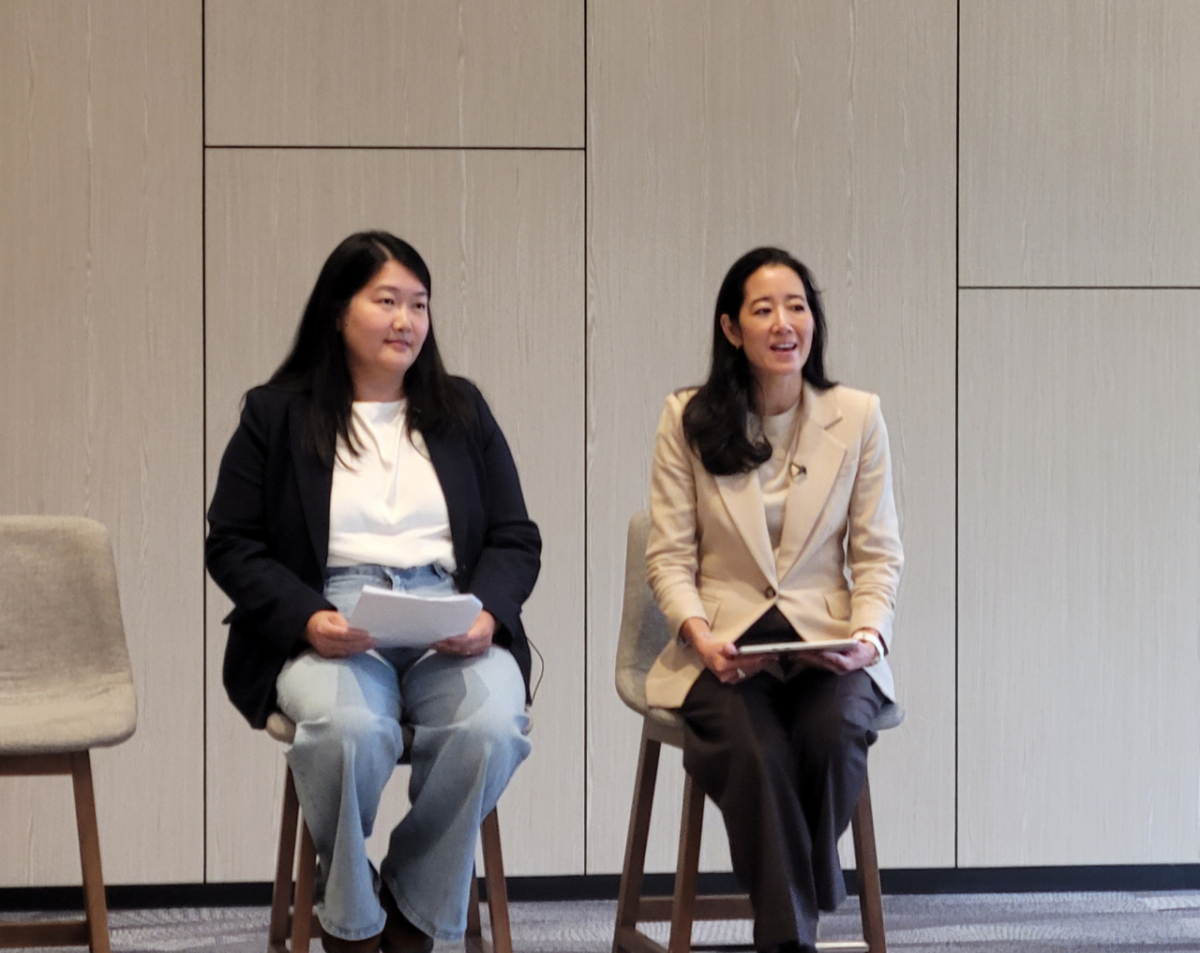
Melanie Nakagawa, Microsoft’s Chief Sustainability Officer (CSO), whom we met at the company’s headquarters in Redmond, Washington State, U.S., on the 8th of last month (local time), explained that securing clean energy is a matter of corporate competitiveness and energy security.
She stated, "Solar and wind power can be secured faster than any other generation source from planning to operation," adding, "Costs have dropped sharply over the past decade, making them the most competitive new power source in many markets. Building domestically reduces reliance on imported fuels and enhances energy security."
It is therefore inevitable that clean power has emerged as a core competitiveness during the period of rapid expansion of the AI industry. This is because how quickly, stably, and competitively priced the electricity required for data centers and semiconductor factories can be secured determines the speed of business expansion.
Beyond Climate Goals: A Matter of Speed, Price, and Security
In particular, CSO Nakagawa emphasized the speed and economics of power acquisition. She stated, "The availability, reliability, and price of electricity are becoming key factors determining where and how quickly new data centers and chip factories will be built."
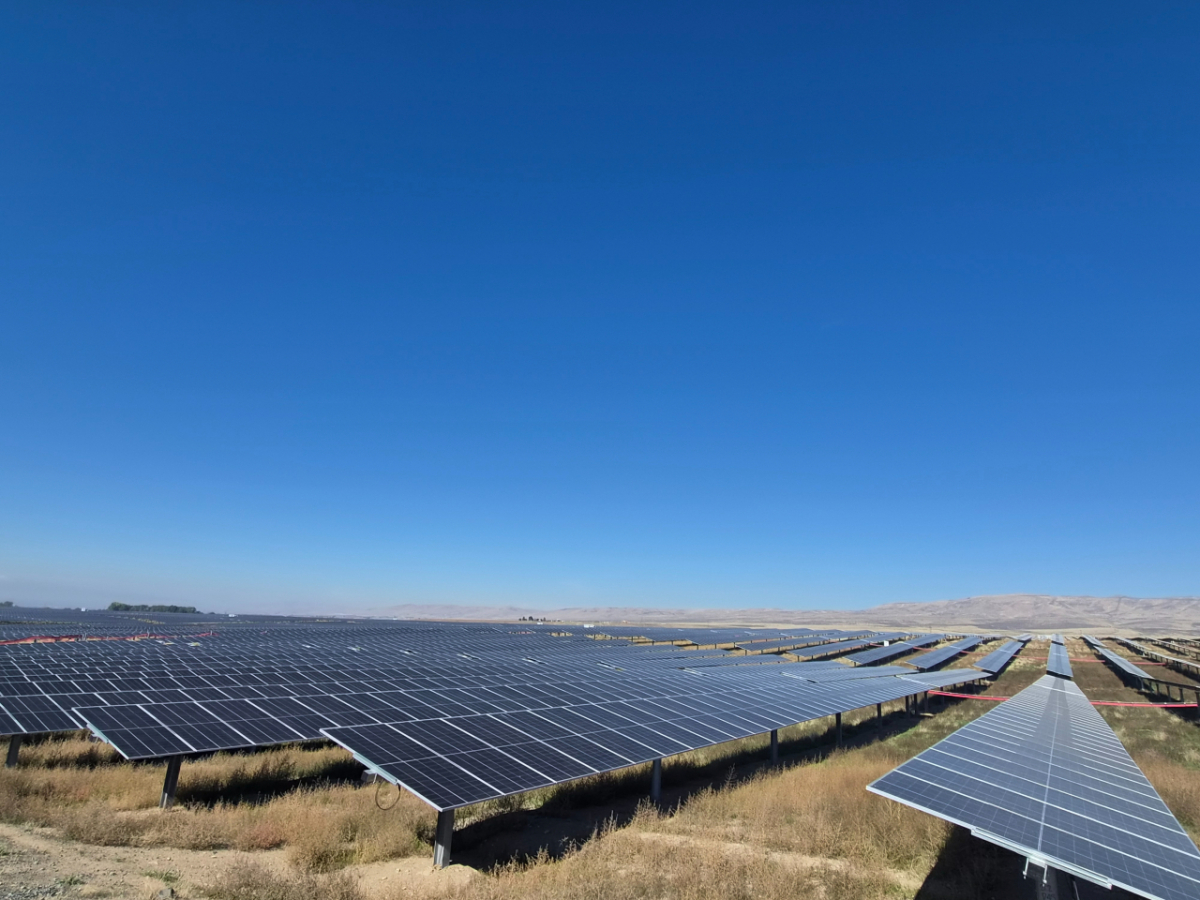
Renewable energy is a primary means to meet this timeline. The reality that speed and cost drive the flow of the energy market was also confirmed on the development site. At the Goose Prairie solar power plant in Yakima County, Washington State, U.S., the day before, Gale Miller, Head of Strategic Investor Relations at global energy developer Brookfield, said, "It takes about eight years to secure (large) gas turbines, but less than 12 months to secure solar panels," adding that "the average period from site selection to power supply for solar facilities is 12 to 24 months."
Cost competitiveness is also decisive. Based on the case of building new generation equipment, Miller explained, "The overwhelmingly cheapest method is a combination of solar and wind with energy storage devices," noting, "Because the sun and wind are free, and they can be stored in batteries before being supplied."
2030 'Carbon Negative' Goal… Already Contracted for 40GW of Renewable Energy
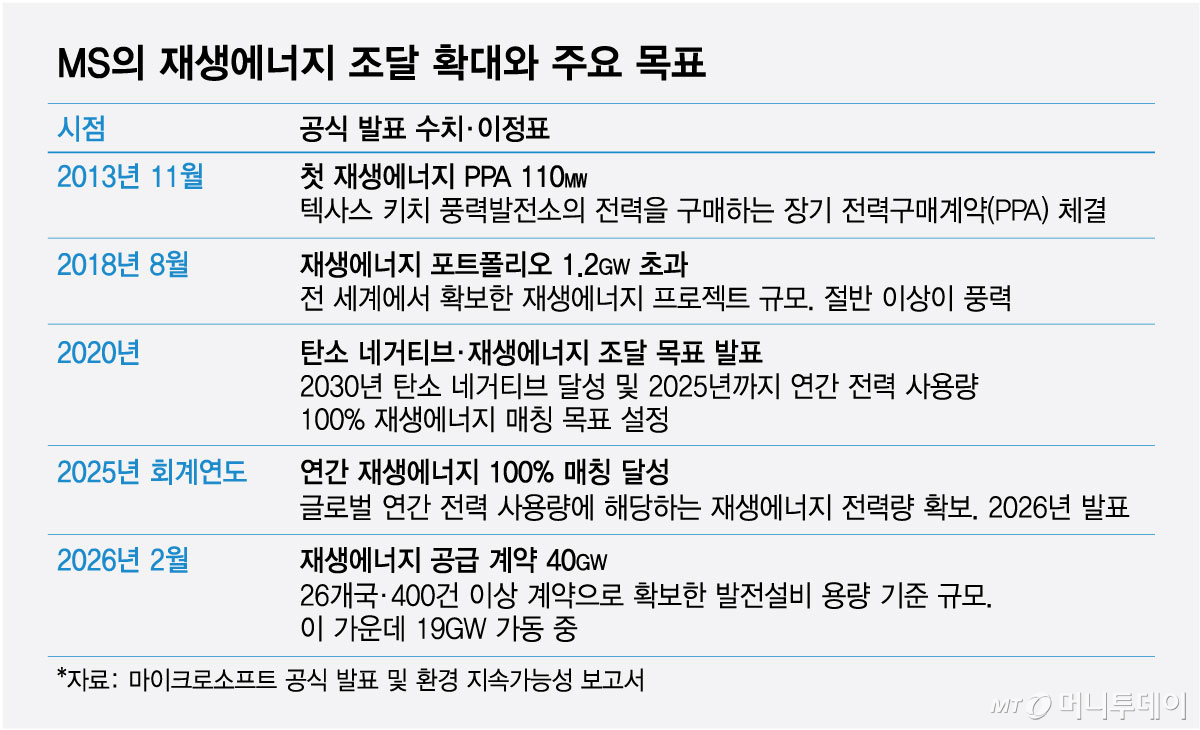
Microsoft announced its "carbon negative" goal in 2020, aiming to remove more carbon than it emits by 2030. As economic viability has been added as a driving force to these climate goals, clean power purchases and investments are expanding.
Starting with a wind project in Texas, U.S., in 2013, Microsoft has signed new renewable energy supply contracts totaling 40GW (gigawatts) across 26 countries since 2020. This is equivalent to South Korea’s total renewable energy installed capacity. Last year, the company matched 100% of its global annual electricity usage with renewable power. This does not mean all facilities are operated by renewable energy every hour, but rather that it procured renewable power corresponding to its annual consumption.
"South Korea’s Carbon-Free Power Is Important to MS"
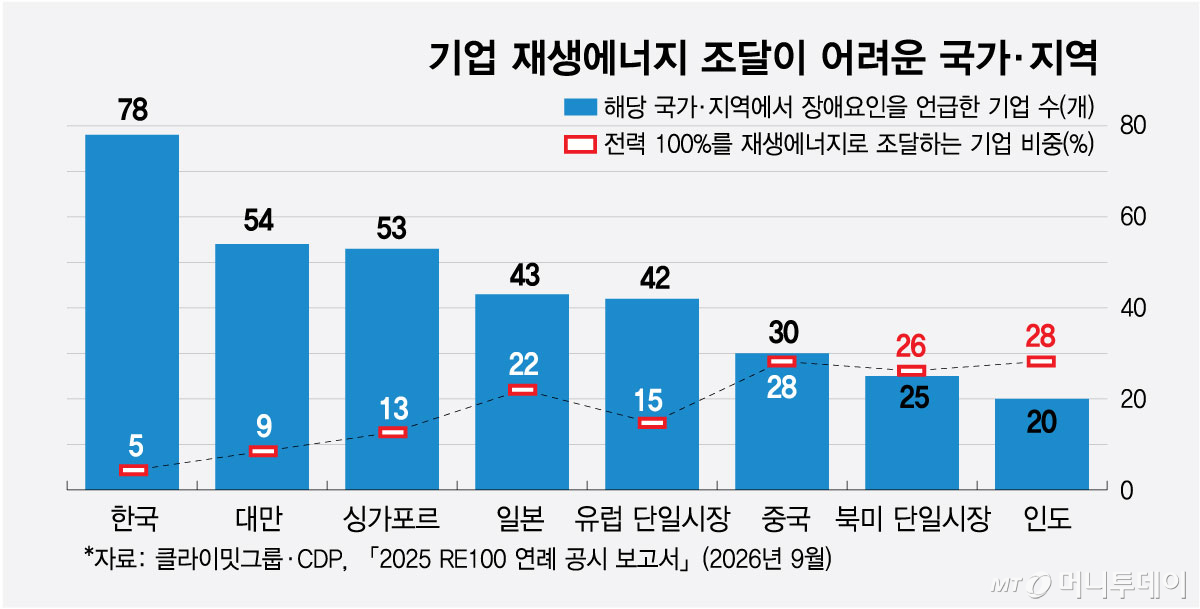
The fact that South Korea is a key country in the semiconductor supply chain while also being a location for data centers is the background making clean power acquisition a common task for Microsoft and Korean manufacturers. CSO Nakagawa stated, "As AI grows, both chip demand and the electricity required for chip production increase," adding, "That is why South Korea’s carbon-free power is so important to Microsoft."
Microsoft’s carbon reduction targets include Scope 3, which refers to other indirect emissions occurring across the value chain including the supply chain. For example, for Microsoft, Scope 3 covers not only steel and cement used in data center construction but also emissions from the process of producing semiconductors installed in servers. As AI infrastructure expands, what kind of power Korean suppliers use to manufacture products becomes important for Microsoft’s reduction targets as well. CSO Nakagawa explained, "All data centers we build are filled with servers, memory, and computing devices, and the energy used to make them is included in our reported emissions."
Microsoft requires major suppliers to transition 100% of the electricity used in producing products and services supplied to it to carbon-free power by 2030. CSO Nakagawa explained that she has requested Korean suppliers to procure this power within South Korea and is working together through bodies such as the Semiconductor Equipment and Materials International (SEMI) to find solutions.
South Korea’s Task: The 'Execution' of Clean Energy Supply
CSO Nakagawa expressed expectations for policy changes in South Korea that enable the expansion of clean power supply. At the same time, she viewed this as a point where execution is needed to convert these into actual projects at the scale required by industry.
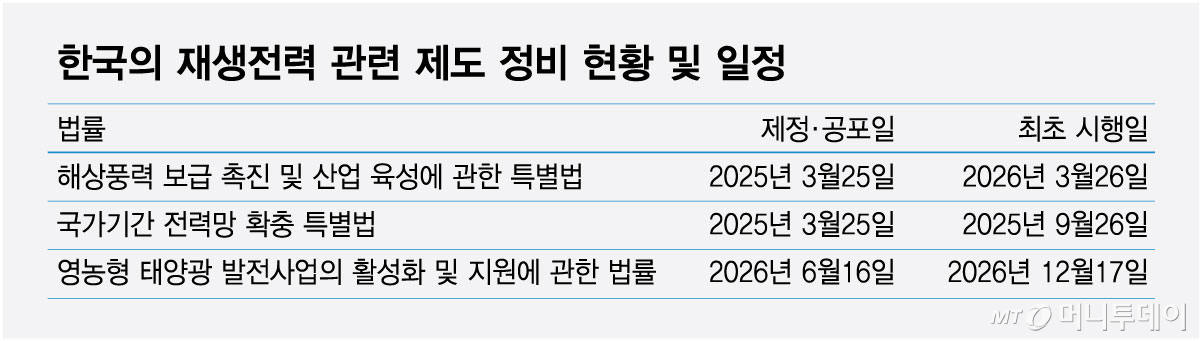
In this regard, she positively evaluated South Korea’s policy changes, such as the promotion of offshore wind, the implementation of laws for grid expansion, and regulatory improvements for expanding agrivoltaics (solar power combined with agriculture). She also cited agrivoltaics as one option to enable large-scale renewable energy deployment in South Korea. CSO Nakagawa stated, "It is a promising option in that it allows agriculture and electricity production to coexist," adding, "While using land for agriculture, it can create potential income sources in rural areas."
Regarding plans to expand clean power in South Korea, she also mentioned the role of long-duration energy storage devices and energy efficiency improvements. She explained that storage devices can complement the variability of renewable energy, and efficiency improvements can reduce the burden on the power system. She stated, "South Korea’s industrial competitiveness is tremendous, and there is very large room to expand clean energy supply accordingly," adding "The next task and opportunity is (the execution of) clean energy supply."
※This special reporting was supported by the Korean Journalists Association and Climate Media Hub.

 in INDUSTRY


