

"If residents believe their electricity bills will rise because of data centers, they will not support connecting data centers to the power grid."
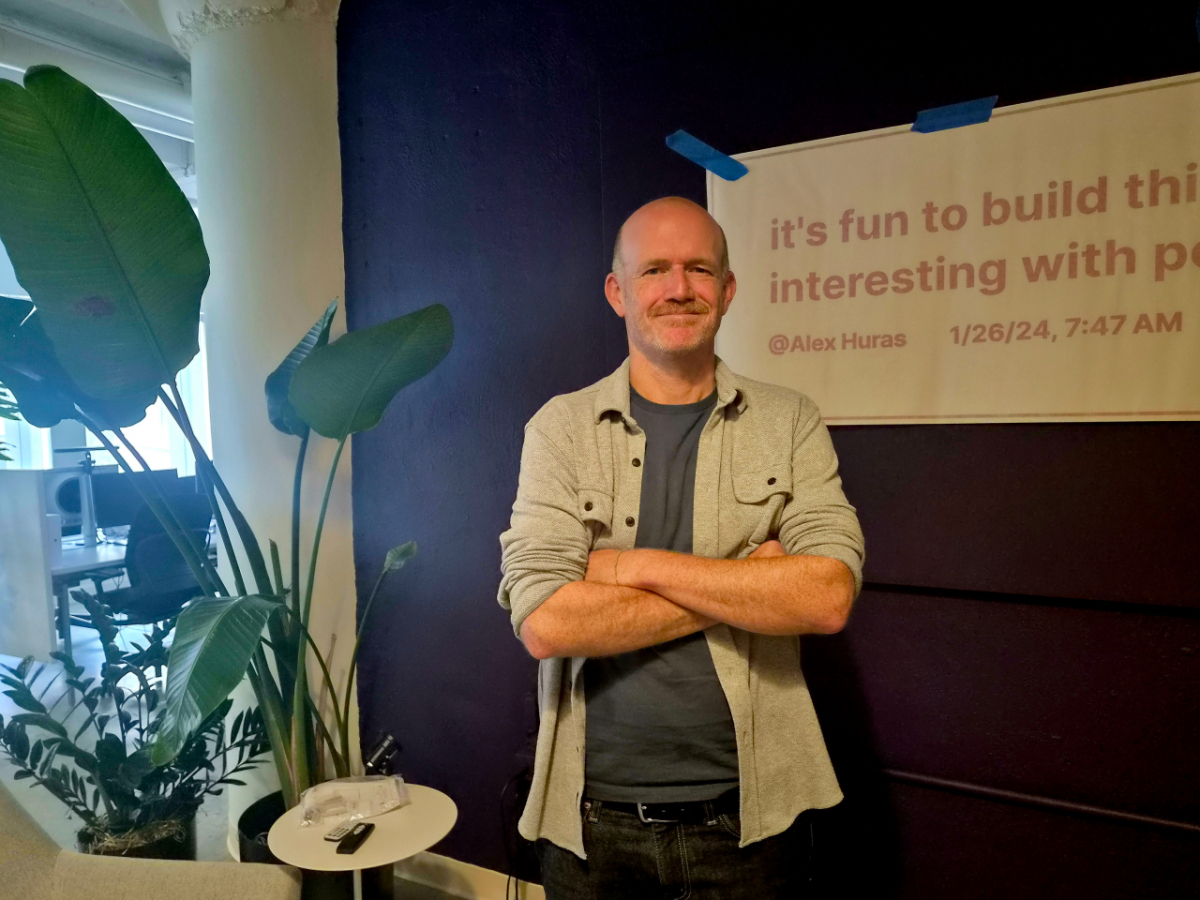
Nick Chiasset, Head of Octopus Energy's U.S. Subsidiary, whom we met in San Francisco, U.S., on the 9th of last month (local time), emphasized that for AI data centers to be connected to the power grid, tangible benefits must first be provided to local residents.
Octopus Energy, which originated in the United Kingdom, is a flexibility-based power service company that combines electricity sales and software technology to adjust the charging and discharging times of electric vehicles or home batteries, alter the usage times of household appliances, and lower customers' electricity bills.
As transmission grids and other infrastructure struggle to keep pace with the increased power demand driven by the spread of AI data centers, we asked Chiasset, who has been in the energy sector for 20 years, about how much role grid flexibility, which is emerging as a "present-tense" solution, can actually play.
Shifting to cheaper time slots boosts consumer benefits
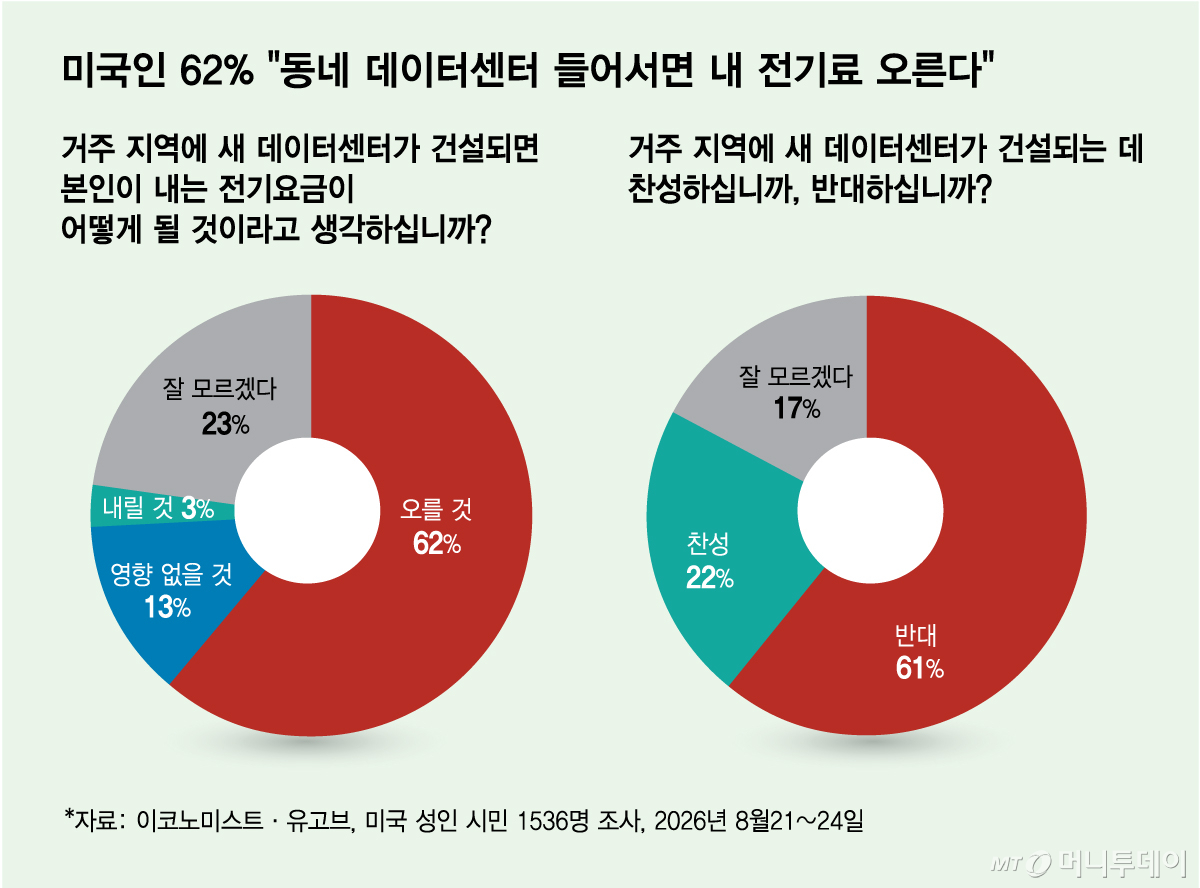
In the United States, building a data center requires obtaining permits from state governments or local governments such as cities and counties, depending on the region. In this year's midterm elections, whether to allow data center construction became an issue in several areas. This is due to concerns that facilities consuming large amounts of electricity could drive up household electricity bills.
Chiasset said, "If you want to lower electricity bills immediately, the fastest way is to enable consumers to use less electricity during expensive time slots and more during cheaper ones." He referred to the margin for adjusting the timing or amount of electricity usage in response to grid conditions or price signals as "load flexibility."
He cited California, where solar power generation is high and daytime electricity rates are relatively low, as an example. Suppose that when power demand peaks, the rate is 40 cents per kilowatt-hour (kWh), and 20 cents during other times. If 10 kWh of daily electricity usage, such as for electric vehicle charging, is shifted to cheaper time slots, one can save $2 a day—$60 a month—while using the same amount of electricity.
The premise is that there should be no inconvenience in daily life. For example, Chiasset said, "You might turn on the air conditioner a bit earlier in the afternoon to cool the house before evening, but you must ensure that when you come home, it does not feel too cold or too hot." It is optimization within the range of not changing one's lifestyle.
Octopus Energy already works with utility companies in various parts of the United States to adjust customers' electricity usage times. In Southern California, if a customer registers an electric vehicle in the Octopus app, charging can be temporarily paused during expensive time slots. In Northern California, Upright, a subsidiary of Octopus Energy, pays customers who agree to have their cooling set temperatures adjusted a few times a year.
Limits on grid expansion solved by adjusting household power demand
So, what does changing the timing of home electric vehicle charging or cooling have to do with AI data centers? Chiasset focused on the fact that households and data centers use the same power grid. He explained that if multiple households temporarily delay charging or cooling during peak demand times, it creates room to supply power to data centers using existing generation and transmission facilities.
He stated, "With the emergence of AI data centers, there is now more demand for grid connection than at any point in the past 50 years," adding, "The cost of building power grid infrastructure is too high and takes a very long time, so it cannot meet current power demand." Therefore, he explained, "Now is the time to find ways to adjust how households and businesses use electricity to enable more connections using existing infrastructure." He emphasized, "Compared to just two or three years ago, the situation has fundamentally changed. It was not essential before, but now we must find such methods."
Chiasset said, "The mindset that 'a very big problem can only be solved by a very big solution' immediately leads to the idea that 'the way to solve the power demand issue of AI data centers is to build large gas power plants,'" adding, "Conversely, that solution could be 100,000 or even 500,000 individual household customers."
Octopus Energy's project with virtual power plant (VPP) operator Voltree to secure power capacity for Google data centers is an example of this idea becoming reality. In June last year, Google and Voltree announced a contract to secure up to 100 megawatts (MW) of surplus capacity during peak demand times by utilizing batteries, thermostats, and other equipment from households and businesses in the territory of PJM, the power grid operator for the U.S. Midwest and East. On the 22nd of last month, they announced that the project scale would be expanded to 1 gigawatt (GW). Google provides the funding, while Voltree aggregates and operates facilities from various locations.
Currently, large customers such as factories are participating in Voltree's project, and Octopus Energy, which handles the residential sector, plans to recruit households equipped with smart thermostats or batteries, or install batteries directly in participating homes. When power demand peaks, shifting the cooling times of these households or sending electricity stored in their batteries to the grid allows Google to pay Octopus Energy through Voltree. Octopus Energy can use this revenue to discount the electricity bills of participating households. Chiasset predicted that the residential sector business will be commercialized in 2027.
Chiasset said, "AI data center companies that figure out how to provide benefits to people will achieve the greatest success," adding, "That benefit means not one-off corporate social responsibility projects, but actual reductions in electricity bills that people feel every day."
※ This planned reporting was supported by the Korea Journalists Association and Climate Media Hub.

 in INDUSTRY

