

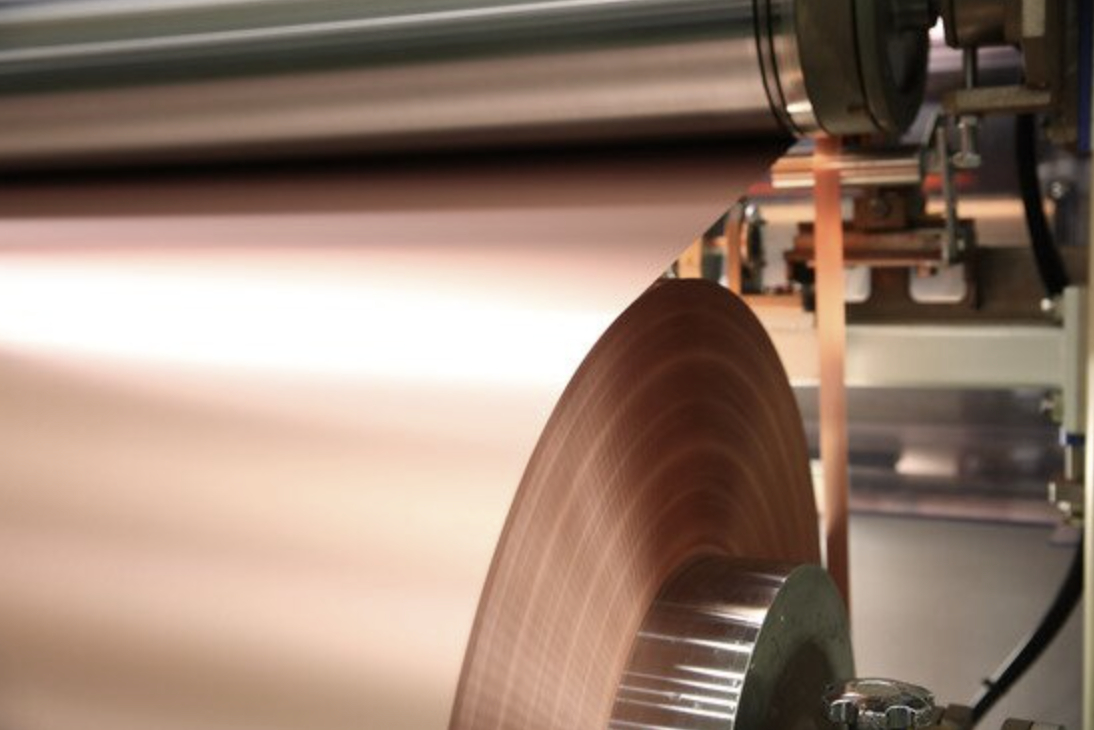
As investments in artificial intelligence (AI) data centers expand, the supply and demand structure for copper foil is changing, heightening expectations for improved performance among related companies. This shift stems from copper foil manufacturers converting their existing battery-grade anode foil production lines into high-value-added AI circuit foil lines. Forecasts also suggest that price increases will begin in earnest starting next year.
According to industry sources on the 14th, supply shortages are emerging in the global copper foil market, centered on AI circuit foils. As demand for circuit foils used in high-performance printed circuit boards (PCBs) for AI servers has risen, copper foil manufacturers have converted some of their battery-grade anode foil production lines to produce circuit foils.
Consequently, the battery-grade anode foil market, which had long suffered from oversupply, is gradually becoming tight. This is because supply capacity is decreasing due to the conversion of production lines for circuit foils, amid limited new expansion. Additionally, as battery manufacturers demand high-specification anode foils suitable for high-capacity products, the actual producible volume is also declining.
The expanding movement in the North American market to secure non-Chinese battery materials is also a favorable factor for domestic companies. Battery firms are showing signs of reducing their reliance on Chinese-made materials to meet U.S. tax credit requirements. The supply stability of non-Chinese copper foil is becoming increasingly important.
Industry experts are raising the possibility that the non-Chinese anode foil market will enter a phase of supply shortage next year. Some predict that anode foil processing fees could rise by 20 to 30 percent, and AI circuit foil processing fees by approximately 30 percent, compared to this year. Analysts note that copper foil manufacturers can strengthen their pricing power in negotiations with customers seeking to secure supply volumes.
Lotte Energy Materials is cited as a company expected to benefit from these supply and demand changes. The market anticipates the company's revenue could reach 1.3 trillion won next year. Possibilities of turning profitable on a quarterly basis in the second quarter of next year are also being discussed. For SKC, improved profitability is expected due to price normalization in its copper foil business. It is reported that some battery manufacturers have already accepted copper foil price increases.
The magnitude of price increases remains a variable. From the perspective of battery manufacturers, who are facing slowing growth in the electric vehicle market and profitability pressures, it is difficult to actively respond to material price hikes. The pace of performance improvement for copper foil manufacturers is also expected to vary depending on the actual rate of price increases and their timing.
The industry is paying attention to the structural change where supply shortages in AI circuit foils lead to improved supply and demand conditions in the battery-grade anode foil market. Domestic copper foil companies, which have struggled with oversupply and low utilization rates, may begin to recover profitability starting next year.
An industry official said, "As anode foil production capacity decreases, the supply and demand structure of the copper foil market is shifting in a direction favorable to suppliers," adding, "Next year, price increases are expected to begin in earnest, centered on non-Chinese copper foil, which should also improve the profitability of domestic companies."

 in INDUSTRY
