

The supply shortage of gaming GPUs (graphics processing units), which has been overshadowed by AI (artificial intelligence) semiconductors, is now shaking the monitor panel market. With rising GPU prices and sluggish PC demand overlapping, growth in the gaming monitor market appears to be stalling. Samsung Display and LG Display are strategizing to respond by leveraging OLED (organic light-emitting diode) panels.
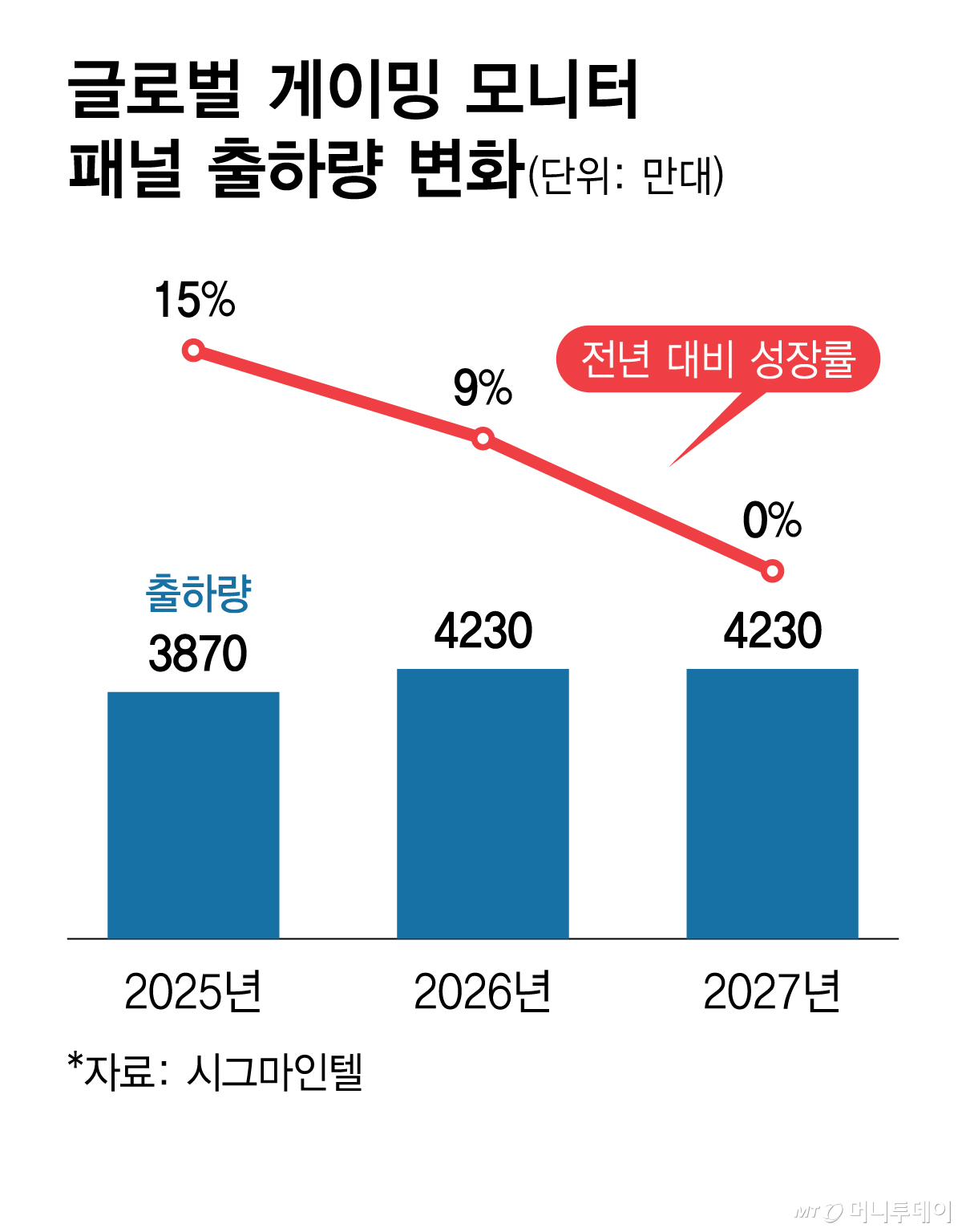
According to market research firm SigmaIntel on the 16th, global gaming monitor panel shipments next year are expected to remain at the same level as this year, at 42.3 million units. The gaming monitor panel market has expanded with growth rates of 15% last year and 9% this year, but growth is expected to stagnate next year.
The causes of the slowdown in the gaming monitor market's growth are cited as a contraction in PC demand due to rising memory prices and a supply shortage of GPUs, a core component of gaming PCs. It is analyzed that NVIDIA, which accounts for approximately 90% of the gaming GPU market, is facing constraints in gaming GPU supply as it focuses on its high-value-added AI GPU business.
NVIDIA previously made gaming GPUs its main business, but currently, its AI data center business accounts for more than 90% of total revenue. In its "2026 Fiscal Year Business Report," NVIDIA explained that "supply constraints will act as a burden on the gaming business."
The memory supply shortage due to the expansion of AI infrastructure is also putting pressure on gaming GPU production. In an earnings announcement last August, NVIDIA forecasted that the magnitude of memory price increases had exceeded previous expectations and would rise further next year. GDDR (graphics DRAM), which is installed in gaming GPUs, is also in a tight supply situation.
As supply shortages intensify, prices for representative gaming GPUs such as the GeForce RTX 50 series are also surging. The domestic selling price of the top-tier RTX 5090 was in the range of 4 million won a year ago, but recently some products have exceeded 10 million won. This is at a level that is difficult for average gamers to afford. Forecasts also suggest that the release of the next-generation RTX series could be delayed due to production capacity constraints and rising memory prices.
Given these circumstances, consumers are more likely to postpone purchases or lower specifications for gaming monitors equipped with high resolution and high refresh rates, which require high-performance GPUs.
Scaler ICs (integrated circuits) that control the screen are also facing supply shortages. Due to memory supply shortages and bottlenecks in semiconductor packaging and testing processes, lead times have increased from less than one month previously to one to two months. Combined with rising prices for related components, display manufacturers' cost burdens are also growing.
Samsung Display and LG Display are expected to respond to the slowdown in the gaming monitor market by leveraging OLED panels, which show relatively robust growth. OLED panels are expanding the market by replacing existing LCDs (liquid crystal displays). This is because consumer demand for switching to OLEDs, which offer superior image quality and response speed, will continue regardless of the stagnation in the overall gaming monitor panel market.
The two companies' shipments of OLED panels for gaming monitors are projected to increase from 5.3 million units this year to 6.3 million units next year. However, this is a figure lower than the originally planned shipment target. Panel price increases due to cost burdens are also expected and could act as an obstacle to demand expansion.
An industry official said, "The gaming monitor market has grown based on an increase in the gaming population and high purchasing power, but recently, rising gaming GPU prices and sluggish PC demand are overlapping," adding, "In particular, demand for high-spec monitors is expected to be weak."

 in INDUSTRY
