

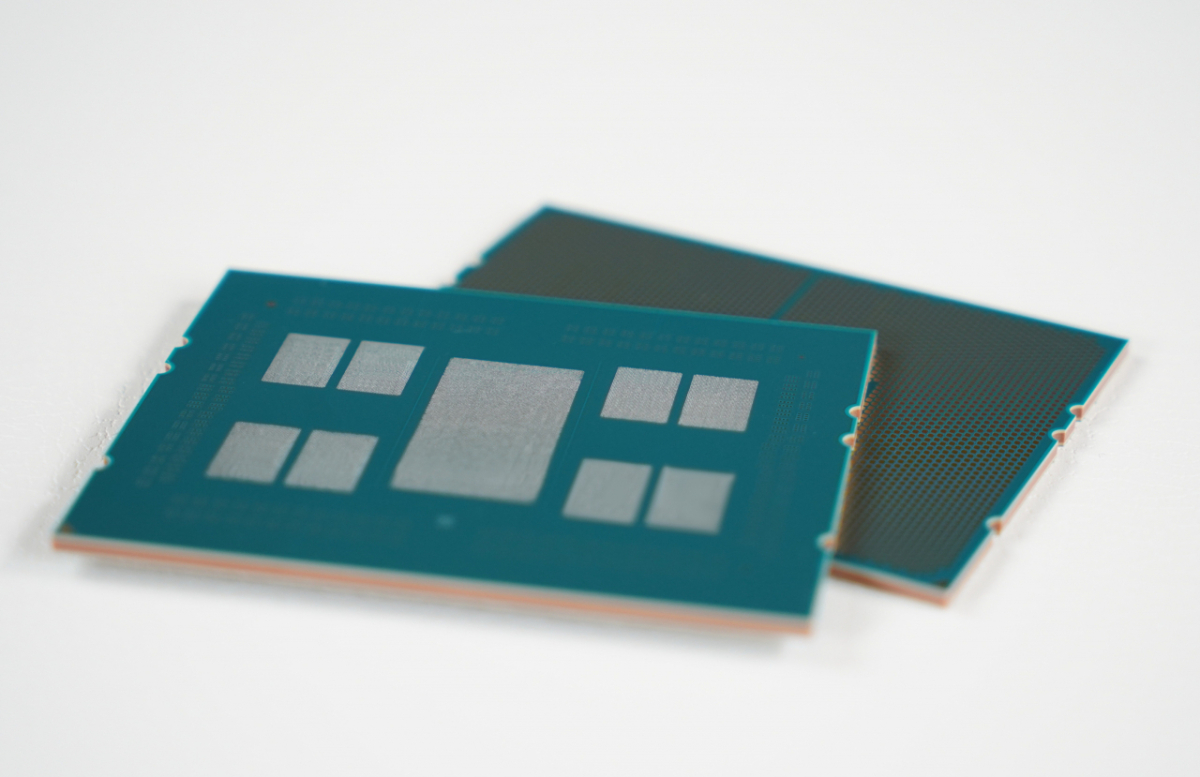
Samsung Electro-Mechanics has secured more than 1 trillion won in advance payments from customers under long-term supply contracts. As AI (artificial intelligence) infrastructure investment expands, the supply shortage of MLCCs (multilayer ceramic capacitors) and semiconductor package substrates is intensifying, prompting global big tech companies to secure volumes by providing advance payments. Component prices are also rising sharply.
According to the electronics industry on the 18th, as of the end of the third quarter, the advance payments received by Samsung Electro-Mechanics in connection with long-term product supply contracts signed with major trading partners reached $777 million (approximately 1 trillion won). This represents a 43.9% increase over three months compared to the end of June ($540 million).
It appears that movements by customers to pay in advance to secure future component supplies are expanding. Major component supply contracts signed by Samsung Electro-Mechanics this year, including silicon capacitors and MLCCs, inductors, and FC-BGAs (flip chip ball grid arrays) for AI servers, total approximately 518 billion won (based on public disclosure).
The expansion of AI infrastructure investment is intensifying supply-demand imbalances for components such as MLCCs and semiconductor substrates. MLCC production lines have been operating at full capacity since the third quarter of this year. Inventory levels are at an all-time low. According to market research firm TrendForce, the current lead time for MLCCs (the period from order to delivery) reaches 40 weeks. This is more than three times the 12th weeks cited as a normal level. Along with memory semiconductors, it is considered one of the components with the tightest supply in the AI infrastructure supply chain.
Prices are rising as the supply shortage deepens. The cumulative average selling price (ASP) of Samsung Electro-Mechanics' MLCCs in the third quarter of this year increased by 21.4% compared to the annual average last year. Samsung Electro-Mechanics is raising supply prices taking into account competitors' pricing policies and market supply-demand conditions. In particular, high-performance MLCCs for AI are supplied mostly by Samsung Electro-Mechanics and Japan's Murata.
The supply capacity for semiconductor package substrates is also becoming tight, centered on high-value-added products, due to the high performance and large size of AI semiconductors. The cumulative ASP of Samsung Electro-Mechanics' semiconductor package substrates in the third quarter of this year rose by 28.1% compared to the annual average last year.
This translated directly into improved earnings. Revenue for the Package Solutions division, which handles semiconductor package substrates, was 939 billion won in the third quarter, a 58% increase from the same period last year. The growth was driven by expanded sales of high-value-added FC-BGA substrates used in AI accelerators and server CPUs (central processing units).
Samsung Electro-Mechanics plans to invest 10 trillion won over the next three years to expand its FC-BGA production capacity. It has secured most of the customers who will receive the expanded supply, and intends to cover a significant portion of the investment with customer advance payments. The company is adopting a method of securing demand and equipment investment funds based on long-term supply contracts before increasing production facilities.
The company is also accelerating next-generation product development. Samsung Electro-Mechanics recently developed high-reliability MLCCs used in the 48V output stage of AI server power supply units (PSUs) and large-area FC-BGA substrates for AI. The strategy is to enhance component reliability and performance to respond to the high performance of AI semiconductors and strengthen competitiveness in high-value-added products.
A Samsung Electro-Mechanics official stated at last quarter's earnings announcement, "We have completed large-scale investment support and long-term supply contract signings after being recognized for our technological capabilities and stable supply capacity by major big tech customers," adding, "We will begin mass production in stages starting next year, contributing significantly to revenue from 2028."

 in INDUSTRY
