

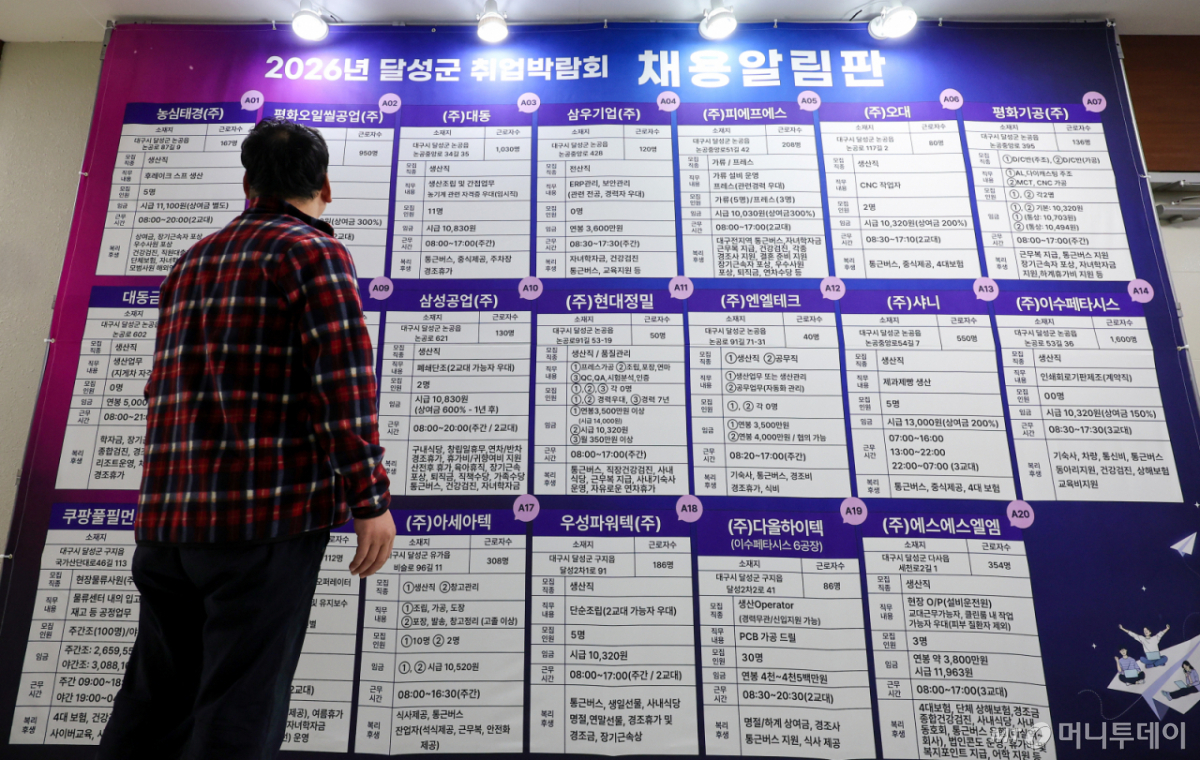
More than four out of ten university students assessed that this year's new graduate recruitment market has become more difficult than last year. The document screening pass rate for university students actively engaged in job hunting was only 18.6%, and the proportion expecting to take more than one year to prepare for employment also increased.
According to the "2026 University Student Employment Perception Survey" released by the Korea Association of Economic Organizations (KAEF) on the 22nd, the proportion responding that this year's new graduate recruitment market is "more difficult than last year" was 45.1%, an increase of 8.0 percentage points from 37.1% last year. Conversely, responses indicating it is "better than last year" were 4.8%, a decrease of 0.3 percentage points from 5.1% the previous year. The survey was conducted among 2,484 current students and graduates of four-year universities nationwide.
Despite growing negative perceptions about employment, job hunting activities have become more active than last year. Among fourth-year university students and graduates, responses indicating active job hunting were 35.4%, an increase of 7.0 percentage points from 28.4% last year. In contrast, the proportion of passive job seekers decreased by 11.7 percentage points from 60.5% to 48.8%. Passive job seekers are those who check job postings without substantive preparation or apply for experience's sake ("ritualistic job hunting" (29.8%)), "barely engage in job hunting" (13.8%), or are "resting" (5.2%).
The most common reason for not actively engaging in job hunting was "the need for additional preparation due to a lack of one's own capabilities, skills, and knowledge," at 43.0%. This was followed by "a shortage of jobs in one's major or area of interest" (18.0%), "concern that one will not find a job even when engaging in job hunting" (17.8%), and "a shortage of jobs with suitable wage levels and other working conditions" (11.6%).
The actual gate to employment also appears to have narrowed. University students in their fourth year or above and graduates who are actively engaged in job hunting applied for an average of 10.2 positions this year, passing document screening 1.9 times. The document screening pass rate was 18.6%, a decrease of 0.8 percentage points from 19.4% last year. Responses indicating failure in all document screenings reached 23.5%.
Forecasts that the job preparation period will lengthen have also increased. 72.8% of respondents expected it would take more than six months to prepare for employment, an increase of 6.8 percentage points from 66.0% last year. In particular, the proportion expecting it to take more than one year rose by 4.7 percentage points from 35.9% last year to 40.6% this year. Among difficulties experienced during job preparation, responses related to job shortages, such as "decrease in new graduate recruitment opportunities" (27.6%) and "shortage of good jobs matching desired working conditions" (24.2%), accounted for 51.8%.
The most frequently cited policy task for resolving youth unemployment was "expansion of job experience through internships and work experiences," at 23.7%. This was followed by "expansion of support for vocational training in new industries and technologies such as AI (artificial intelligence) and big data" (19.1%) and "strengthening companies' capacity to create employment through measures such as easing regulations in labor and industry sectors" (18.2%).
Lee Sang-ho, Head of the Economic Department at KAEF, stated, "Amid continuing domestic and international management uncertainties such as high exchange rates, high interest rates, and uneven economic recovery by industry, coupled with increased regulatory burdens in the labor market, conditions remain difficult for companies to expand recruitment." He added, "While the government and the National Assembly should enhance companies' employment capacity through regulatory easing and tax and investment support, given that the youth demographic is also concerned about the decrease in new recruitment opportunities, policies that could impact youth jobs, such as extending retirement age, need to be pursued cautiously."

 in INDUSTRY
