

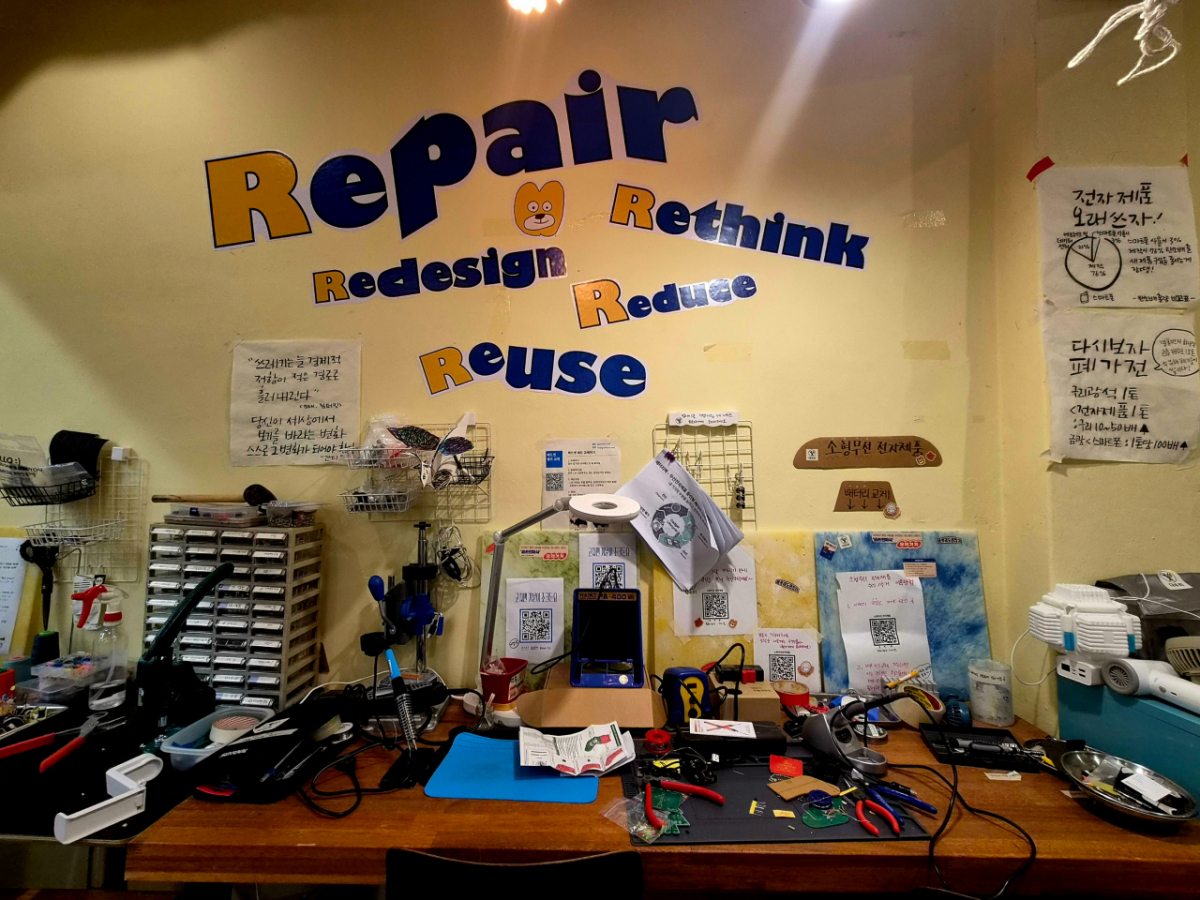
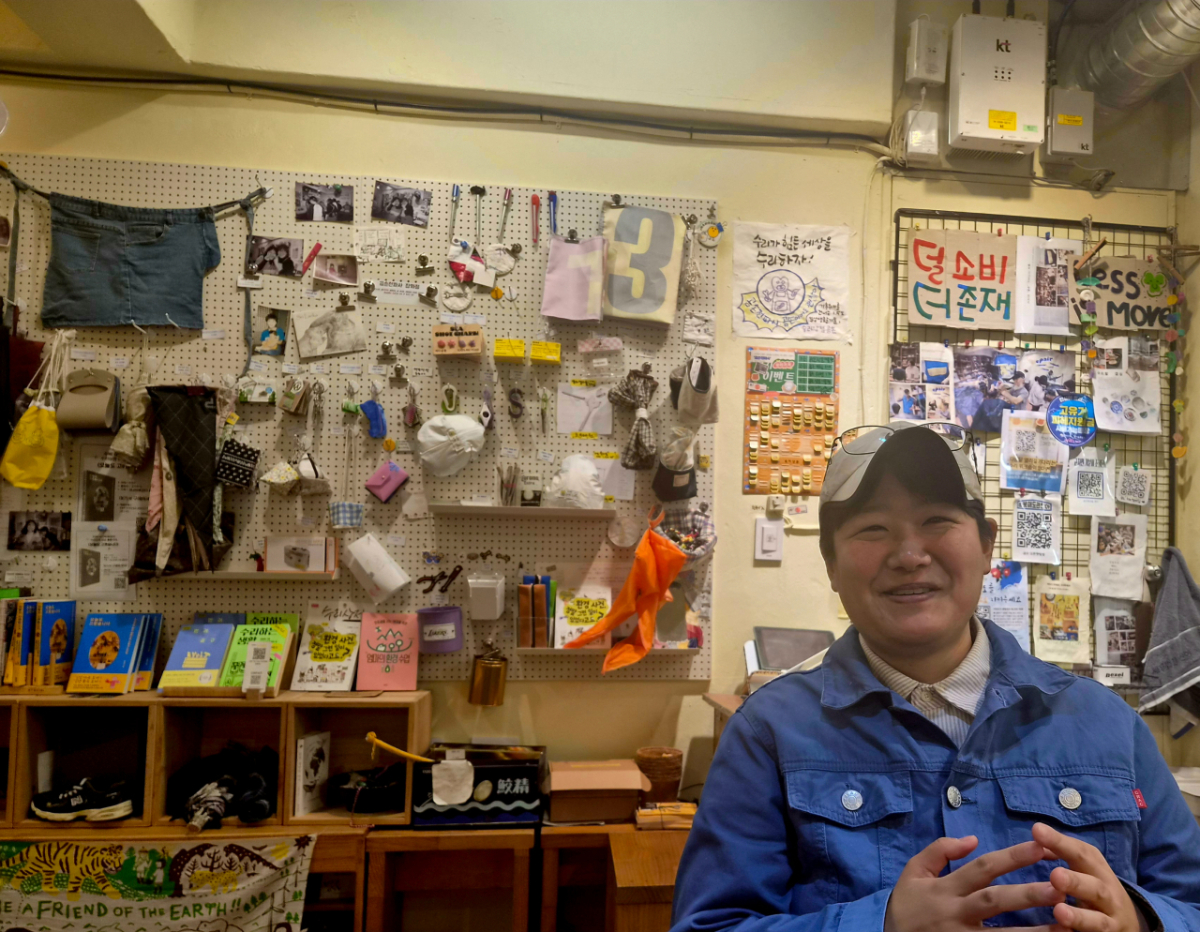
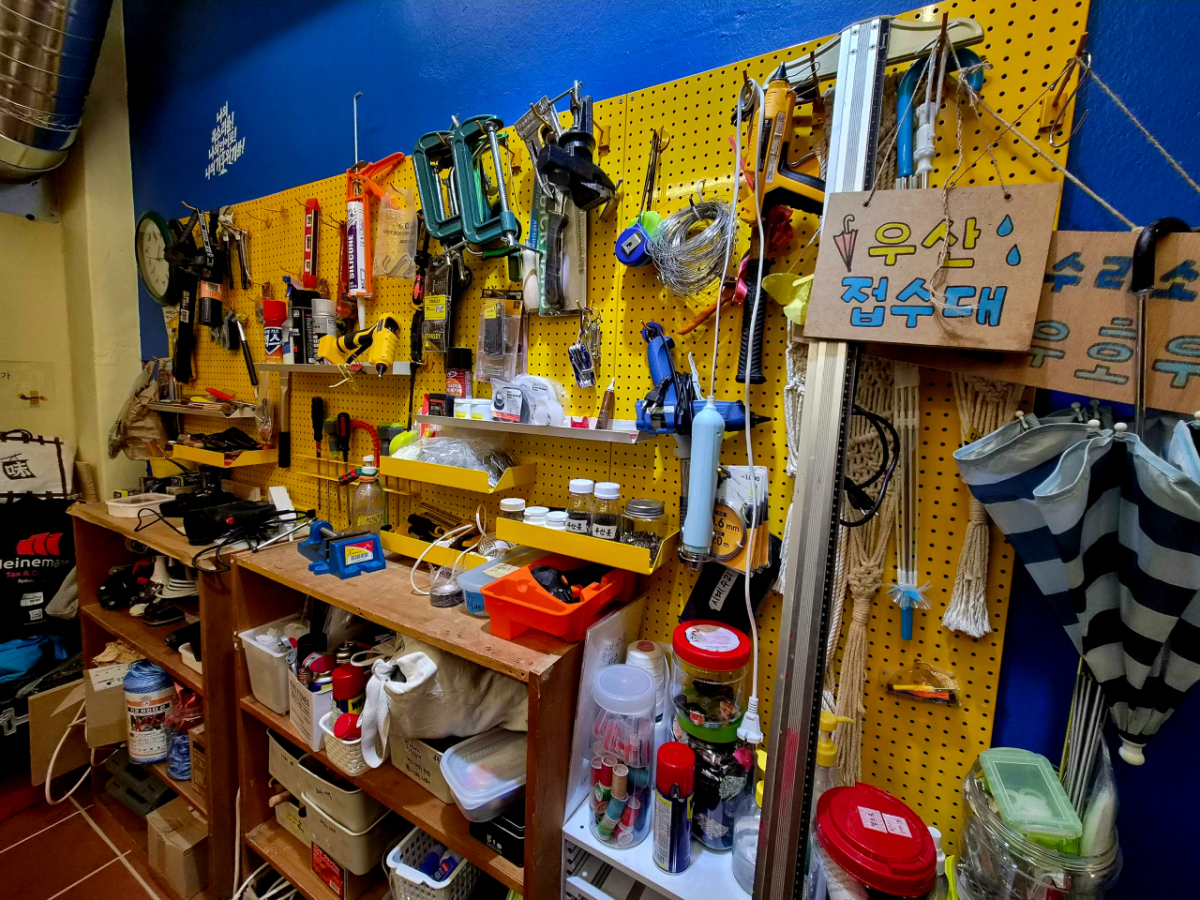
Every Thursday at 4 p.m., people gather in small groups in the basement of a building located in an alley near Mangwon Market in Mapo-gu, Seoul. They gather to repair umbrellas. After finishing their respective daily tasks, they come together here to disassemble and fix the umbrellas entrusted to them. Since late 2023, two or three new members have joined each year, and now about 15 people join the umbrella repair session at a set time every week. Approximately 200 umbrellas have been repaired through these requests.
The name of this space is Repair Shop Gomson (hereinafter Gomson). The impetus for opening it was CEO Yoo Hye-min’s personal experience. The glass on the back of her iPhone shattered just three days after she bought it. Although the screen was intact and the camera worked well, she was told the repair cost would be in the 800,000 won range. This led her to decide that she had to fix her mobile phone herself, and she succeeded in the repair.
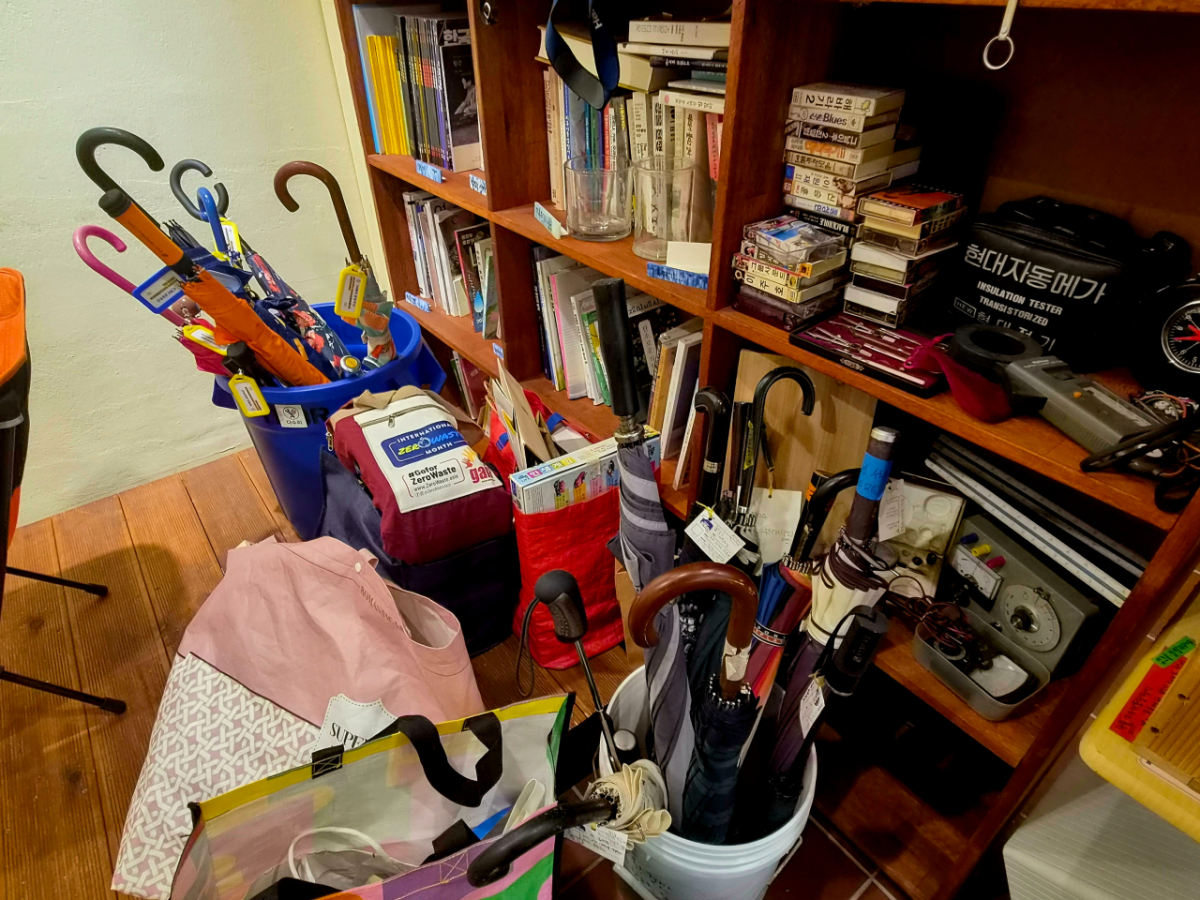
Having directly confirmed that choosing to repair is a viable option, CEO Yoo initially gathered acquaintances, and later recruited people via social media to fix items together. She realized that many people wanted to continue using their phones even if the battery drained or the glass cracked. She wanted to share the experience of repairing with more people and expand it into daily life.
CEO Yoo, who produces documentaries on environmental topics, has lived in Mangwon-dong for a long time and participated in a campaign to reduce plastic bags at Mangwon Market. Although she urged merchants and customers to use shopping baskets, it was difficult to see noticeable changes in the market. On the other hand, she judged that creating a space where repairs could be made was a way for citizens to directly feel small changes and for circular resource use to take more substantial root in daily life.
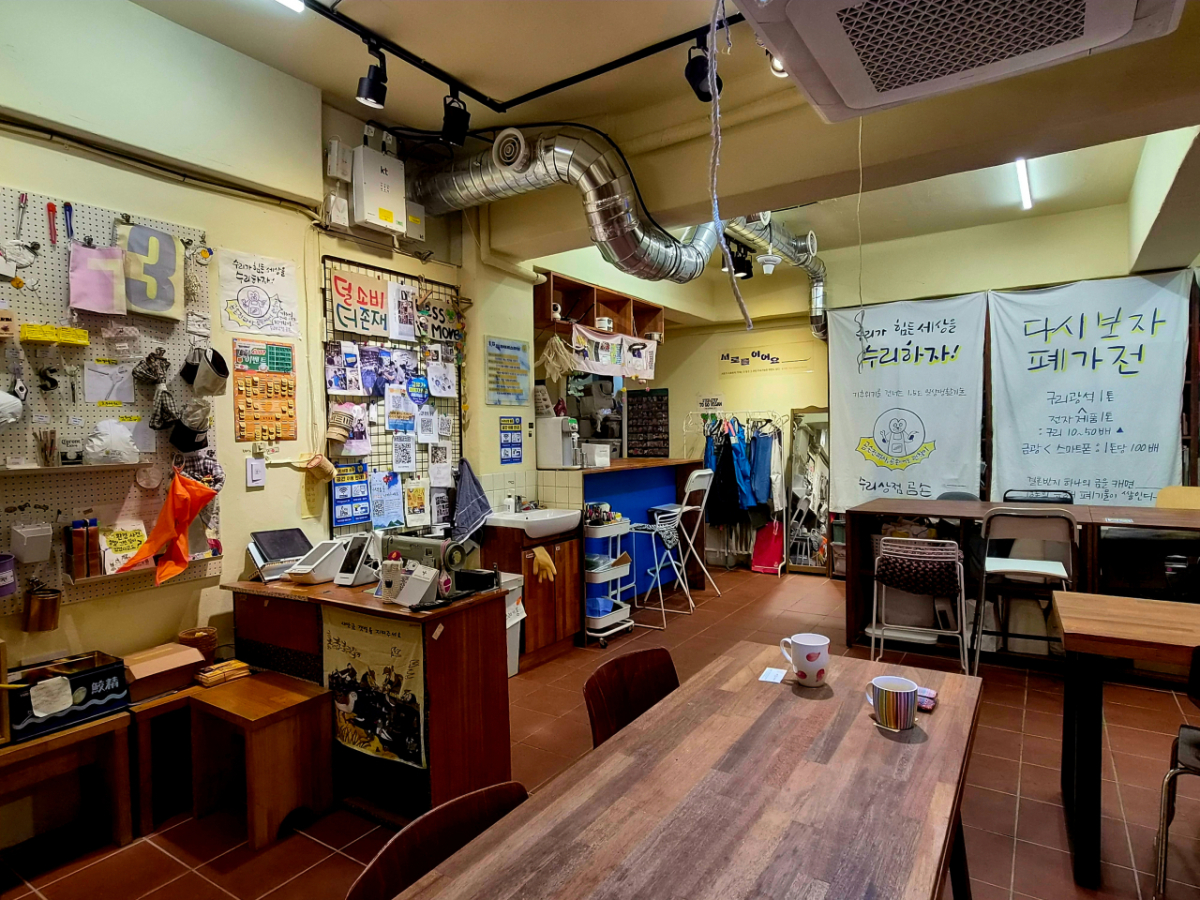
Gomson began that way. The space was secured in November 2023, preparations started, and it opened its doors in February 2024. CEO Yoo and five other people who shared the vision of circular resource use make up Gomson’s management team. While continuing their main jobs, they cover rent and operating costs through tuition fees and revenue from external education programs.
Gomson is open four days a week, from Thursday to Sunday. There are about 20 programs per month. In smartphone classes, one instructor typically works with four participants. As more people have come to prefer the unique texture of photos taken with older camera models, an increasing number of people recently bring in old mobile phones kept in their drawers. There are also days when they examine small home appliances brought by neighborhood residents and identify the cause of malfunction with the owner of a local electronics shop. If it can be fixed on the spot, they take it with them; items requiring more time are "hospitalized" at the electronics shop.
CEO Yoo, whom we met at Gomson in Mangwon-dong, Mapo-gu, Seoul, on the 20th, said "Since opening, the number of repair cases for mobile phones, small home appliances, umbrellas, and others has exceeded 1,000. Including items fixed in pre-opening gatherings, citizens have directly repaired approximately 500 mobile phones".
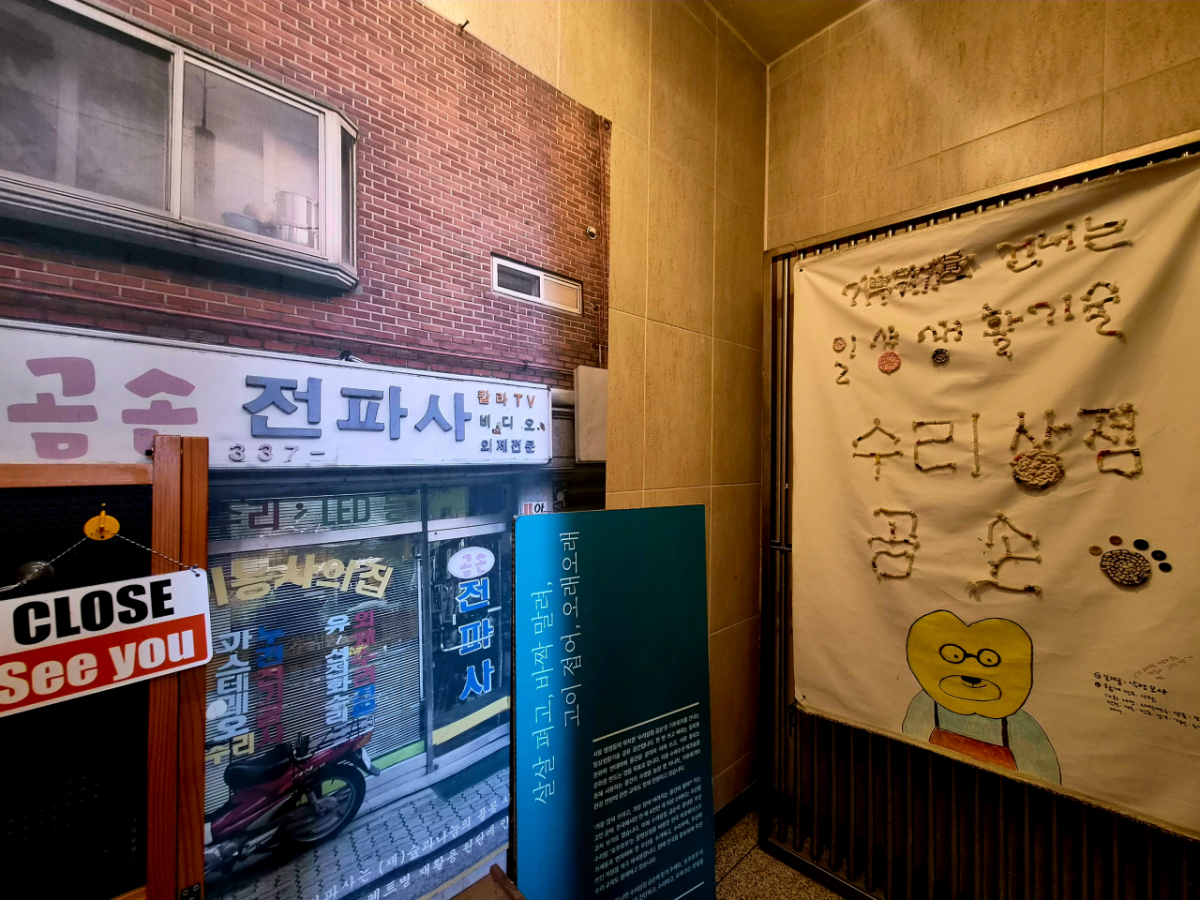
Over the full three years of activity, they have also expanded their reach. By lecturing on umbrella repair methods in Jeonju, Cheonan, Sejong, and elsewhere, they contributed to creating hubs in other regions. In Sejong, those who received training are still engaged in repair activities today. Gomson provides information on repair methods and lists of necessary tools to people in various regions who want to try similar work.
Movements in local communities have also led to institutional changes. A representative achievement is the enactment of the "Ordinance for Promoting Repair Culture" by Mapo-gu this March. The ordinance includes expanding repair education through neighborhood hub spaces and tool lending infrastructure at administrative welfare centers to the district level, with Gomson contributing opinions through roundtable discussions and other means. Discussions on detailed implementation plans are underway ahead of next year’s related budget allocation.
CEO Yoo emphasized that it is as important to establish standards requiring companies to create products designed for long-term use from the start, as it is for citizens to learn how to repair and reuse items. Low-cost home appliances purchased through overseas direct shopping often have poor-quality parts, making them difficult to use for a long time even after repair. Additionally, the burden of buying new ones is small, so they are easily discarded when they break down. She viewed the need to establish standards considering durability from the design stage for low-cost small home appliances and to determine what standards should be applied at the import stage for overseas direct shopping products.
For example, the European Union (EU) has an "Eco-design" system that requires consideration of whether a product can be used for a long time and easily repaired, as well as whether it can be recycled after its lifespan ends, at the design stage. A representative example is ensuring that repairers can obtain major replacement parts such as batteries and screens for at least seven years after the supply of a specific smartphone model launched in the EU has ended.
The area CEO Yoo wants to focus on next year is lithium-ion batteries. Lithium-ion batteries, which use lithium, cobalt, nickel, and manganese as raw materials, are used in small electronic devices that require charging, such as smartphones, laptops, and wireless earphones. Adding rare earths contained in ultra-small speakers and vibration motor parts inside the devices, a considerable amount of limited resources is packed into a single electronic product. The reason overseas countries pay particular attention to electronic product repair is also to use already mined resources for as long as possible.
Realizing that just looking inside her own bag reveals four or five rechargeable devices, she decided to start by replacing batteries that can be easily fixed in daily life. Next year, she plans to open a class on replacing cells inside power banks to reuse them. CEO Yoo said, "I want to expand the touchpoints of circular resource use by starting with repairing and reusing the items I use most frequently in my daily life."

 in INDUSTRY


