

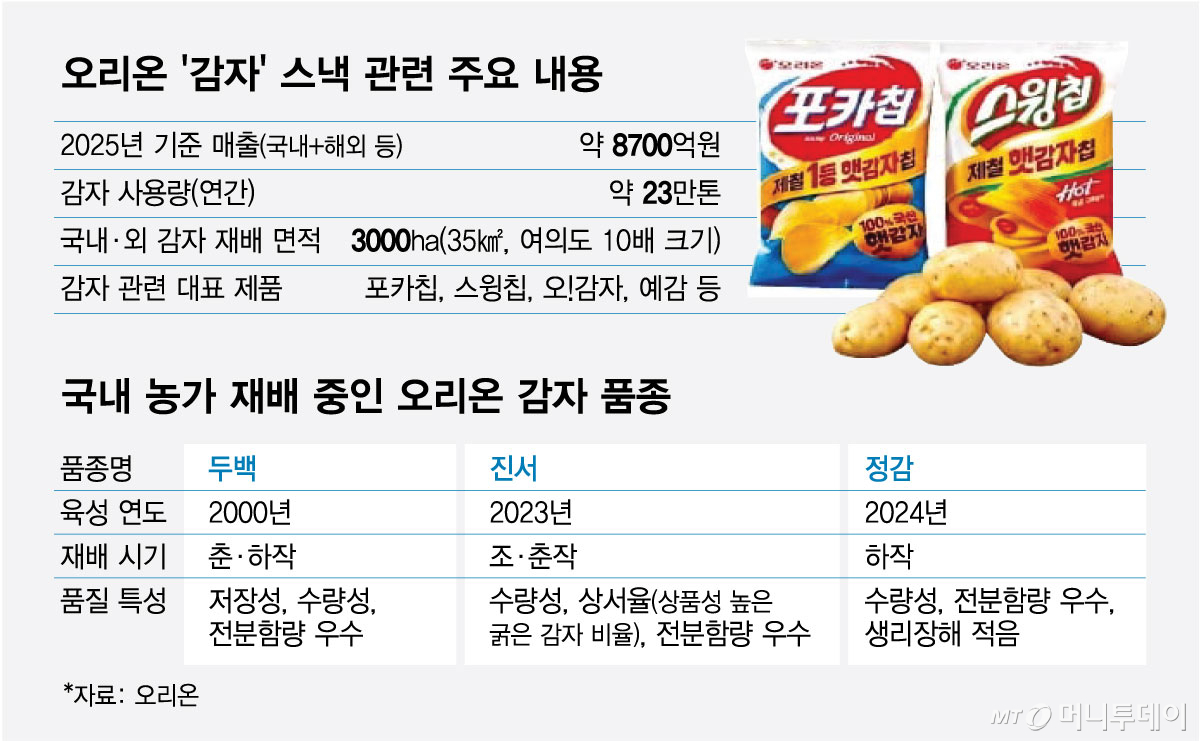
Orion is on the verge of surpassing 1 trillion won in annual sales from its potato snacks. The company uses a total of 230,000 tons of potatoes annually across South Korea, China, and Vietnam alone. Industry observers note that Orion’s strategy of focusing on raw materials has paid off as it has evolved beyond a confectionery manufacturer into a leading "potato seed company" representing South Korea.
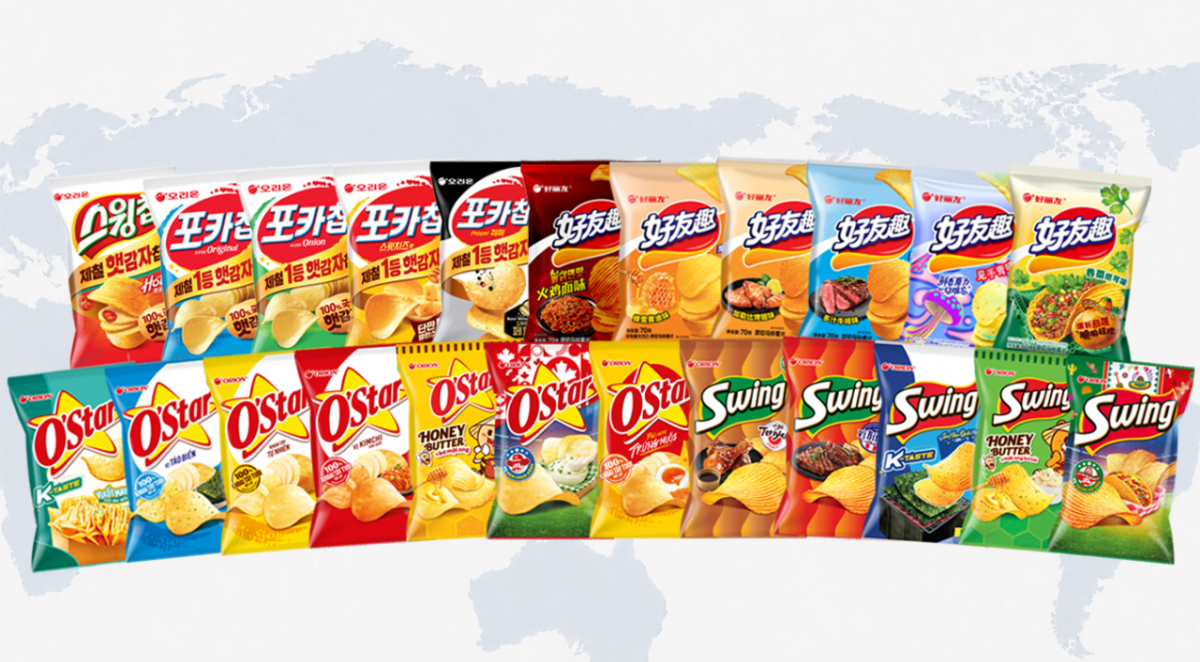
According to industry sources on the 26th, Orion’s total potato snack sales last year reached 874 billion won, with overseas markets accounting for 73% of that figure. Currently, Orion offers six potato snack brands in markets including South Korea, China, and Vietnam, led by Poka-chip. In terms of flavor variations, the company produces over 70 different products. Among Orion’s global mega-brands generating more than 100 billion won in annual sales, nine in total exist; four of them are potato snacks: Poka-chip, O! Potato, Swing Chip, and Yegam.
Orion established the first private-sector "Potato Research Institute" in South Korea in 1988. Guided by the philosophy that "good products come from good raw materials," the company took direct action to develop superior dedicated potato varieties. The core competitive advantage in the potato snack market lies in "processing suitability." Varieties must meet rigorous standards including taste, solid yield, color, absence of defects, resistance to low-temperature sugarization, and disease tolerance.
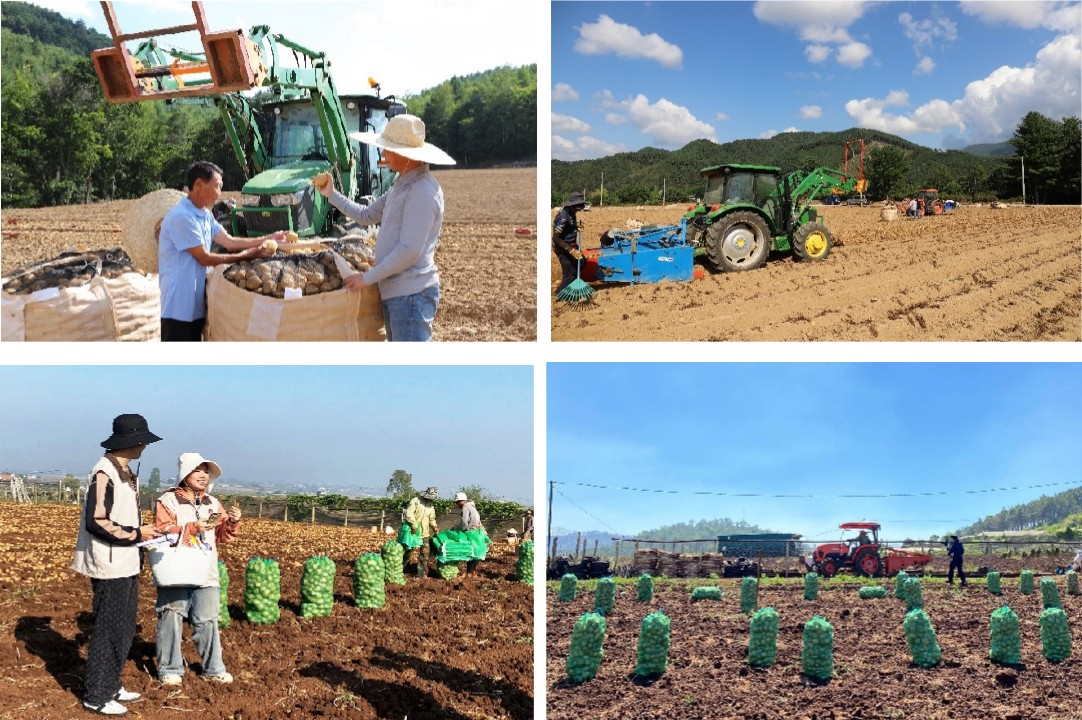
Developing new processing-grade potato varieties requires over a decade of time and massive investment. From hundreds of cross-breeding parent lines, only one superior variety emerges after overcoming odds as slim as 1 in 500,000. Globally, only three companies — Orion, PepsiCo, and Garibi — conduct direct research and development on potato varieties specifically for potato snacks.
Orion has independently developed new potato varieties including Dubaek (2000), Jinseo (2023), and Jeonggam (2024). Notably, its flagship variety "Dubaek" has been distributed to farmers since 2020 in collaboration with the Gangwon Province Potato Seed Promotion Association. Today, Dubaek accounts for 90% of South Korea’s summer potato production and has significantly contributed to increasing farmers’ income.
Orion is also accelerating its expansion into overseas markets. Since 2016, it has exported Dubaek and Jinseo seed potatoes to Vietnam, marking the first case of "industrialization through potato seed exports." In China, Orion completed development of a new variety named "OA2132" in 2024 and is currently applying for a patent.
Currently, Orion manages a total potato cultivation area of 3,000 hectares (approximately 35 square kilometers) through contract farming and direct-operated farms across three countries: South Korea, China, and Vietnam. This area equals ten times the size of Yeouido Island or the combined area of 4,200 soccer fields. The Korean subsidiary plans to procure 15,000 tons of fresh potatoes this year alone through contracts with approximately 300 farms.
The seed industry is often referred to as the "second semiconductor," representing a future high-value-added sector. However, South Korea’s private seed market remains at just 1% of the global market level, and reliance on foreign currencies for major vegetable seeds remains high. With the government presenting a blueprint to grow the seed industry to a scale of 1.2 trillion won by next year, Orion’s proactive seed research and collaborative model with farmers serve as a guiding beacon for private enterprises to follow.
An Orion representative stated, "It has taken nearly 40 years of dedicated effort to develop potato snacks, from seed development to contract farming with farmers and establishing a global supply system. Through our unwavering commitment to high-quality raw materials, we are elevating the status of K-snacks in the global market."

 in LIVING


