

"The future of a sustainable Earth depends on what and how we eat."
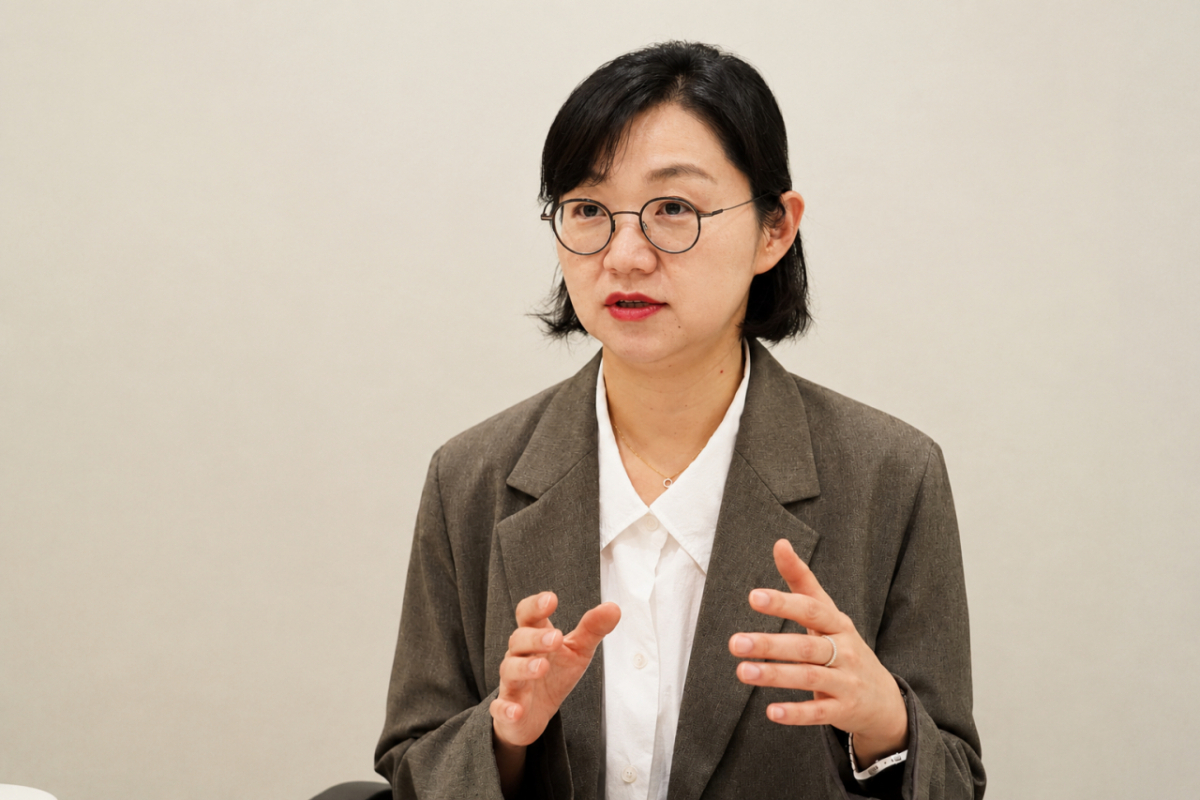
Hong Eun-ki, Executive Vice President in charge of ESH at Pulmuone, emphasized this during an interview with MoneyToday held at the company's office in Suseo-dong, Gangnam-gu, Seoul, last month on the 21st. He explained that as extreme weather events such as floods and heatwaves repeat, everything related to our food habits, including food insecurity and supply chain instability, determines the Earth's sustainability.
The reason can be seen in the structure of the food industry. About one-third of global greenhouse gas emissions occur within the food industry, from raw material cultivation and livestock rearing to processing, transportation, cooking, and disposal, with the agricultural and livestock sectors accounting for a significant portion. Producing 1kg of beef generates approximately 30kg of carbon. From a food company's perspective, carbon reduction and sustainable management are not optional but essential tasks.
Pulmuone is conducting various experiments at the production stage. It carries out low-carbon demonstration cultivation with cooperating farms such as Deomungyeong Farm (cabbage) and Shinmine Distribution Business Unit (soybeans), optimizing nitrogen and phosphorus inputs. Collaboration with startups possessing cultivation technologies continues as well.
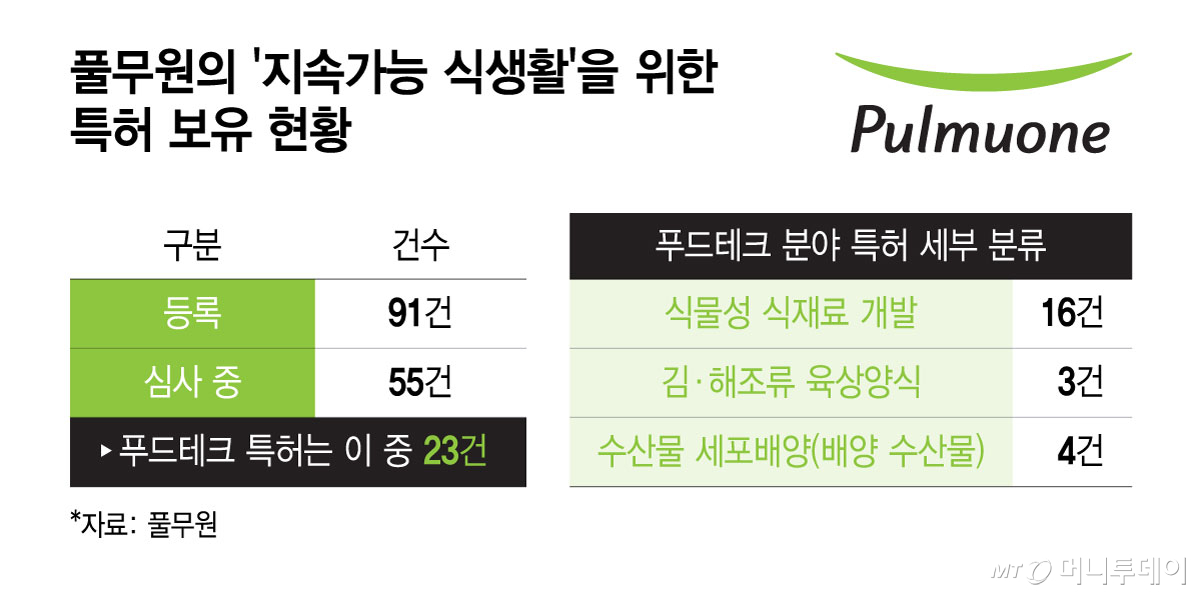
The company has also accumulated technical assets. Pulmuone holds 91 registered patents and 55 under examination. Among these, 23 are food-tech patents, including 16 for developing sustainable ingredients using plant-based raw materials, 3 for land-based seaweed farming, and 4 for seafood cell culture (cultured seafood).
Among Pulmuone's various patents, the 'plant-based ham' patent stands out. In 2021, it secured a patent for technology that preserves the texture and taste of ham using plant-based materials instead of pork. It also filed a patent for growing seaweed on land to prepare for future scenarios where rising sea temperatures due to climate change will make it difficult to cultivate seaweed in the ocean. One related patent involves a recirculating aquaculture system that reduces water usage and discharge by reusing water.
Efforts to reduce emissions only at the production and technology stages have limits. The method Pulmuone proposes for consumers to practice in daily life is the '211 diet.' This involves composing one meal with vegetables, protein foods, and whole grains in a '2:1:1' ratio, using ingredients low in saturated fat such as soybeans, tofu, and oily fish for protein. The eating order should also be vegetables, then protein, then whole grains.
He explained that just changing your table can prevent blood sugar spikes, reduce emitted carbon by 35%, and quadruple nutritional density. Vegetables have the lowest carbon footprint among food groups, so substituting protein with soybeans can reduce carbon emissions compared to beef by up to one-tenth or even less. This result was measured using the 'NRF9.3 index,' calculated by subtracting scores for three restricted nutrients from nine recommended nutrient scores in a Life Cycle Assessment (LCA) covering the entire production process from cultivation to disposal. The study was presented orally at an international academic conference of the American Society for Nutrition last July and was selected as one of the top 10% of submitted research.
The effect of consumer participation can also be seen in numbers. According to Pulmuone, if Korean adults in their 30s and 40s who need health management follow a sustainable diet once a week for a year, they can reduce emissions by 480,000 to 590,000 tCO2e. This amount is equivalent to the total emissions from Pulmuone's domestic and overseas factories over one year. Simply changing diets once a week per household can offset the emissions of a single food company.
Executive Vice President Hong said, "Since its founding, Pulmuone has made it its mission to practice love for neighbors through healthy food and create a healthier tomorrow for the Earth. We are consistently seeking ways to implement this mission by translating it into ESG (environmental, social, and governance)."


 in LIVING


