

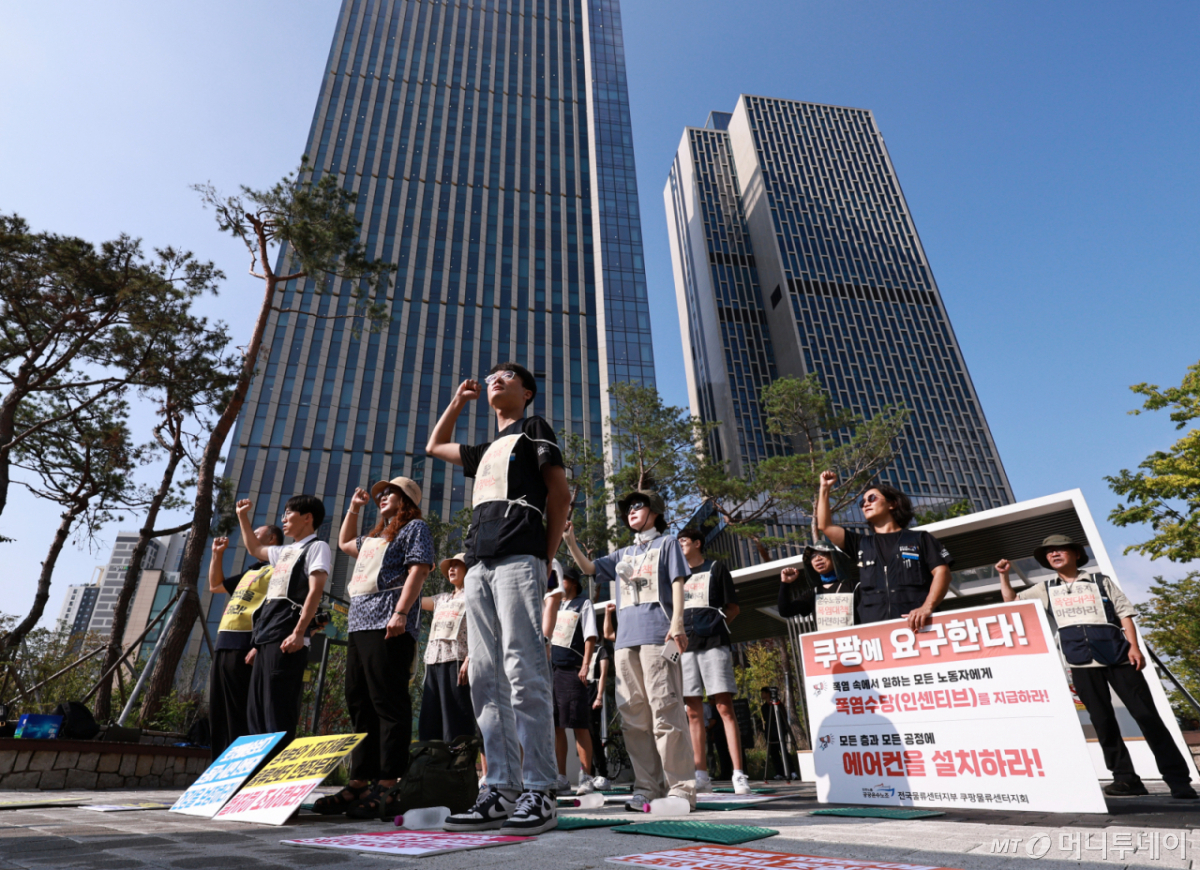
#. On the 1st, over 30 investigators from the Fair Trade Commission launched a surprise on-site inspection at Coupang's headquarters in Gwangjin-gu, Seoul. The pre-notification procedure required under the Fair Trade Act was skipped due to suspicions of violating the law. Dispatching such a large number of investigative personnel to a single company is unprecedented. This occurred just one day before the court hearing for a lawsuit filed by Coupang last month challenging the legality of the Korea Fair Trade Commission's on-site inspection procedures. Inside Coupang, terms like "retaliatory investigation" and "cracking down on discipline" were heard.
On the 21st of last month, an unprecedented incident occurred where e-commerce giant Coupang blocked an on-site inspection by the Korea Fair Trade Commission, dubbed the 'Reaper of the Business World.' Coupang refused the investigation and filed a lawsuit to revoke it with the court. This action stands in sharp contrast to its previous active cooperation with investigations conducted by government regulatory institutional investors.
It is interpreted as the result of long-simmering conflicts between the two sides exploding. Even considering the risks associated with Coupang's rapid growth in the domestic market within a short period, the company's internal atmosphere suggests that the intensity of the government's high-strength joint inspections and the level of fine sanctions are excessive. In fact, Coupang Inc., its U.S. headquarters, testified to these contents during a U.S. Congressional hearing, escalating the issue into a diplomatic conflict between the two nations.
Since the customer data breach incident erupted at the end of last year, the Jamsil office building that once served as Coupang's headquarters has been nicknamed "Mini Sejong City." This is because the government, which formed a joint inspection team, deployed hundreds of personnel for on-site inspections. Regulatory institutional investors, excluding those from the Prosecution Service, participated in the investigation, including the Korea Fair Trade Commission, the National Tax Service, the Personal Information Protection Commission, and the police.
During this period, the Korea Fair Trade Commission formed a large-scale team centered on its Market Surveillance Bureau to conduct intensive investigations. The inspection team conducted over 100 interviews with Coupang employees and, in addition to the data breach incident, simultaneously investigated violations of the Fair Trade Act and the Large-Scale Retail Business Act, requesting hundreds of documents. It is reported that some departments were asked for 10 years' worth of data. Inside the company, reactions such as "this looks like a separate investigation" emerged.
In fact, various punitive sanctions against Coupang materialized afterward. In June this year, the Fair Trade Commission imposed a fine of 624.7 billion won for the data breach incident. In the same month, the National Tax Service notified Coupang Inc. to pay an additional tax amounting to $208 million (approximately 300 billion won) through a tax audit of its Korean subsidiary. It is expected that in the second half of this year, the Korea Fair Trade Commission will impose fines in the range of 200 billion won regarding allegations of tie-in sales and other issues.
Over the past year and a half since the second half of last year, the total amount of fines and taxes imposed on Coupang has exceeded 1 trillion won. Even if administrative lawsuits are filed, the structure requires payment first followed by refund, inevitably causing disruptions in fund management. In particular, delays in building domestic and international Rocket Delivery logistics networks, which require large-scale additional investment, could slow down the company's growth, raising concerns about negative side effects such as a contraction in local employment, reduced order volumes for small and medium-sized suppliers, and delayed payments to them.
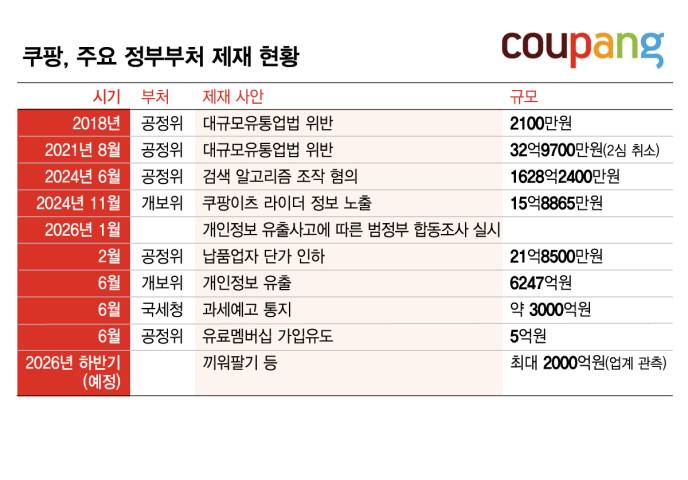
The scale of economic sanctions against Coupang has noticeably increased since the current administration took office. The 162.8 billion won fine imposed in June 2024 for manipulating search algorithms for PB (Private Brand) products was the largest single-case fine ever imposed on Coupang up to that point. The previous largest fine was related to a violation of the Large-Scale Retail Business Act in August 2021, amounting to over 3.2 billion won; however, Coupang won this case in a second-instance administrative lawsuit and received a full refund.
Industry sources state that while the increase in the scale of fines imposed on Coupang compared to previous years is partly due to the company's growing sales volume, it cannot be ignored that the company has taken a confrontational stance against the government through its own investigations and announcements of compensation plans following last year's data breach incident.
In particular, since the Korea Fair Trade Commission holds immense authority to adjust the level of sanctions by overseeing everything from on-site inspections to plenary meeting decisions, including first-instance rulings, it is a general consensus that companies have no other response strategy besides a "low-key" approach to minimize risks.
President Lee Jae-myung previously stated that for violations such as massive personal information leaks, repeated industrial accidents, and unfair trade practices, "punitive sanctions of an intensity high enough to make people feel that the company could go bankrupt if things go wrong are needed, going beyond criminal punishment." The government's regulatory institutional investors, including the Korea Fair Trade Commission, are expected to continue their high-strength sanction policy.

 in LIVING

