

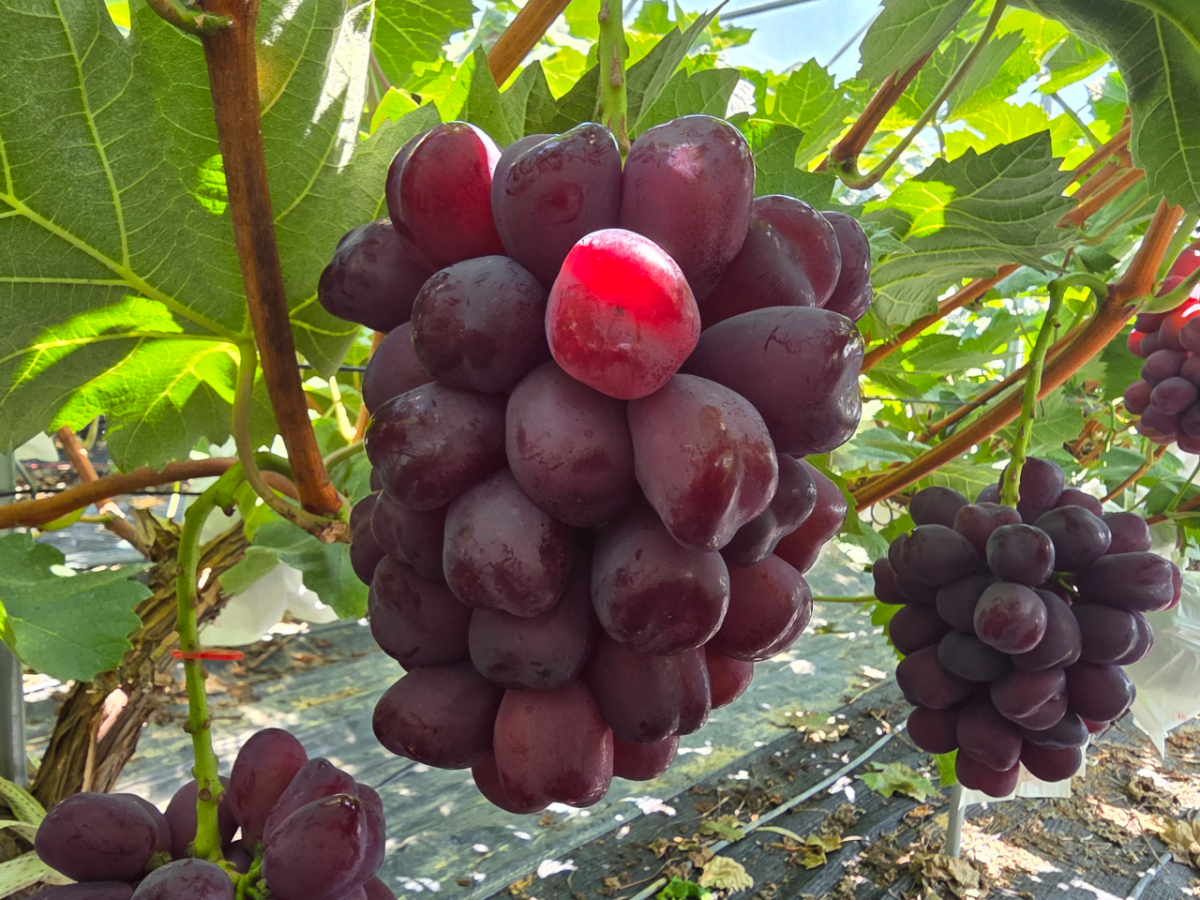
A grape farm in Sangju, Gyeongsangbuk-do. Stepping into the 600th-pyeong (approx. 1,980 square meters) greenhouse, Royal Vines hanging heavily on over 120 vines came into view at a glance. The deep red-purple grape clusters, so large that even an adult man could not hold them all in one hand, were wrapped in protective fruit bags, awaiting shipment.
Royal Vines is a variety developed by the Shimura Grape Research Institute in Yamanashi Prefecture, Japan. It completed its plant variety protection registration in South Korea in 2024 and was commercialized starting in 2025. Its key features include a maximum sugar content of 30 Brix and firm flesh.
Royal Vines is cultivated through the 'Club Cultivation' system, which manages the entire process from production to distribution. Both the number of cultivating farms and their output are restricted, accounting for only about 0.5% of South Korea's total grape cultivation area. The country's maximum annual production reaches 300,000 clusters. Approximately 470 farms cultivate Royal Vines, primarily in regions with large day-night temperature differences such as Sangju and Yeongcheon in Gyeongsangbuk-do and Yeongdong in Chungcheongbuk-do.
Cultivation is demanding, requiring farmers' hands-on care until just before harvest. First, unlike regular grapes, the vines exhibit strong vegetative growth, making it difficult to control. Only one cluster is left per shoot to concentrate nutrients. Even with high sugar content, clusters that do not develop a deep red-purple color cannot achieve a high grade. The variety is also sensitive to temperature fluctuations, necessitating meticulous management.
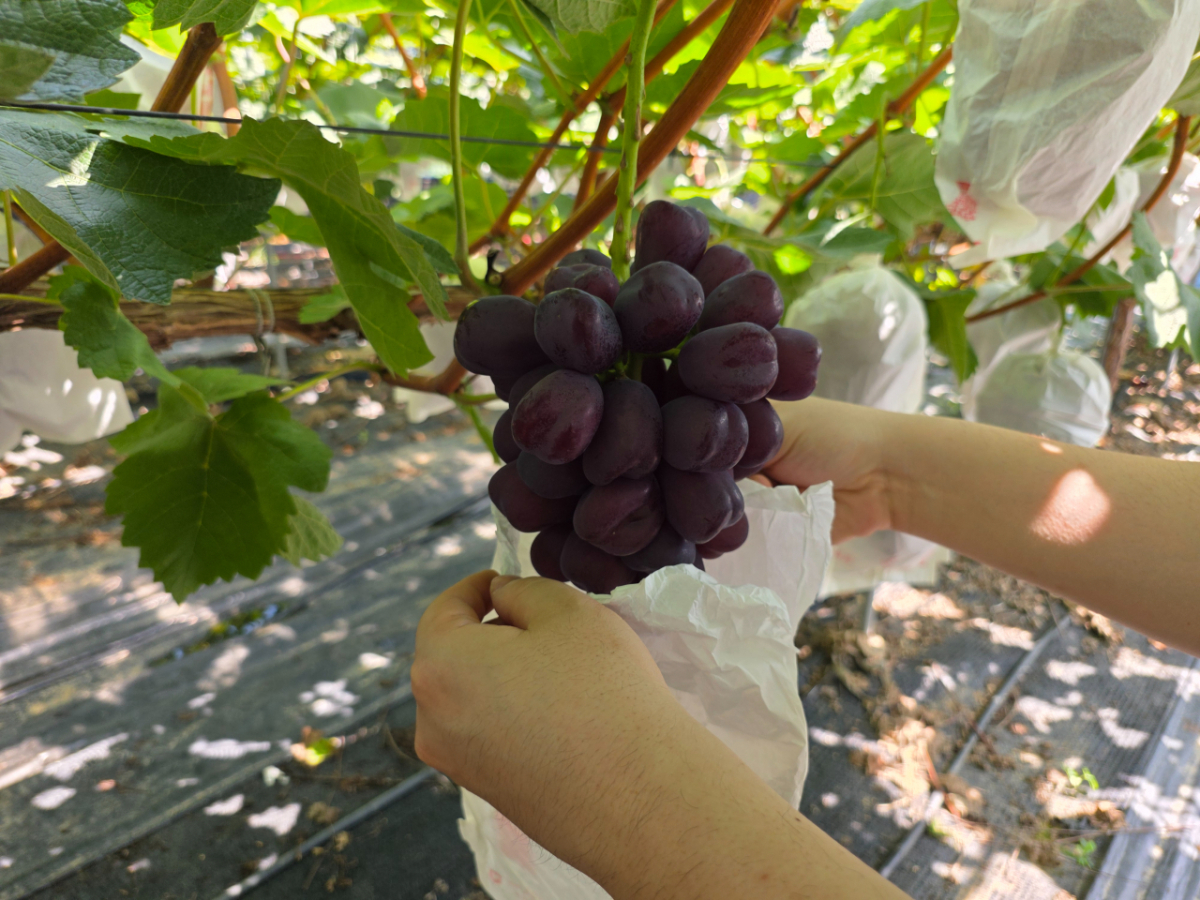
Among the Royal Vines harvested in Sangju, some clusters weighed over 1 kilogram. Grape berries as small as a newborn baby's fist were also noticeable. Tasting Royal Vines firsthand revealed a complex sensation of crisp texture combined with refreshing sweetness.
Baek Cheol-ha, president of Alps Farm, stated, "Even though we only cultivate with farms that have at least four years of agricultural experience, many struggle due to the demanding conditions. We are striving to create premium-grade products through rigorous quality control."
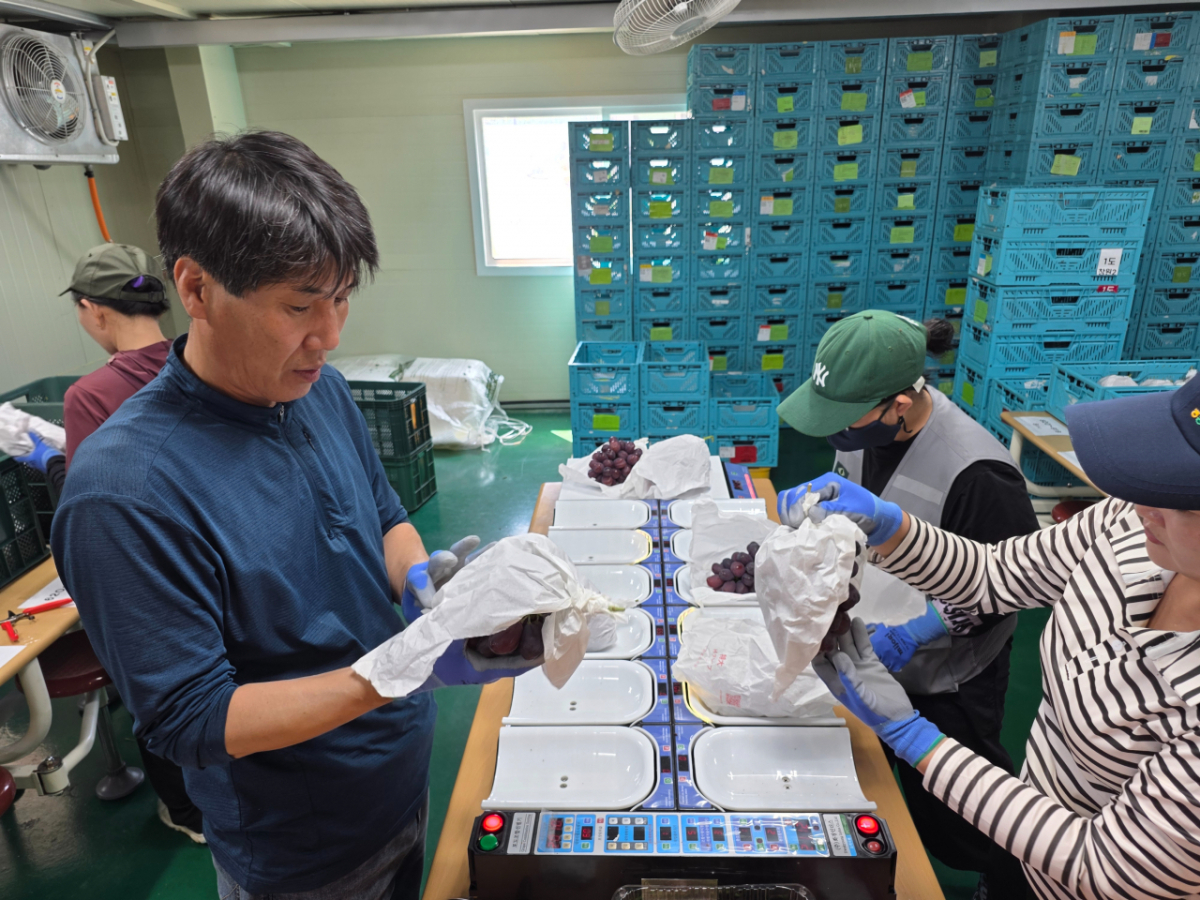
After harvest in the production area, Royal Vines are transported by truck for about one hour to a sorting facility. Sorting from premium grade down to regular grade takes place here. Upon entering the facility, workers were gathered around weighing machines, conducting the sorting process. First, they examined the coloration and shape of each grape cluster. Clusters with insufficient color or irregular berry shapes cannot receive a high grade. Subsequently, weight and sugar content are verified to finalize the grade.
A representative at the sorting facility said, "To ensure objective quality evaluation, specially hired workers handle the sorting. Only those that receive excellent ratings for color, shape, weight, and sugar content can be classified as premium grade and supplied to Shinsegae Department Store."
After undergoing the demanding cultivation process and sorting, Royal Vines are packaged at a packaging plant in Gwangju, Gyeonggi-do, before being supplied to Shinsegae Department Store. Only after passing an additional sorting process conducted by the department store can they finally be placed in the 'Premium Fruit Corner.'
Shinsegae Department Store buyers participate in all areas from production site management to quality control. Especially during holiday seasons, they visit production sites at least three days a week to inspect fruit conditions and are involved in inspection work ranging from packaging design to just before items reach the shelves.
Lee Eun-seo, a fresh food buyer at Shinsegae Department Store, announced, "Although these are already recognized as premium fruits, we separately stock premium fruits that meet Shinsegae's unique standards. Stores also verify fruit conditions before finally placing them in the 'Premium Fruit' corner."

 in LIVING


