

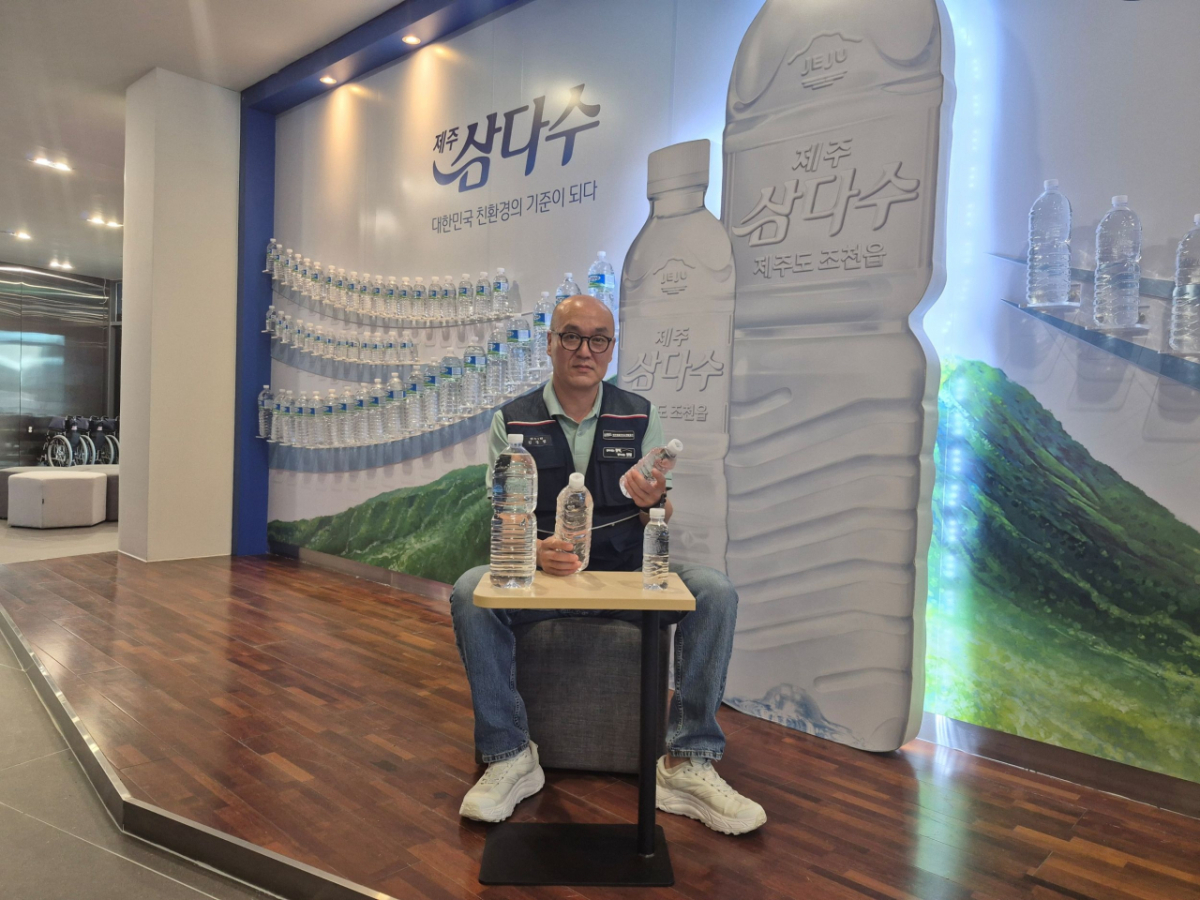
"The Jeju Samdasu container features images of Hallasan, the source of Samdasu, and the volcanic island of Jeju, along with the identity of Jeju's nature and the brand. It consistently conveys the essence of Samdasu as water originating from Jeju and the brand value of clean, healthy water."
Section Chief Kim Seong-beom (51) of Production Team 1 at Jeju Development Corporation, who has been producing Jeju Samdasu since 2001, holds a particular pride in the transparent Samdasu bottled water. He has witnessed the changes in Samdasu containers over 25 years and has taken on the role of improving them. Among the current employees of the corporation, Section Chief Kim has been involved in Samdasu production for the longest period.
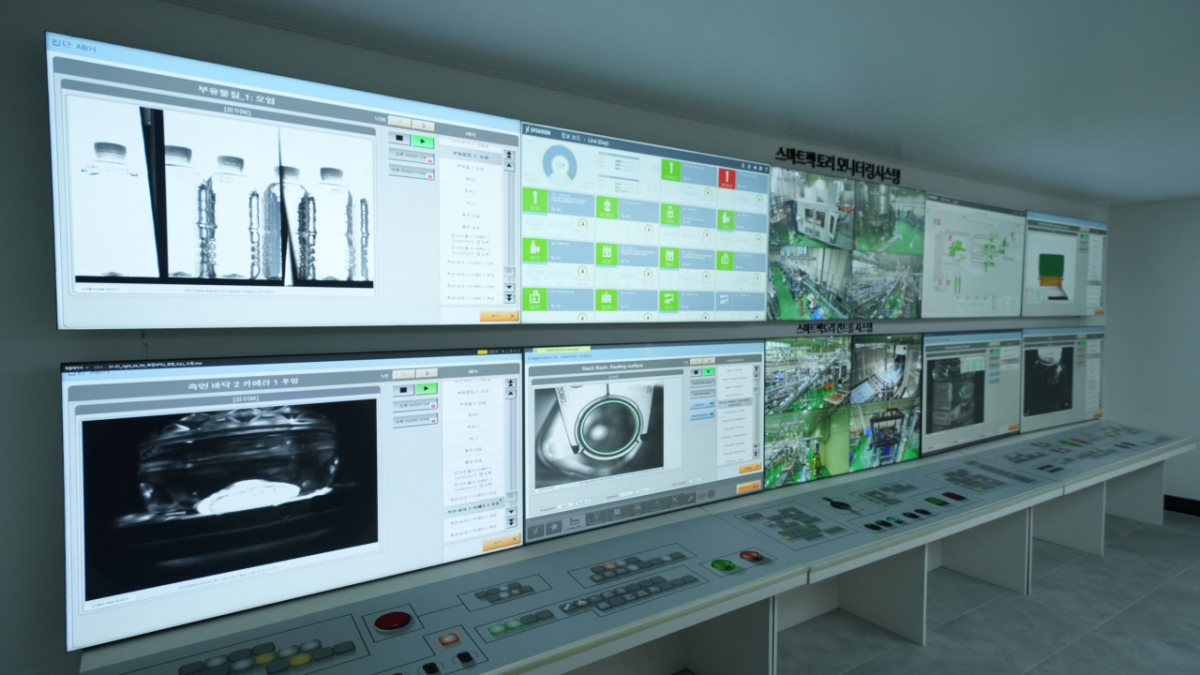
The Jeju Samdasu container is the result of a design that considers strength and ease of use. The angle and curvature of the bottle's shoulder are functionally designed to increase the compressive strength of the PET bottle and improve the grip when held by hand. Because Jeju Development Corporation handles all processes from raw material intake to preform molding and finished container production, quality status is managed at each stage.
Section Chief Kim stated, "If we outsource or receive finished containers from other companies, there is a possibility that the product will be exposed to external environments during packaging, storage, and transportation, and there are limitations in identifying the cause when quality issues occur," adding, "Jeju Samdasu directly manages inspections by process and quality checks through in-house production."
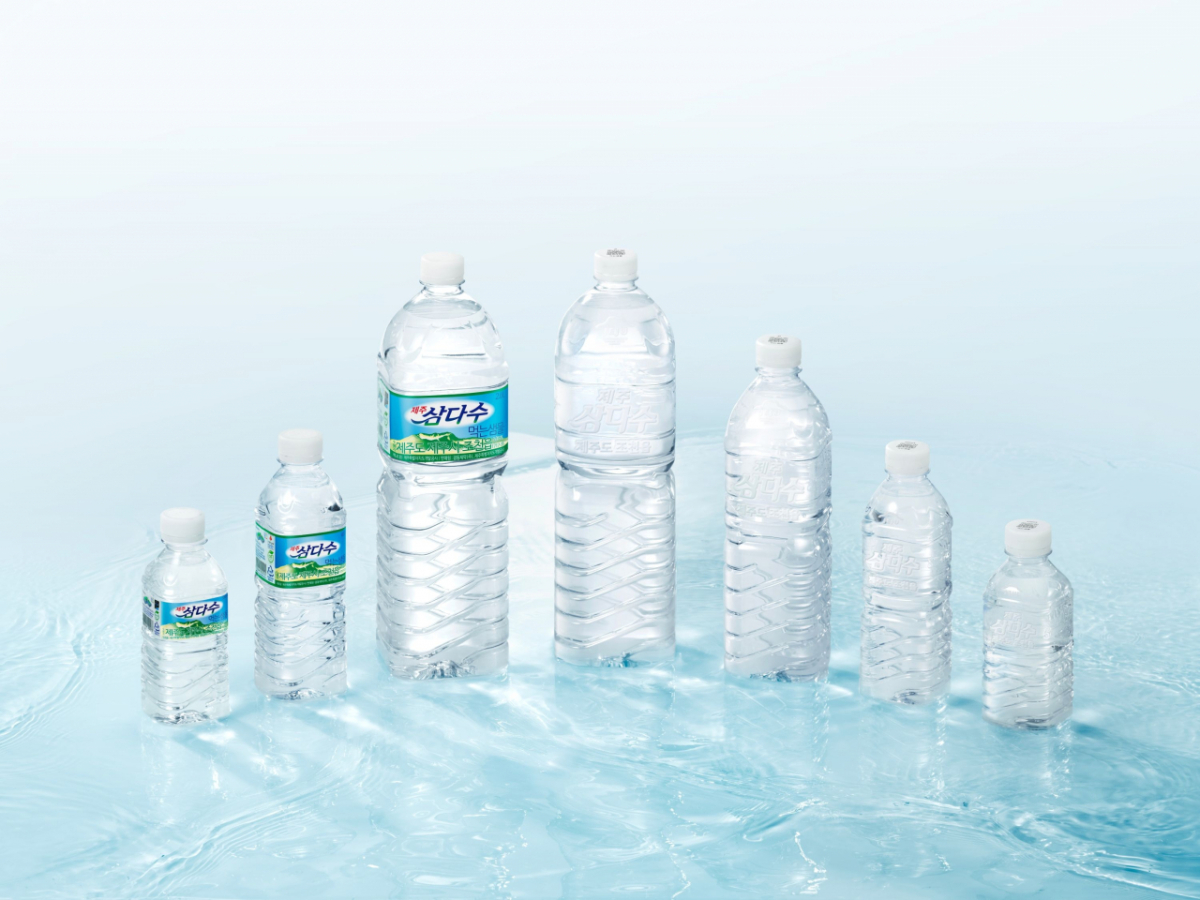
Section Chief Kim said that reducing the weight of a PET bottle by 1 gram is the most difficult task. It is a highly precise operation that requires re-examining the overall structure and molding conditions of the container. He stated, "To lighten it by 1 gram, we must first redesign the design," adding, "Because changes in shape and weight can alter the thickness and weight distribution of the PET bottle container, we must newly set the molding conditions and verify the balance and strength of the entire container."
He then explained, "In the early days of my employment, Jeju Samdasu used relatively heavy PET bottles, with a container weight of approximately 21 grams for the 0.5-liter standard," adding, "Over time, we have continuously pursued the transition to label-free packaging for all varieties and the lightening of PET bottles, reducing plastic usage and lowering the environmental burden."
Last year, Jeju Development Corporation completed the lightening of containers for all varieties of Jeju Samdasu by approximately 12%. Through this, it is expected to reduce annual plastic usage by approximately 3,400 tons and carbon emissions by 8,000 tons. Section Chief Kim stated, "Currently, Jeju Samdasu produces containers using 10% recycled materials," adding, "We aim to expand the application of recycled materials to 30% in the future, have prepared a separate checklist, and are conducting equipment application tests and quality verification."
Since introducing its label-free policy in 2021, Jeju Development Corporation has allowed the container itself to take over the brand expression previously handled by labels. The mold processing and expression methods were improved and tested more than seven times so that the 'Jeju Samdasu' text is clearly visible while blending naturally with the design, which was then applied to the current label-free containers.
Section Chief Kim stated, "We are applying eco-friendly policies, including the transition to label-free packaging, which we consider most meaningful, as well as container lightening and the use of recycled materials, across the entire product production process," adding, "I feel a sense of pride in having directly participated in the process over 25 years where Samdasu containers have become progressively lighter and more eco-friendly."

 in LIVING


