

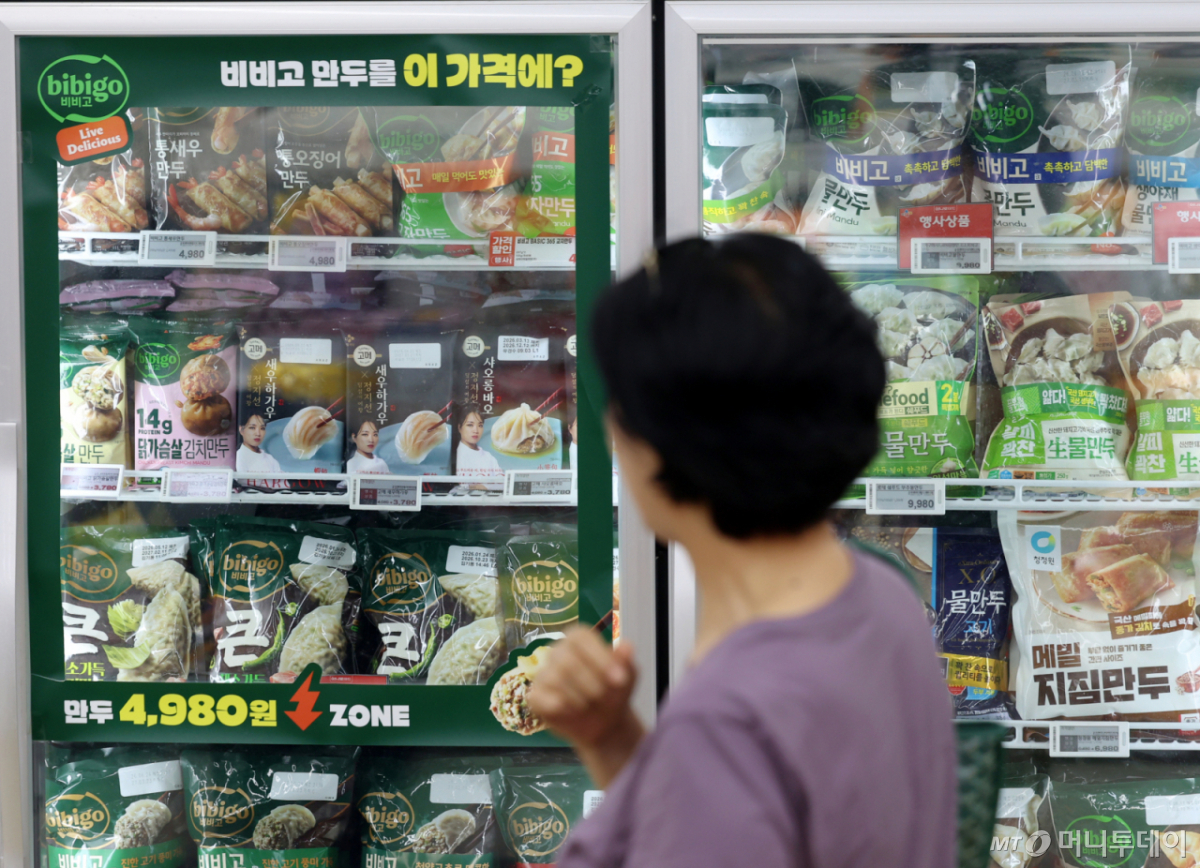
CJ CheilJedang's operating profit (excluding CJ Logistics) rebounded for the first time in seven quarters. This is seen as a result of overseas K-food business supporting performance and growth in the amino acid business, which had struggled last year.
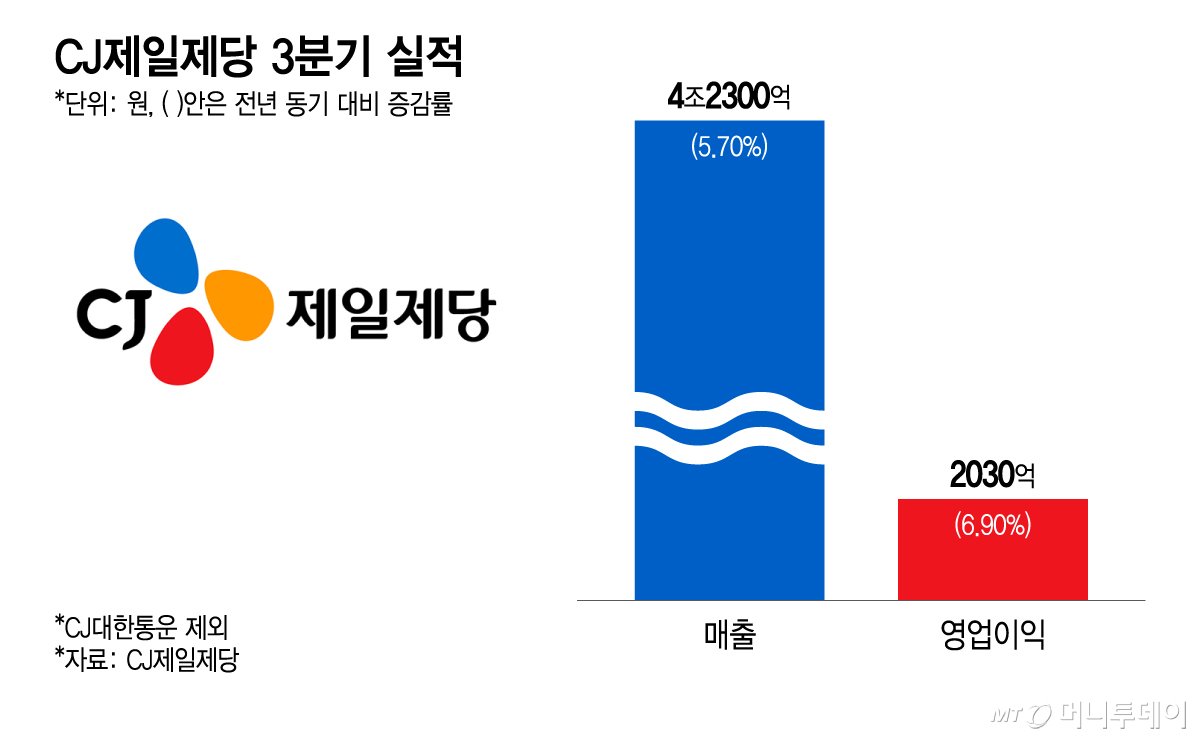
CJ CheilJedang announced on the 10th that it recorded revenue of 4.23 trillion won and operating profit of 203 billion won for the third quarter of this year, excluding CJ Logistics. These figures represent increases of 5.7% and 6.9%, respectively, compared to the same period last year.
The increase in operating profit excluding CJ Logistics compared to the same period last year is the first since the fourth quarter of 2024. After declining by 26% to 148.5 billion won in the first quarter and by 18.4% to 161.9 billion won in the second quarter this year, it turned to growth in the third quarter. It also increased by 25.4% compared to the previous quarter.
By business segment, the core materials division recorded revenue of 1.423 trillion won and operating profit of 108.5 billion won, up 7% and 36%, respectively, year-on-year.
The company explained this was due to specialty amino acids centered on arginine and expanded lysine sales in the North American market. CJ CheilJedang's bio business operating profit last year was 203.4 billion won, a 36.7% decrease from the previous year.
The lifestyle food division recorded revenue of 2.5744 trillion won and operating profit of 118.7 billion won. Revenue increased by 3.8% year-on-year, while operating profit remained at the same level as the previous year.
The company explained that profitability was defended through growth in online and offline channels and cost efficiency, despite burdens from raw materials and logistics costs.
Overseas revenue reached 1.5093 trillion won, a 3.7% increase year-on-year. In the Americas, sales of global strategic products (GSP) such as dumplings and Hetbahn increased, driving 3% growth. European revenue rose by 26%, and Chinese revenue increased by 8%. Vietnam also grew by 14%, driven by strong sales of strategic products including rolls, seaweed, and noodles.
Domestic revenue was 1.065 trillion won, up 3.9% over the same period. Revenue for Bibigo grilled fish (up 69%) and Baeksul 1-Minute Ring (up 24%), along with Hetbahn and Sobaba, also increased significantly.
The technology materials division's revenue was 232.6 billion won, a 20.2% increase year-on-year.
Sales of specialty products such as Taste & Richness (TNR) and probiotic brands and functional products in the Health & Wellness (H&W) segment increased. However, it recorded an operating loss of 24.2 billion won due to investments for future market development.
Consolidated revenue including CJ Logistics was 7.3952 trillion won, up 7%, but operating profit fell by 7.4% to 309.1 billion won. This was influenced by a 25.3% year-on-year decrease in CJ Logistics' third-quarter operating profit to 110.5 billion won.
The prior-year period results reflected the discontinued operations of the F&C segment, including feed subsidiary CJ Feed & Care, for which a sale agreement was signed in October last year, under both consolidated and ex-CJ Logistics bases.
CJ CheilJedang plans to continue the growth momentum of GSPs in the fourth quarter while improving profitability in nucleic acids and feed-grade amino acids.
It is also pushing for the sale of its starch sugar business division to restructure its business portfolio. Based on this, it appears set to focus resources on core businesses such as global food and bio to strengthen profitability.
A CJ CheilJedang official said, "Based on the growth of global strategic products such as dumplings and Hetbahn, we will accelerate the expansion of K-food territory in major regions."
He added, "We will enhance the competitiveness of each business segment by expanding sales of feed-grade amino acids and improving the profitability of future growth products."

 in LIVING

