

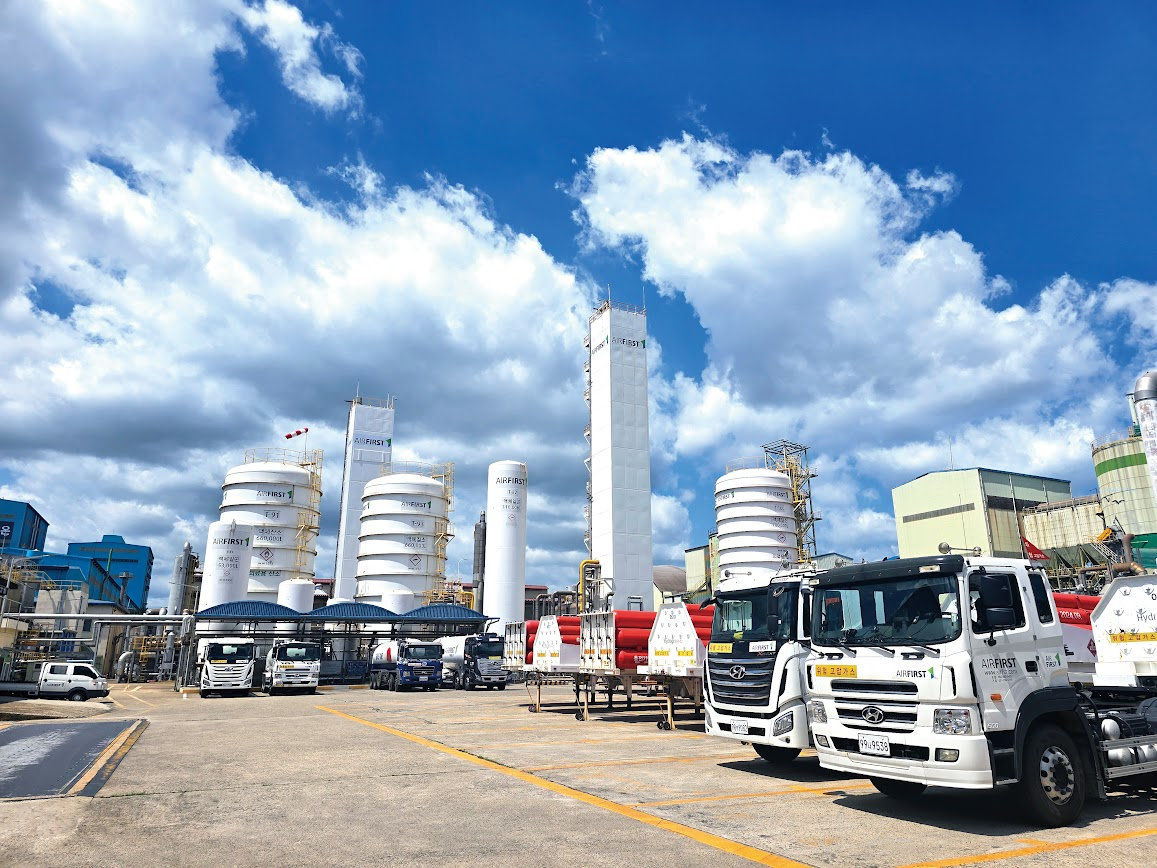
Airfirst, an industrial gas specialist that started in Pohang, North Gyeongsang Province, the center of the steel industry, is gaining attention as a sturdy pillar of regional industry and a future growth driver.
Based on its production and supply technology for industrial gases accumulated over more than 50 years, Airfirst has supported Pohang's steel industry and is now expanding its scope into national core industries such as semiconductors and petrochemicals.
In particular, the possibility of it leaping to become a key supply hub for the future hydrogen industry is growing in connection with the hydrogen city development project being promoted by Pohang City.
According to industry sources on the 12th, Airfirst's history dates back to the establishment of Pohang Haidong Gas in 1975. It began its business based in Pohang during a period when South Korea's steel industry was growing substantially, building technical expertise in the production and supply of industrial gases.
Starting with the first air separation unit (ASU) in 1989, followed by the second unit in 1997 and a steam methane reformer (SMR) hydrogen production facility in 2005, the company expanded its production capacity.
It subsequently extended its business to major domestic industrial hubs such as Seosan in South Chungcheong Province, Giheung and Yongin in Gyeonggi Province, and Pyeongtaek, and was newly launched as Airfirst in 2019. Currently, it supplies industrial gases such as oxygen, nitrogen, argon, and hydrogen, greatly contributing to strengthening the competitiveness of domestic manufacturing.
In particular, the Pohang plant is Airfirst's starting point and core production base. It is equipped with a first ASU with a daily oxygen production capacity of 200 tons, a second unit with a capacity of 343 tons, a hydrogen production facility that produces 1,200 cubic meters of hydrogen per hour, and a liquefaction facility that produces 110 tons of nitrogen per day.
Air separation units, which separate and produce oxygen, nitrogen, argon, and other gases from the air, are essential core facilities for manufacturing industries such as steel and petrochemicals. If the supply of these industrial gases is interrupted, customers' production processes also face disruptions.
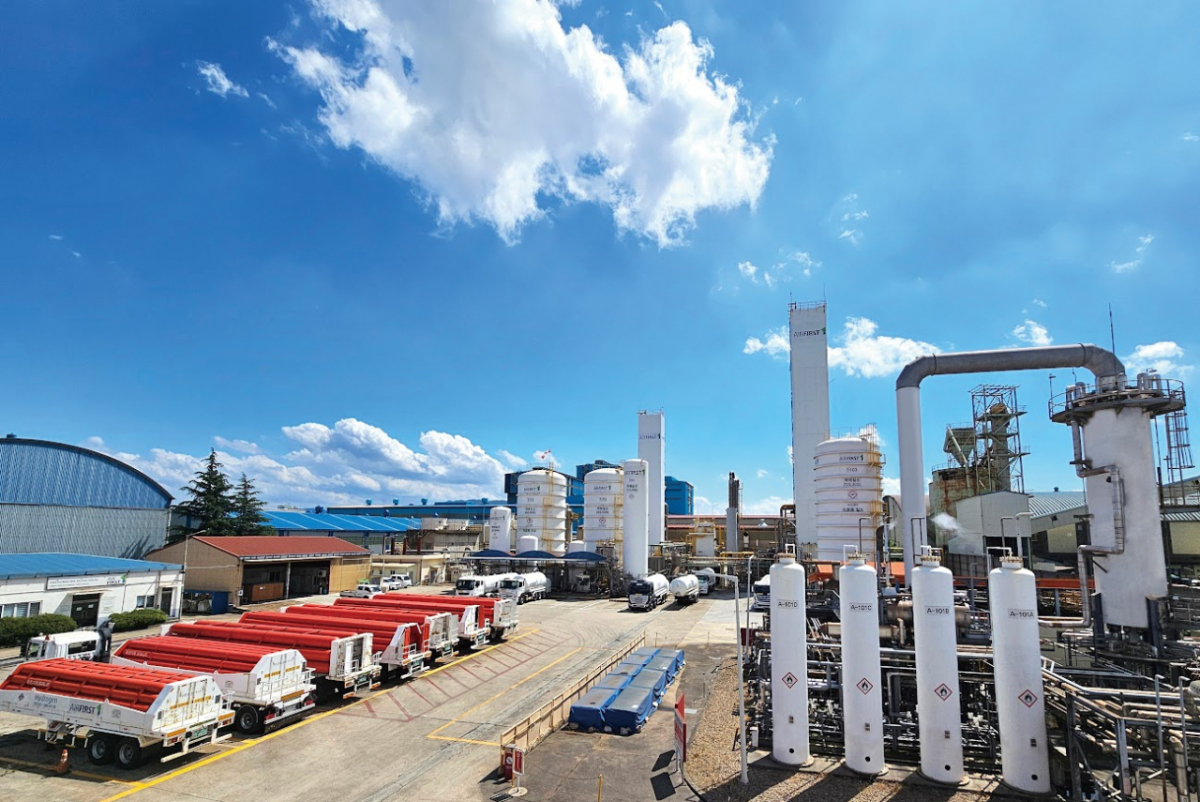
Another competitive strength of the Pohang plant is its dense industrial gas pipeline network. It has built a pipeline network of approximately 36.9 kilometers around the Pohang Steel Industrial Complex to supply gas to major manufacturing companies. Key suppliers include POSCO, Hyundai Steel, Dongkuk Steel, SeAH Specialty Steel, SeAH Steel, and OCI, which represent Pohang.
Supplying gas directly through pipelines for large-scale manufacturing processes reduces logistics costs and enables continuous supply. Oxygen is used in the steelmaking process to remove impurities and improve production efficiency, while nitrogen and hydrogen are also used in various industrial processes such as metal heat treatment. This is why Airfirst is called the invisible production infrastructure of the Pohang Industrial Complex.
The future growth potential of Airfirst's Pohang plant can be found in the hydrogen industry. This is because Airfirst's production infrastructure is expected to play an important role in the hydrogen city development project being promoted by Pohang City.
The plan for building a hydrogen pipeline network in Pohang City includes a proposal to build a new pipeline network of approximately 18.7 kilometers connecting Airfirst's hydrogen production facility within the Pohang Steel Industrial Complex and the hydrogen fuel cell cluster in the Blue Valley National Industrial Complex. If the plan is concretized, a new system will be established to supply hydrogen produced by Airfirst to local hydrogen utilization industries.
Yang Han-yong, CEO of Airfirst, said, "Airfirst, which started its business in Pohang, has grown alongside regional industry for more than 50 years," adding, "Now, we will expand our scope beyond the steel industry to become a company that supports the competitiveness of South Korea's future manufacturing industries, including semiconductors, petrochemicals, and the hydrogen industry."

 in LIVING

