

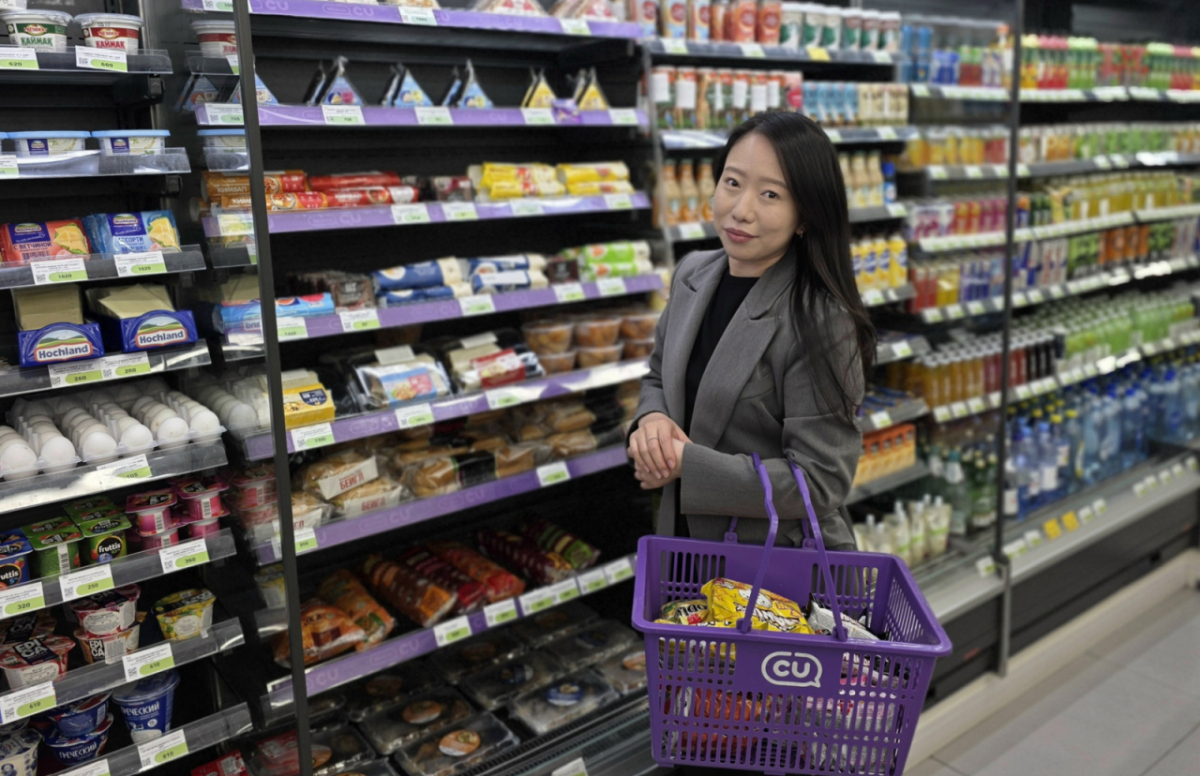
For Alina Shin (Alina Shin·30), a 4th-generation Koryo Korean born and raised in Kazakhstan and CEO of CUCA (CU Central Asia), Korea is a special country where her ancestors' roots are deeply embedded. She led the local entry of Korean convenience store CU and is now expanding her business scope into K-food and K-beauty, seeking new opportunities in Central Asia.
Speaking at the CU Graffiti store in Almaty, Kazakhstan, on the 11th (local time), CEO Shin said, "I visit Korea every year-end to welcome the New Year," adding, "It is not only because of business with Korean companies, but also because it is a good opportunity to read Korean culture and global trends."
CEO Shin is a female executive leading CUCA, the operator of the CU master franchise in Kazakhstan, and is the eldest daughter of Andrey Shin, chairman of Shinkorin Group, a local food manufacturing and distribution company. Shinkorin Group is a distributor operating businesses ranging from food manufacturing, such as ice cream, ramen, and dumplings, to refrigerated and frozen logistics in Central Asia. It also cooperates with Korean fast-food brand Mamschi and logistics company Lotte Global Logistics.
CUCA, led by CEO Shin, partnered with BGF Retail in March 2024 to open its first CU store in Kazakhstan. As of the end of September last year, the number of stores stood at 72. CEO Shin explained, "CU was an attractive partner possessing store operation know-how accumulated by BGF Retail in Korea, differentiated product competitiveness, and systematic logistics and IT systems."
CEO Shin looked back on how establishing the gimbap manufacturing process, which Shinkorin Group first attempted in the early days of the CU business, was not easy. It required many ingredients and had a short shelf life, necessitating adjustments to production and hygiene standards as well as the refrigerated logistics system. CEO Shin stated, "The key was securing price competitiveness suitable for the local market while maintaining taste and quality," adding, "Once the system was established, logistics burdens decreased, and we could quickly improve products in response to consumer reactions."
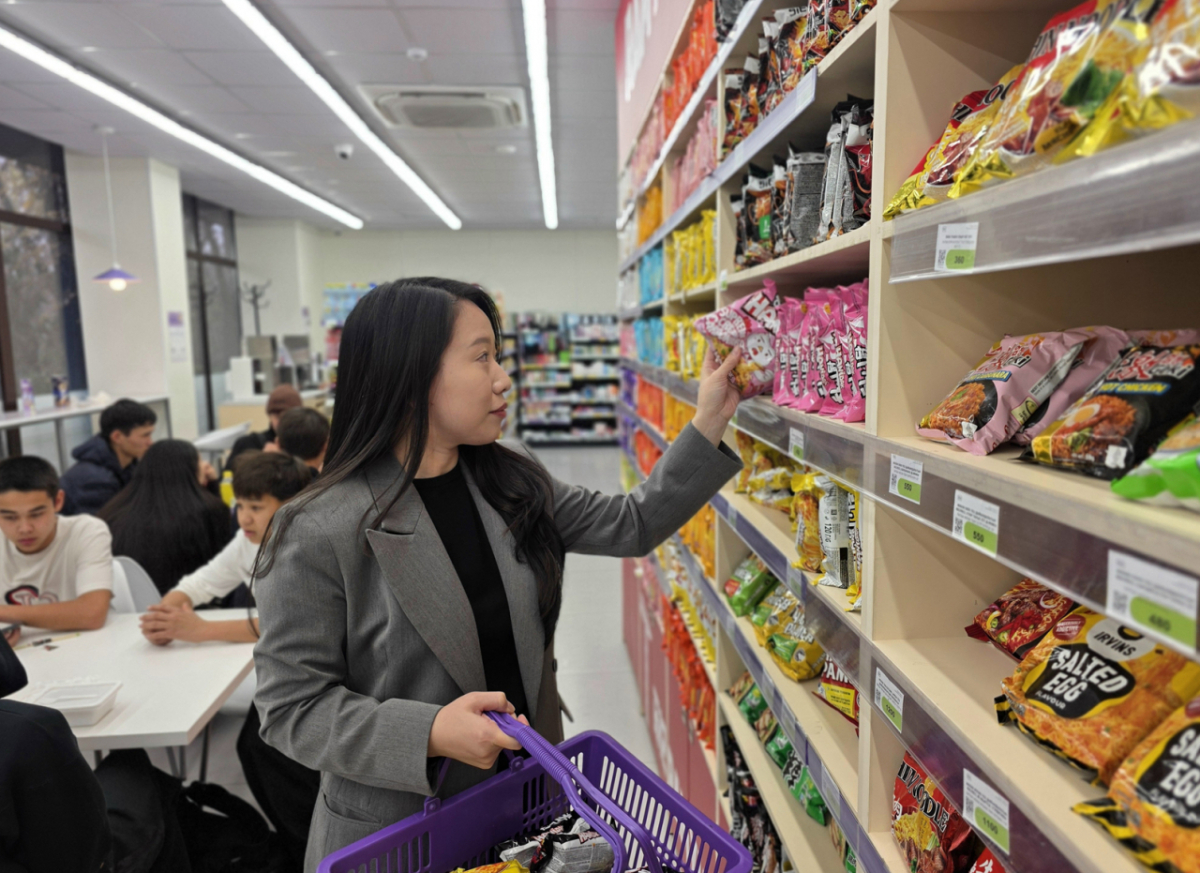
For CEO Shin, the convenience store business is a continuous series of new challenges. While she was familiar with food manufacturing and logistics, retail distribution involving direct interaction with consumers was a different domain. She said that while operating CU, she has felt the changes in Kazakhstan's consumer market firsthand. She explained that Korean-style convenience stores have permeated the daily lives of local consumers, from customers who visit every day to eat ramen to office workers who stop by during lunchtime.
K-beauty was noted as a new growth driver. Shinkorin Group is preparing a separate health and beauty (H&B) and cosmetics specialty store business and is in negotiations with Korean beauty companies for entry. It also plans to strengthen K-beauty specialized spaces at local CU stores. Additionally, the group is experimenting with cultivating cabbage using Korean cabbage seeds and producing kimchi locally.
CEO Shin said, "Young customers value not only products but also store experience and spatial atmosphere," adding, "In addition to the Ramyun Library and K-beauty, we will diversify store content and food types according to location and customer characteristics."
CUCA is considering the possibility of expanding to other cities in Kazakhstan besides Almaty and neighboring Central Asian countries in the long term. In vast Central Asia, stabilizing logistics such as cold chains is the top priority. CEO Shin emphasized, "What is important is not how quickly we increase the number of stores, but building a foundation to stably operate hundreds of stores."

 in LIVING

