

OncoNic Therapeutics has confirmed the potential to suppress muscle loss associated with weight reduction in a non-clinical study combining the obesity treatment semaglutide with its new drug candidate 'OCN-501.' The company plans to proceed with subsequent development after securing results showing that it maintains weight-loss effects similar to existing treatments while preserving muscle mass and strength and further reducing fat tissue.
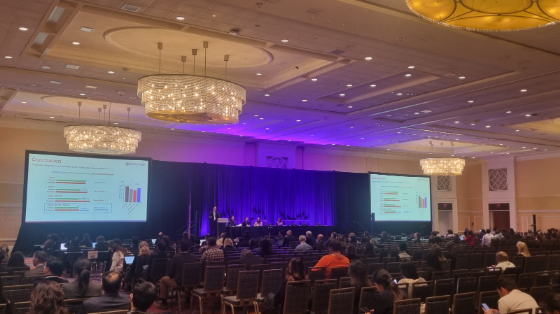
OncoNic Therapeutics announced on the 17th that it orally presented the non-clinical combination study results of OCN-501 at 'ObesityWeek 2026,' the annual academic conference of the American Society for Obesity, held in Washington D.C., USA, on the 16th (local time).
OCN-501 is an oral small-molecule new drug candidate being developed with the goal of maintaining energy metabolic homeostasis in muscles and mitigating muscle protein degradation signals. This study was selected as a Late-Breaking Abstract by the society and presented in a session addressing new obesity treatments and clinical outcomes.
The research team compared a semaglutide monotherapy group and a semaglutide-OCN-501 combination therapy group using mice induced to develop obesity through a high-fat diet. Semaglutide was administered via subcutaneous injection, while OCN-501 was administered orally.
The weight loss rate was 13.1% in the semaglutide monotherapy group and 15.3% in the combination group. Although the reduction magnitude was numerically larger in the combination group, there was no statistically significant difference. The decrease in food intake was also similar between the two groups.
In contrast, differences emerged in body composition and muscle function assessments. In the combination group, inguinal white adipose tissue, corresponding to subcutaneous fat, and epididymal white adipose tissue, an experimental indicator of visceral fat, decreased significantly compared to the monotherapy group.
In muscle mass assessment, while the gastrocnemius skeletal muscle mass decreased in the semaglutide monotherapy group, improvement in muscle mass was observed in the combination group. In particular, the gastrocnemius mass relative to body weight was significantly higher in the combination group. In grip strength tests evaluating muscle power, the decline in strength was significantly suppressed in the combination group compared to the monotherapy group.
In muscle tissue analysis, the reduced muscle fiber area ratio and average muscle fiber cross-sectional area observed in the semaglutide monotherapy group showed a trend of improving to levels close to those of the normal diet group in the combination group.
Based on these results, OncoNic Therapeutics plans to develop OCN-501 as an add-on therapy that complements the effects of existing obesity treatments. Leveraging its characteristics as an oral small-molecule compound, the company is pursuing a strategy of combining it with both injectable and oral obesity treatments.
However, since this study represents non-clinical results in mice, whether the same muscle-preserving effect and safety profile appear in humans must be confirmed through future clinical trials.
An official from OncoNic Therapeutics stated, "We observed high interest and positive reactions to the research achievements of OCN-501 at this American Society for Obesity meeting," adding, "As a combination new drug that addresses the unmet need of muscle loss in incretin-based therapies already leading the obesity treatment market, we expect demand to expand alongside market growth."
The official further added, "In particular, the strategy of not competing with existing treatments but complementing their therapeutic effects can be an advantage in terms of market entry and collaboration with global pharmaceutical companies," concluding, "Based on the achievements at this conference, we will accelerate subsequent development and strive to produce tangible results in business development, including global technology transfer."

 in THEBIO
