

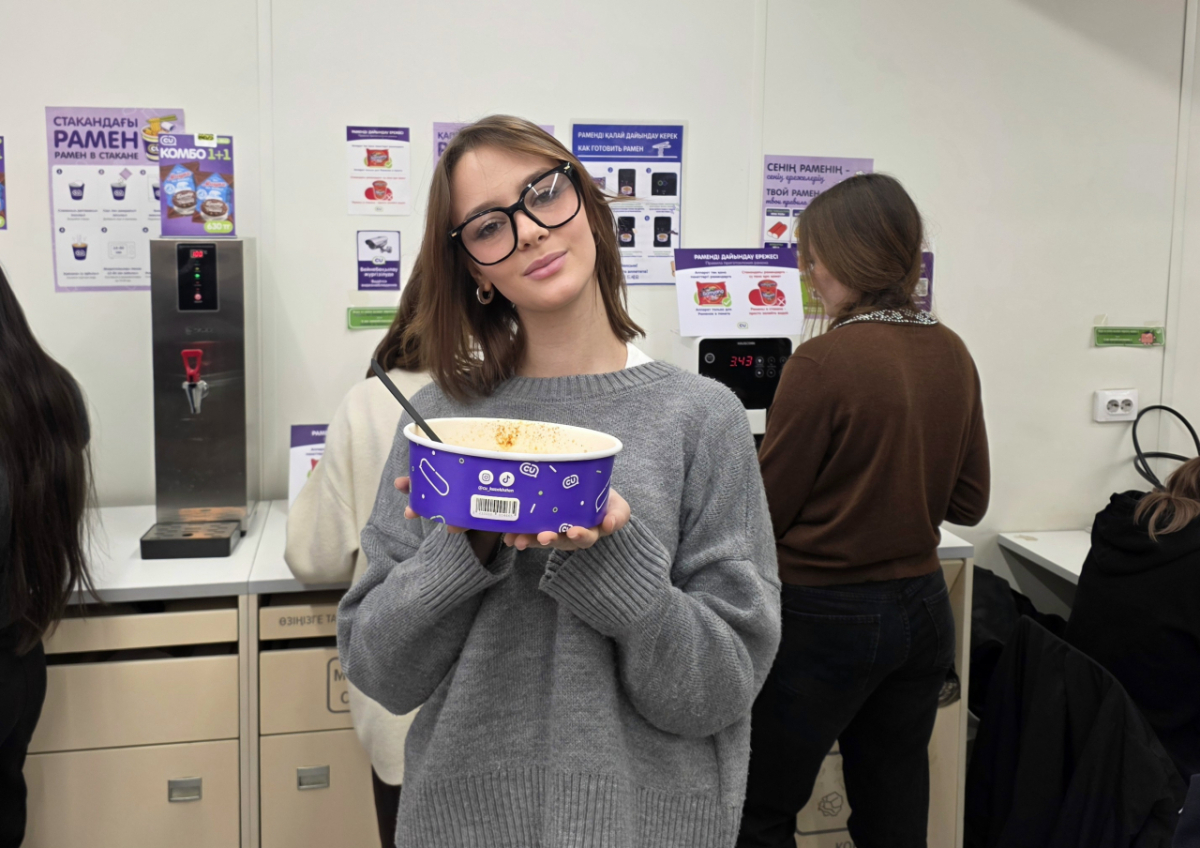
Around noon on Nov. 111 (local time) at CU Turan Grand Store in Almaty, Kazakhstan. Daria, a first-year university student preparing instant noodles, said, "I like spicy Korean cheese ramen the most." After a CU opened near her home, she started trying Korean food and visits the store about five times a week. It has become an essential routine to stop by after classes on weekdays and go with friends on weekends.
The most eye-catching spot at CU in Kazakhstan is the "Ramen Library." It displays 30 to 35 types of instant noodles, including Korean brands, allowing customers to choose their preferred product and cook it using a "Han River Ramen" machine. From gimbap (Korean seaweed rice rolls) and bento boxes to pouch drinks, ice cups, and K-beauty products such as sheet masks, it looked like a direct replica of a Korean convenience store.
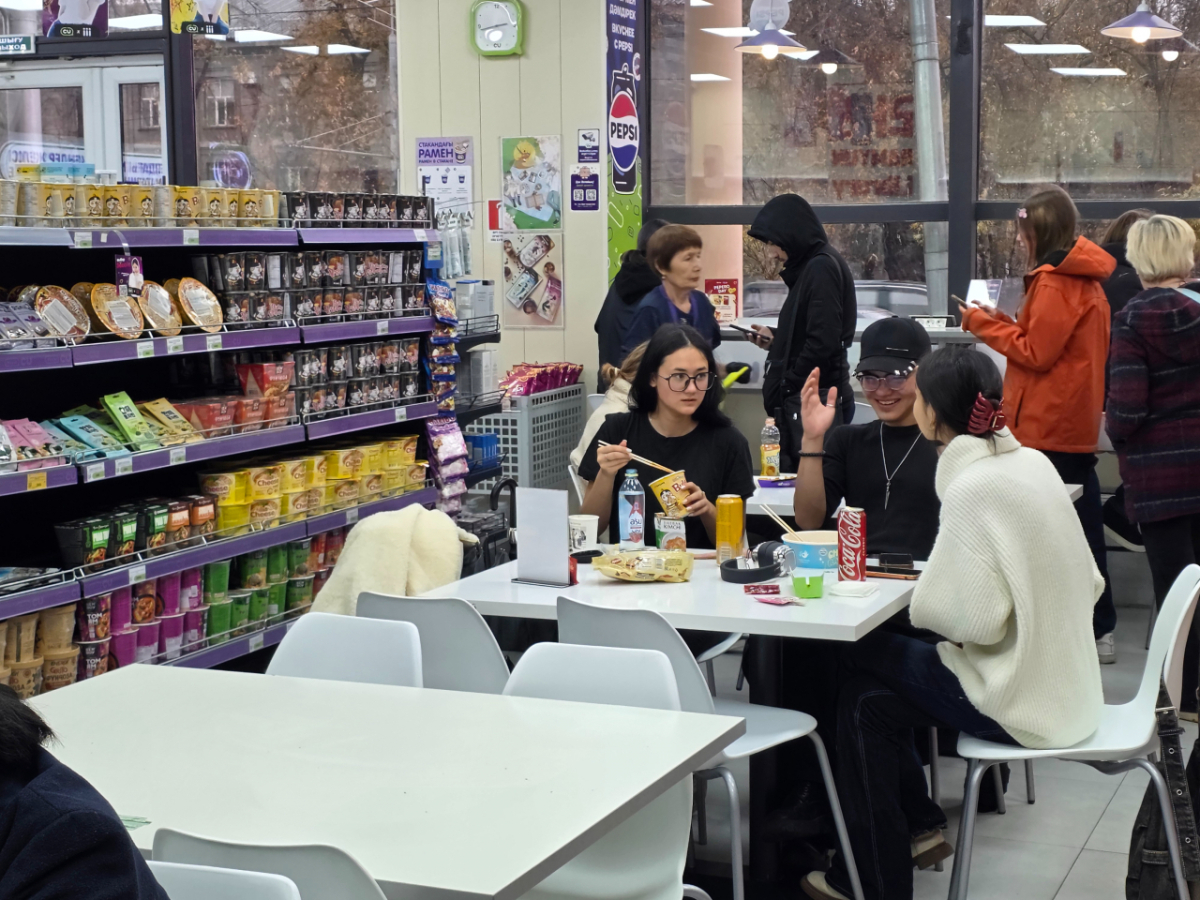
Local CU stores serve as "meeting places" for the 2030 generation. The stores, which are 170 square meters (about 50 pyeong) in size—twice the average in Korea—are equipped with spacious dining areas and mostly operate 24 hours a day. A local official explained, "Cafes close early or have burdensome prices, but at CU, you can eat and talk with friends even late at night," adding, "Due to CU's popularity, local retail stores have started installing tables and introducing nighttime operations."
CU, which changed the local convenience store culture, has also transformed Kazakhstan's food culture. A representative example is that in meat-centric Kazakhstan, tuna mayo gimbap and triangular gimbap have risen to become the No. 1 and No. 3 items in fresh food sales volume. Prepared foods such as tteokbokki (spicy rice cakes) and dakgangjeong (crispy fried chicken) are also popular locally.
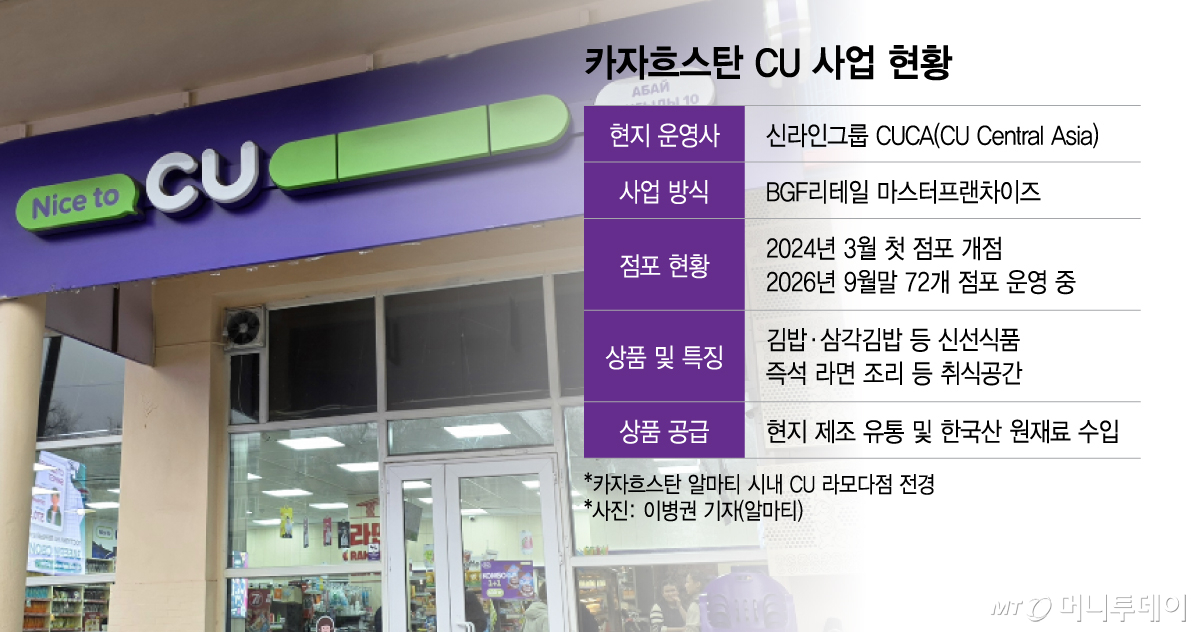
CU in Kazakhstan, which opened its first store in March 2024, increased its number of stores to 72 as of the end of September last year. This is due to the active efforts of CUCA (CU Central Asia), a subsidiary of Shinlain Group that signed a master franchise agreement with BGF Retail. Shinlain Group, which operates food manufacturing and logistics businesses in Central Asia, produces gimbap, sandwiches, and other items at local factories by incorporating BGF Retail's product development know-how.
Alina Shin, CEO of CUCA, said, "Customers who used to visit out of curiosity now come for everyday meals and shopping," adding, "We are not just replicating Korean convenience stores but creating a model optimized for the Kazakhstan market."
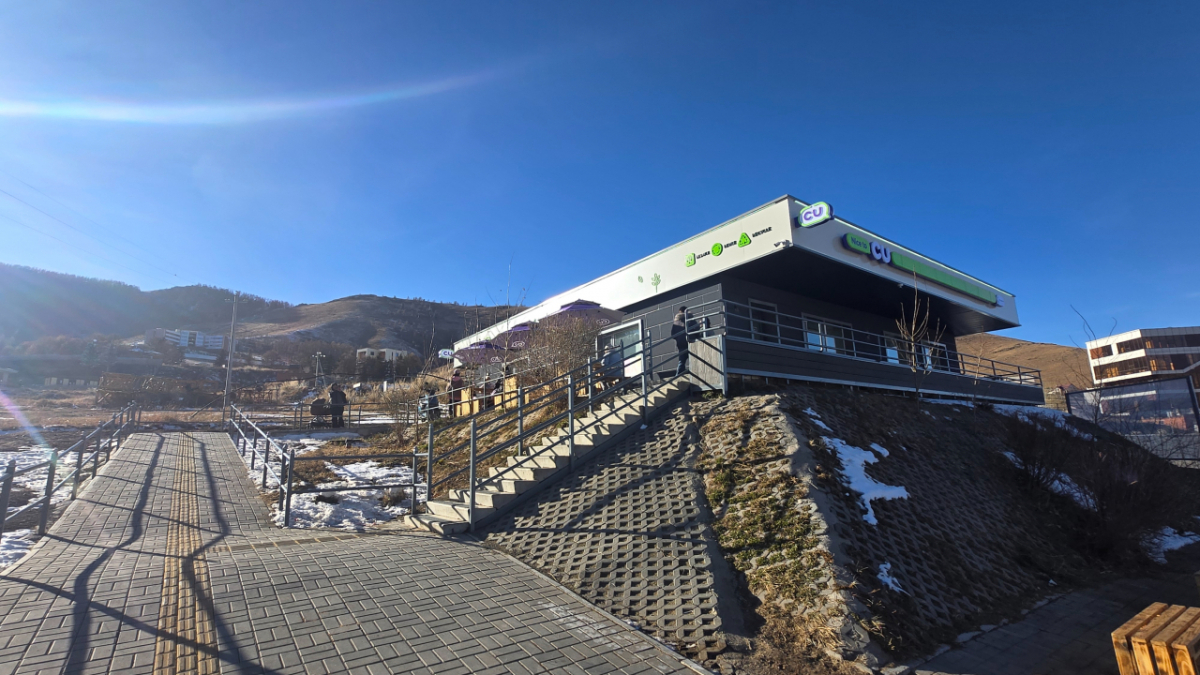
CU Bogd Mountain Jaisan Hill Store in Mongolia, visited on the 28th of last month. Located at the entrance to a mountain road and at an elevation of 2,218 meters, it is the highest-altitude convenience store in the capital, Ulaanbaatar. On a weekday afternoon, despite the cold of minus 8 degrees Celsius, family customers accompanied by young children and students visited the store to enjoy K-convenience foods such as ramen and triangular gimbap. K-beauty products, including sheet masks, were also on display.
This store, which opened last month, reflects CU's operational strategy of not only symbolizing its status as the "No. 1 convenience store brand in Mongolia" but also spreading positive influence. As Mongolia's first "Eco Friendly" concept store, it minimized energy use in selecting interior design and fixtures within the store.
Energy-saving shields and automatic lighting sensors were installed on the refrigerated convenience food shelves. A separate recycling sorting area was set up around the store to encourage a change in the awareness of local consumers who typically dispose of most household waste in landfills. An open-air restroom installed for citizens and customers hiking in features, for the first time, a space to change baby diapers, considering families with children.
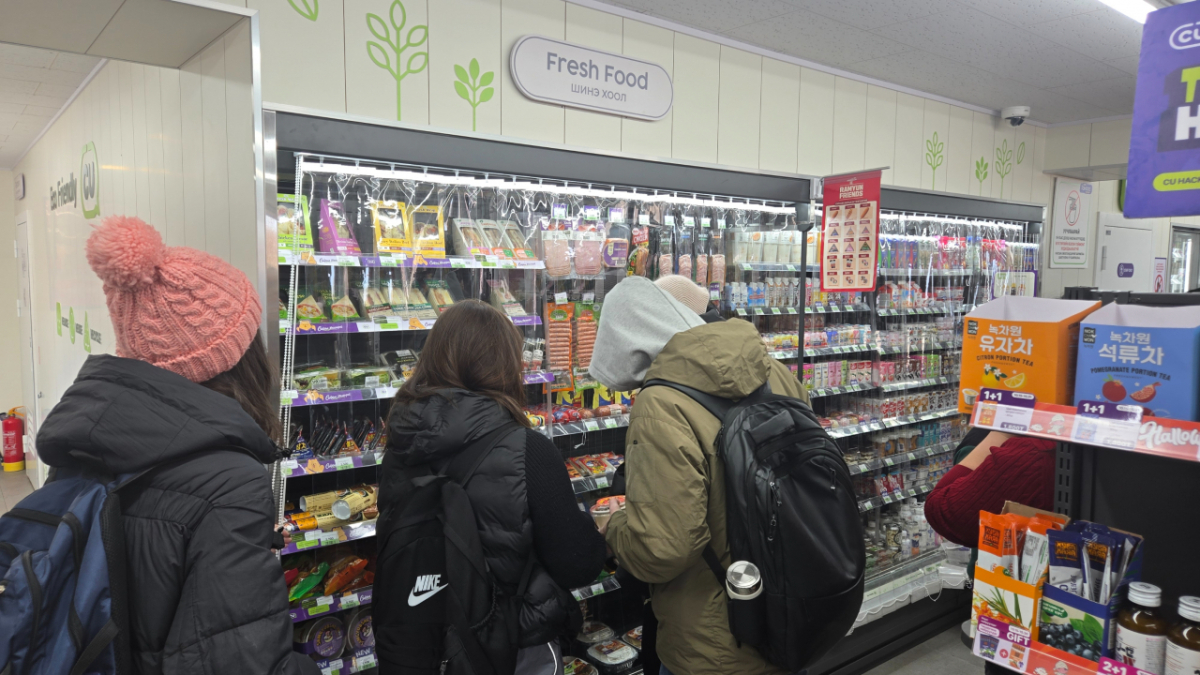
In Mongolia, CU's localization strategy has evolved to be tailored to site conditions and customer demand. Having already operated over 600 stores in Ulaanbaatar city and overwhelming competitors in terms of quantity, the current strategy is to solidify a premium image.
For example, the 600th store, "Hotokh Dundsorm Store," which opened last June, was built on an 85-pyeong scale in the Bulgan Aimag region, located 600 kilometers west of Ulaanbaatar. As a roadside commercial area along the highway to Lake Khubsugul, a representative tourist destination, it reflects the characteristics of its main customer base—tourists and long-distance transport drivers—by equipping the store with shower facilities. Under the "Green Station" concept, it installed solar power generation equipment and an electric vehicle charging station for the first time in a Mongolian convenience store.
Park Ju-beom, team leader of BGF Retail's Mongolia TF division, said, "The local operating company, Premium Nexus Group, has a strong will for social contribution, so there is a trend of increasing specialized stores considering regional locations."

 in LIVING


