

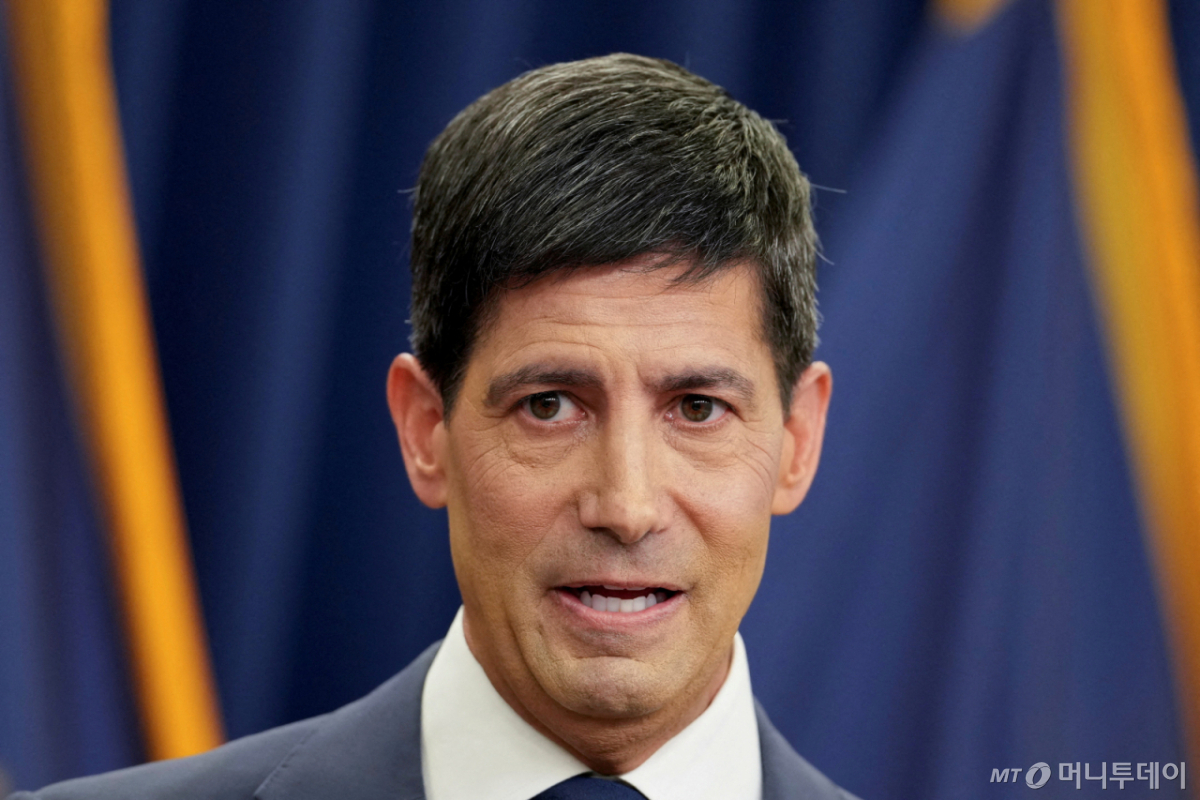
Kevin Warsh, Chairman of the U.S. Federal Reserve (Fed), signaled the possibility of further monetary tightening while warning against high inflation rates during his Jackson Hole debut. Shin Hyun-song, Governor of the Bank of Korea, who visited Jackson Hole, stated that he evaluated the upcoming September Federal Open Market Committee (FOMC) meeting as containing significant signals, but emphasized that the Bank of Korea will implement monetary policy with broad consideration of domestic conditions. The Bank of Korea raised its base rate by 0.25 percentage points to an annual 3.0% on the 27th. This marks the second consecutive month of interest rate hikes, a preemptive response to rising inflation and the possibility of U.S. monetary tightening.
Chairman Warsh stated that while personal consumption expenditure (PCE) and consumer price index (CPI) indicators were better than expected, it is difficult to view fundamental trends as improved. July PCE stood at 3.7%, and CPI at 3.4%. Although the pace of increase has slowed, both remain far from the Federal Reserve's target of 2%. As Chairman Warsh emphasized that "achieving price stability is the Fed's duty and mission," the probability of a September interest rate hike according to the Chicago Board Options Exchange FedWatch Tool jumped from 39.9% to 57%.
The U.S. Federal Reserve's base rate increase poses an immediate burden for the Bank of Korea. The Bank of Korea raised interest rates for two consecutive months in July and August, narrowing the interest rate differential between South Korea and the United States to 0.75 percentage points. However, if the U.S. Federal Reserve proceeds with rate hikes, the gap will widen again to 1 percentage point. The problem is that as the U.S. base rate rises, dollar asset returns increase, exposing South Korea to capital outflows and downward pressure on the won. A weaker won pushes up import prices for energy and grains, stimulating consumer price inflation and leading to a decline in household real income.
It is also difficult for the Bank of Korea to mechanically follow the Federal Reserve's interest rate hikes, as this could contract domestic demand and increase credit risk. Governor Shin also stated that the Federal Reserve's actions are not an absolute benchmark for South Korea's monetary policy. At the end of the second quarter, household debt reached 20.19 trillion won, surpassing 20 trillion won for the first time in history, while loans to self-employed individuals and overdue amounts have also reached record highs. If the Bank of Korea raises interest rates further here, small-scale self-employed individuals and marginal companies will be hit first. The government must proactively design measures to support vulnerable borrowers and provide credit guarantees and liquidity to SMEs (small and medium-sized enterprises). Above all, a policy combination is needed that integrates management of exchange rate risks, capital outflows, and weak domestic demand alongside gradual base rate adjustments.

 in OPINION
