

The stock price of Link Solution, which entered the KOSDAQ market last June through a special listing for technology companies, has plummeted from its peak due to deteriorating profitability. The company secured national projects worth several hundred billion won, signaling revenue growth, but it has repeatedly failed to turn a profit. Last month, it issued convertible bonds (CBs) 15 months after its listing to raise funds. However, concerns are being raised that institutional investors and retail investors may continue to suffer losses, as the company is focusing solely on expanding its scale by spending more than necessary on factory equipment investments and paying premiums for subsidiary acquisitions.
On the 13th, Link Solution closed trading at 21,850 won, down 650 won (2.89%) from the previous day. This marked five consecutive trading days of decline, a level 76.58% lower than the peak of 93,300 won reached in February last year. Link Solution is a 3D printer manufacturer and 3D printing service provider that holds a subsidiary, AM Solutions (ownership ratio 50.06%).
Link Solution's stock price decline is analyzed as being due to poor profitability. The company posted an operating loss of 8.3 billion won in the first half of this year. The size of the loss more than doubled compared to the first half of last year. Revenue was 5.8 billion won, an increase of 2.1 billion won from the first half of last year (3.7 billion won), but cost of sales alone reached 5.6 billion won. In addition, the company invested 8.5 billion won in research and development, deepening the deficit. As of the end of June, accumulated losses were recorded at 30.9 billion won. Total capital has steadily decreased from 39.5 billion won at the end of June last year, shortly after its listing, to 38.2 billion won at the end of last year, and then to 35.3 billion won at the end of June this year.
Revenue also falls significantly short of the company's projections made at the time of listing. In its securities registration statement, Link Solution estimated that it would generate revenue of 20.4 billion won last year, 32.5 billion won this year, and 59.9 billion won next year. However, last year's revenue was 13.1 billion won, falling about 36% below the estimate.
The industry is concerned about Link Solution's aggressive expansion of its scale. Last month, Link Solution issued CBs worth 30 billion won. This amount is 9.3 billion won more than the 20.7 billion won raised through its initial public offering. Of this, 17 billion won will be additionally invested as facility funds. The construction cost for Link Solution's Daejeon factory, as known in the market, totals 49 billion won. According to an industry official, the construction cost for a general manufacturing factory is typically around 3 million to 5 million won per pyeong (a traditional Korean unit of area) excluding equipment costs, but it is reported that Link Solution's factory cost approximately 6 million won per pyeong.
The company paid a premium (goodwill) of 1.1 billion won for the acquisition of AM Solutions, in which it acquired a 50.06% stake this year. AM Solutions is a small and medium-sized enterprise (SME) located in Daegu that manufactures 3D printers and precision equipment. The company turned to an operating loss last year with an operating loss of 172 million won. During the same period, its debt ratio rose from 87.63% to 325.76%, and its reliance on borrowings increased from 45.07% to 68.57%.
The scale of national projects secured by Link Solution has exceeded 20 billion won since June last year, based on publicly known information. A former director of the Korea Institute of Industrial Technology, who served until 2023, has joined Link Solution as an outside director since 2024. Analysis suggests that the 4.7 billion won equipment supply contract secured by Link Solution from the Daejeon Regional Public Procurement Service in March last year involved selling outsourced products as in-house manufactured goods.
It is assessed that the specifications of the delivery equipment disclosed in the relevant contract announcement match those of products from EOS, a German PBF (Powder Bed Fusion) 3D printer manufacturer. Doubts have also emerged as to whether there were issues from the bidding stage, given that Partners Lab, which participated in the bid, is EOS's domestic distributor. Nevertheless, Link Solution only discloses "product revenue," which indicates revenue from self-developed products, in its financial statements. There are no accounts for "merchandise revenue" or "merchandise purchases," which would indicate transactions involving goods purchased externally.
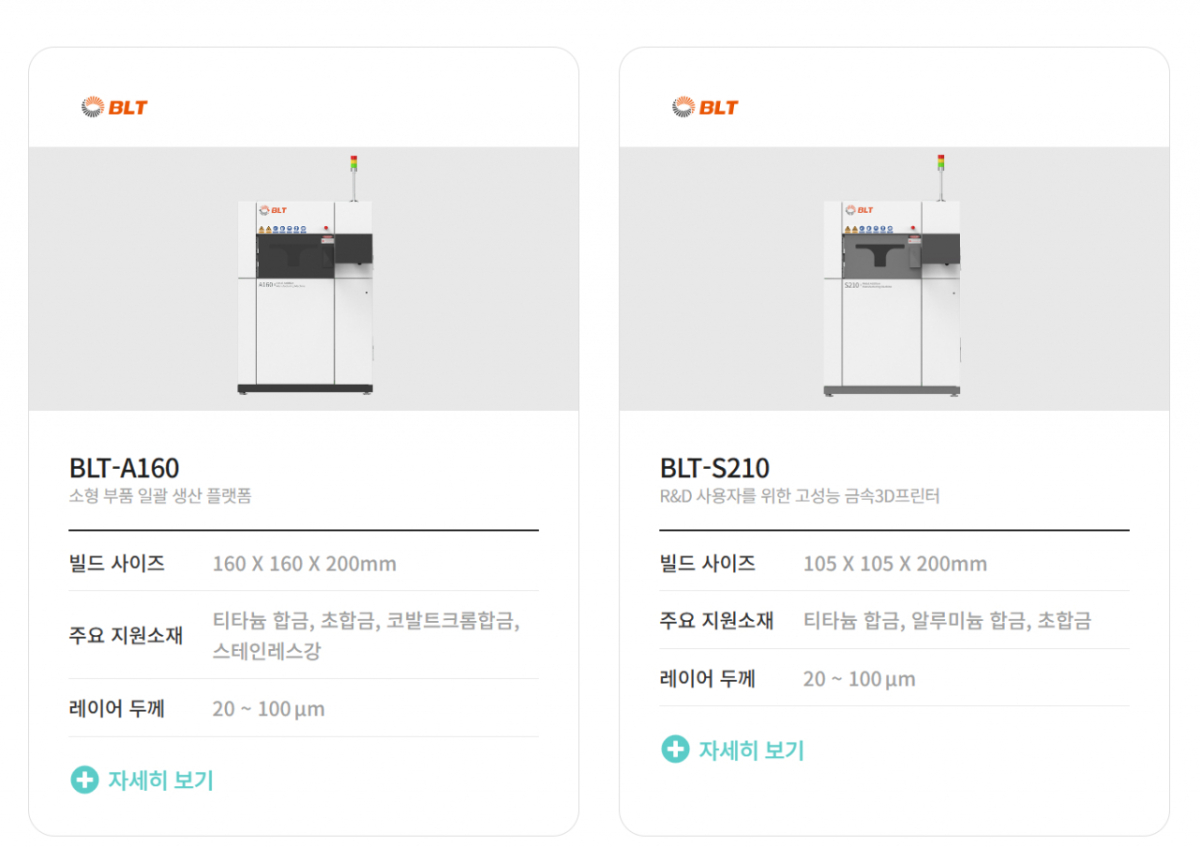
An industry official stated, "Link Solution is causing confusion in the market by supplying equipment from BLT, a Chinese 3D printer company that was previously considered a competitor, domestically, even at the time of its listing." The official added, "The funds raised are being invested in expanding scale without clear revenue growth, leading to concerns within the industry about the lack of core technology, which is central to special listings for technology companies."

 in STOCK
