


Launched in 2010 with the aim of reducing household communication costs, the MVNO (Mobile Virtual Network Operator) market now faces a crisis. While price competition has delivered tangible cost savings for consumers, MVNO operators have long suffered from adverse effects such as deteriorating profitability, as their only competitive weapon is 'low prices.' Although the government promised measures under this year's MVNO 2.0 plan—including a Data Assurance Option (QoS, 400Kbps) and reduced wholesale rates—it remains uncertain whether the decade-long price war will finally cease.
According to an the 8th survey by the Ministry of Science and ICT, as of June this year, the average monthly fee for MVNO subscribers was 17,570 won, representing 48.7% of the 36,050 won average charged by the three major mobile carriers. The government's primary goal of reducing household communication costs has been achieved. However, due to a price war focused solely on low fees, MVNO providers are experiencing adverse effects such as financial distress.
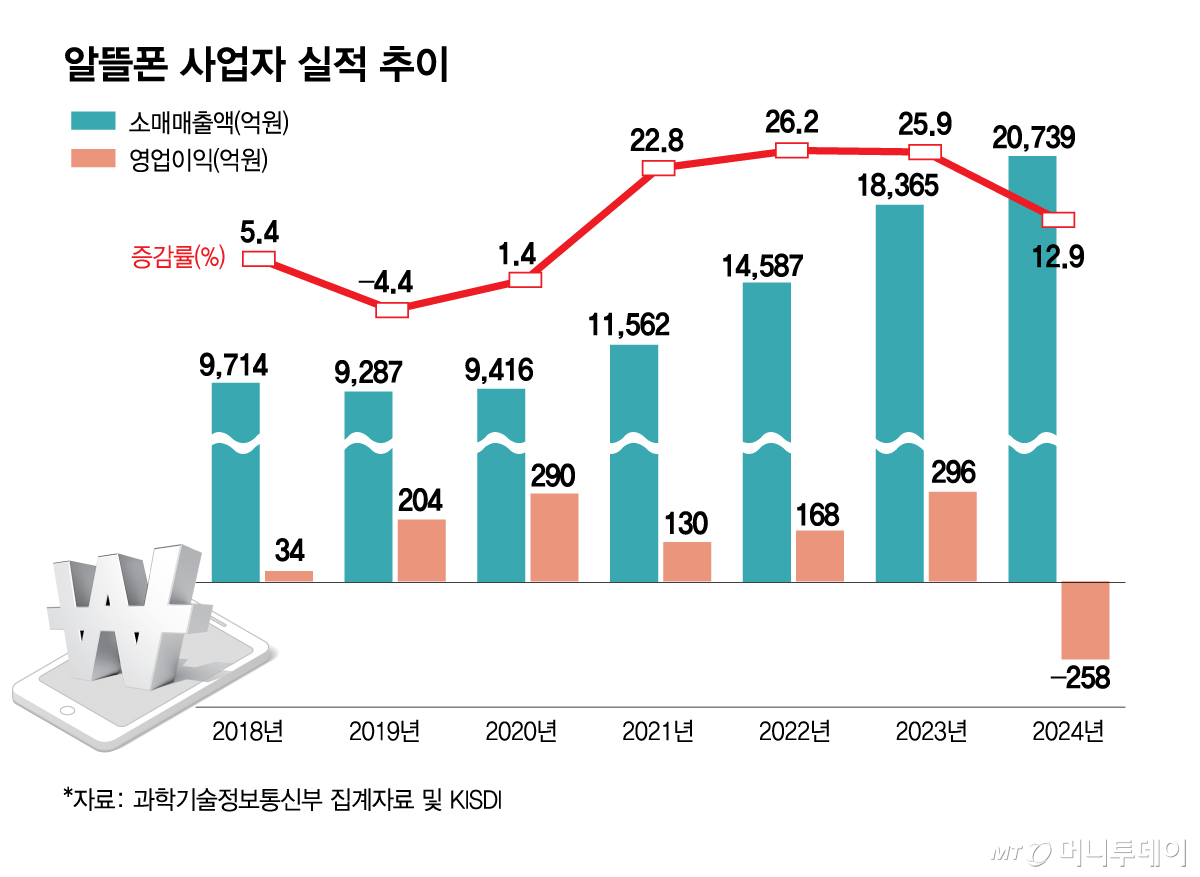
In fact, based on the latest available data for 2024, total industry revenue for MVNO operators reached 2.7 trillion won, yet they recorded an operating loss of 25.8 billion won. This marks a turnaround from profit to loss just one year after reporting an operating profit of 29.6 billion won in 2023. Among the 59th total operators, nearly half—27 companies—are posting operating losses, and six are preparing to cease operations.
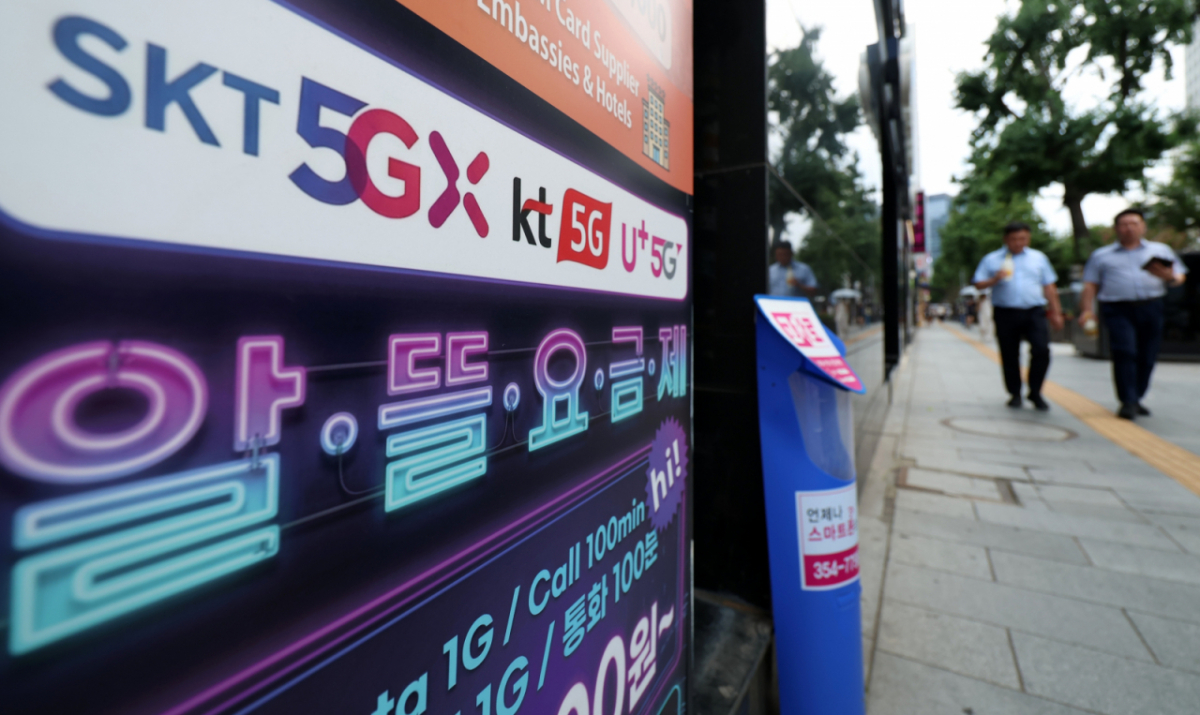
The primary cause of deteriorating management is identified as cutthroat competition driven by ultra-low-price promotional plans such as 'Monthly 0 won' or 'plans in the 1,000 won range.' Currently, there are eight zero-won plans available on the market. This outcome results from operators prioritizing short-term marketing efforts—such as inflating subscriber numbers—over securing long-term profitability.
Deteriorating profitability among small-scale operators ultimately leads to declining service quality and eroded consumer trust. Most small MVNOs struggle with insufficient staffing, making it difficult for customers to reach customer service centers, while responses to cancellations or lost devices remain inadequate. Improvements in usage environments such as roaming, eSIM, and value-added services are also lagging. Due to a lack of resources for investing in personal information protection and security systems, cases have emerged where these operators' networks were exploited for crimes like illegal phone activation (daepo-phones) and voice phishing, further damaging consumer trust.
The only glimmer of hope is the growing activity in the used mobile phone market. Many consumers seeking to use phones affordably combine used handsets with MVNO plans. Since the introduction of the Used Phone Safe Transaction Certification System last May, approximately 1.1 million used phones have been traded within about a year.
To revitalize the market, the government recently introduced measures under MVNO 2.0, including the adoption of QoS (Quality of Service) already implemented in LTE and 5G plans by major carriers, as well as commitments to reduce frequency wholesale rates and radio wave usage fees. However, experts consistently point out that normalization will be difficult without fundamental structural changes among operators.
Shin Min-soo, a professor at Hanyang University, stated, "The problem could be resolved if existing operators transform into independent MVNO (Full MVNO) providers capable of building their own infrastructure and creating differentiated plans. However, given that major carriers are not profiting from MVNOs either, the investment motivation among existing MVNO operators is waning." He added, "New entrants such as banks need to enter the market to drive development, and current MVNO operators must undergo necessary changes."

 in TECH


