

Domestic game companies are successively releasing games that incorporate Korean culture and settings to target the global market.
Analysts point out that Korea-based settings have become a "weapon for global expansion," driven by the novelty of themes not previously covered in existing media such as films and games, combined with the popularity of K-content.
Domestic game companies also developing 'Korea-based games'
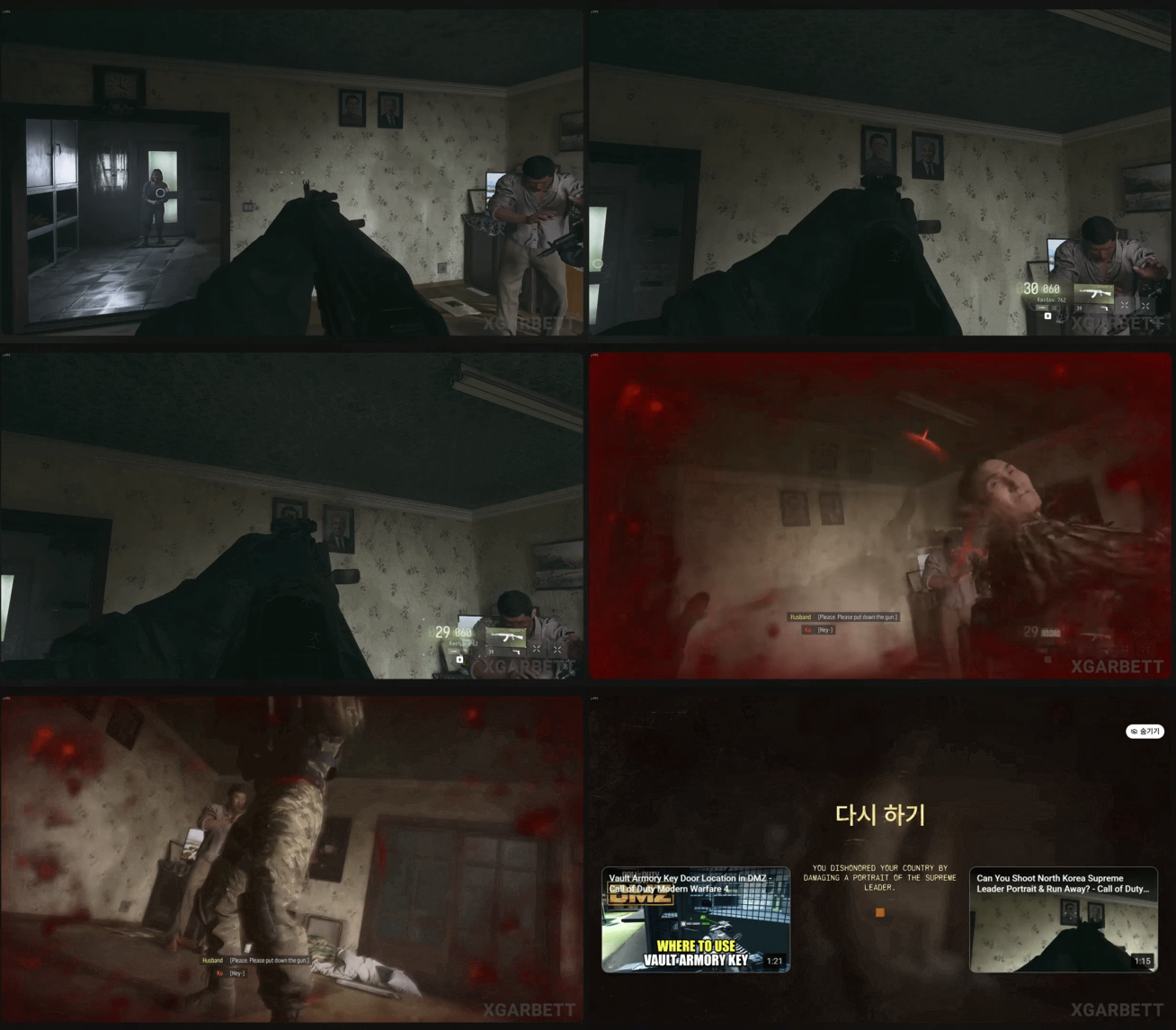
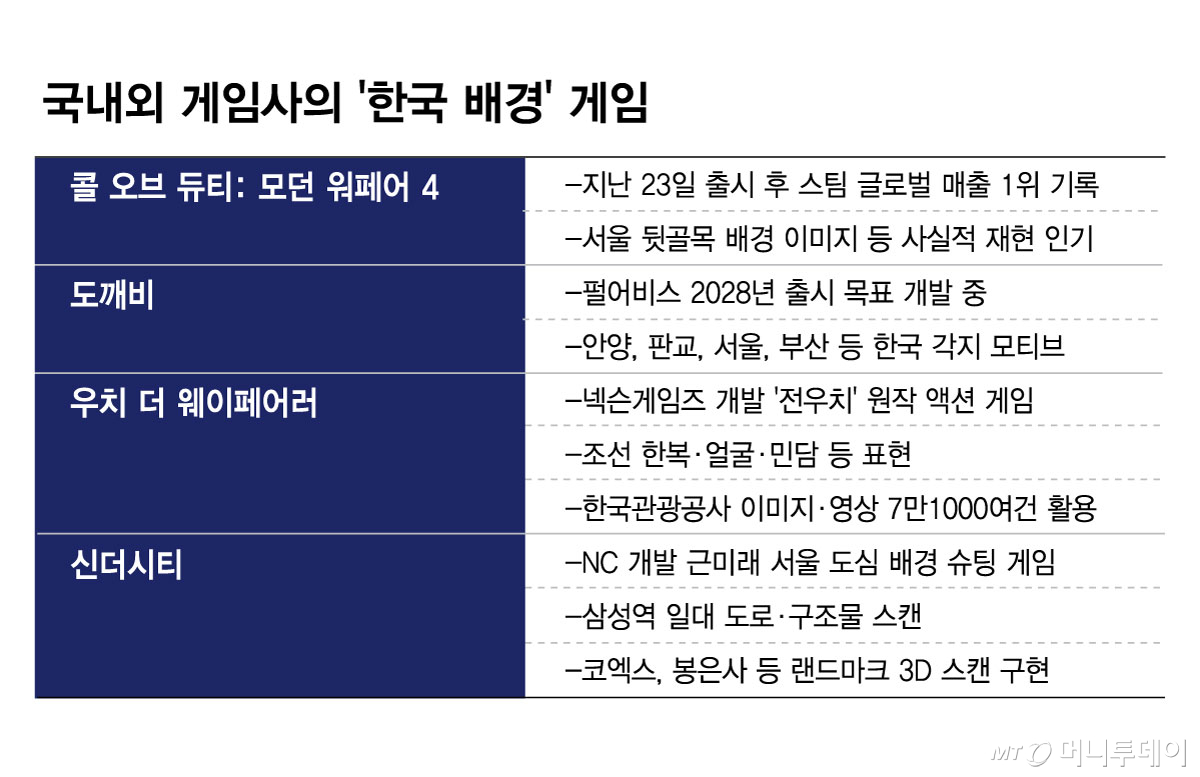
According to PC gaming platform Steam on the 25th, 'Call of Duty: Modern Warfare 4' (hereinafter Call of Duty), released on the 23rd, has consistently ranked first in global sales on Steam since its launch.
The game is a first-person shooter (FPS) set against the backdrop of a fictional "Second Korean War." It has gained significant attention and popularity for its realistic depictions, including backgrounds that faithfully recreate Seoul's back alleys and a setting where North Korean military players are summarily executed if they shoot the portrait of the country's supreme leader.
Movements by domestic game companies to build a "fictional Korea" within their games are also active. Pearl Abyss requested the provision of "precision road maps" from the National Geographic Information Institute under the Ministry of Land, Infrastructure and Transport in mid-month for game development purposes. The company's open-world game 'Goblin,' which it is developing with a target release date in the second half of 2028, takes its motifs from various parts of Korea, including Anyang, Pangyo, Seoul, and Busan in Gyeonggi Province.
Nexon's development subsidiary, Nexon Games, is developing 'Uchi The Wayfarer,' an action game based on the classical novel "Jeon Woo-chi." Given that the game is set in the Joseon Dynasty, the development team is striving to express elements such as hanbok (traditional Korean clothing), facial features, and folk tales from the era. Nexon Games signed a "Memorandum of Understanding for K-Content Development Cooperation" with the Korea Tourism Organization on the 11th of last month, agreeing to receive over 71,000 high-quality images and videos related to tourism in Korea.
NC is preparing the release of 'Cinder City,' a shooting game set in the near-future downtown area of Seoul. The company has recreated a "desolate future city of Seoul" based on actual neighborhoods such as Samsung-dong and Nonhyeon-dong. NC directly filmed the area around Samsung Station and utilized scans of roads and structures. Seoul landmarks, including COEX and Bongeunsa Temple, were also implemented using the same method.
Medieval Europe is stale… K-content boosts recognition
The gaming industry's implementation of Korea in games is aimed at global expansion. Unlike medieval Europe or modern America, where images have been heavily consumed in existing games, films, and dramas, Korea offers users a fresh experience due to its less saturated representation.
Bae Jae-hyeon (CEO) of Big Fire Games, the developer of Cinder City, stated in an interview with foreign media, "We considered several candidate cities as key backgrounds, but they had already appeared frequently in other games and films, making them lack freshness or appeal." He added, "Since most of our developers are Korean, Seoul was the most familiar to us, allowing for efficient construction. Additionally, it had not been deeply explored as a game background, which made it intriguing."
The popularity of K-content has also contributed to making Korea more familiar to global audiences. Mark Grigsby, co-head of Infinity Ward, the developer of Call of Duty, explained that the reason for choosing the Korean Peninsula as a key setting for Call of Duty was that "Korean cultural content such as BTS, BLACKPINK, and Squid Game has gained worldwide popularity, which inspired us."
Technological advancements in 3D scanning and game engines have also been beneficial. An industry official noted, "It is easier to secure the photos and videos required for 3D scanning in Korea than in foreign countries or medieval Europe settings." He continued, "Using 3D scanning allows work that would take a person four weeks to complete to be produced in just one hour. We expect an increase in the development of games based on Korean motifs in the future as well."

 in TECH

